
The U.S. Army has increased its maximum enlistment age by seven years, raising the limit from 35 to 42. At the heart of this decision lies a simple but pressing issue: the need to expand the pool of eligible recruits. While recruitment targets were achieved in 2024 and 2025, the Army significantly missed its goals in earlier years, and its reserve components have faced persistent shortfalls over a much longer period.
These gaps cannot be attributed to a single cause. Instead, they result from a combination of interrelated pressures, including a highly competitive civilian labour market, a declining number of young people who meet medical and physical eligibility standards, and evolving attitudes toward military service.
Raising the age limit is therefore a practical response. It immediately enlarges the pool of potential candidates by including people who may have previously been excluded simply due to age, not capability.
Why Older Recruits Matter More Than Before
Modern militaries are increasingly recognizing that age does not necessarily limit effectiveness. Many individuals in their late 30s and early 40s bring qualities that younger recruits may still be developing: professional experience, emotional maturity, and clearer long-term motivation.
Research from institutions such as the RAND Corporation has pointed out that older applicants represent a “high-quality but underused” recruitment group. They often have stable life situations and transferable skills from civilian careers, making them potentially valuable assets in non-combat and technical roles as well.
Policy Alignment Across the Military
Another factor behind the change is consistency across the armed forces. The Air Force and Navy accept recruits who are over 40 years old. The Marine Corps has a lower limit of 28 years, but candidates who are 29 or older can still apply if they receive a special waiver allowing them to join. By adjusting its own threshold, the Army aligns itself more closely with these standards, reducing discrepancies between services.
The change is implemented through an update to Army Regulation 601–210, which governs enlistment eligibility. Alongside the age adjustment, the revision also removes certain administrative barriers, such as requiring waivers for a single past marijuana possession offence. This reflects broader shifts in U.S. social and legal attitudes.
Are External Events Driving the Decision?
Some observers have linked the timing of the policy change to global tensions, including the ongoing US–Israel war on Iran. However, there is no official indication that the decision was a direct response to any specific conflict.
In fact, discussions about expanding the recruitment age have been ongoing for years. The underlying issue – difficulty in meeting recruitment targets – predates recent geopolitical developments.
That said, public opinion does play a role in shaping recruitment trends. Surveys show that younger Americans are generally more sceptical of military intervention abroad than older generations, which may indirectly affect enlistment levels.
A Generational Shift in Military Service
One of the most significant long-term factors is cultural change. Younger generations are less likely to view military service as a default career path. Concerns about physical risk, mental health impacts, and long-term career flexibility all influence enlistment decisions.
At the same time, the average age of recruits has been slowly increasing, suggesting that the military is already adapting to this reality. Allowing older individuals to enlist simply accelerates a trend that was already underway.
A Strategic Adaptation, not a Temporary Fix
The U.S. military currently maintains a force of roughly 1.3 million active personnel, with the Army making up the largest portion. Sustaining these numbers requires continuous recruitment, which is becoming more challenging in a changing demographic and economic environment.
Raising the enlistment age is not a radical overhaul, but rather a strategic adjustment. It reflects a broader shift toward flexibility – both in who can serve and how the military defines readiness.
Conclusion
The increase in the enlistment age in the U.S. Army shows that institutions need to adapt when traditional recruitment channels weaken. By widening eligibility, the U.S. Army is acknowledging that experience matters as much as youth in today’s world. Whether this change will fully solve recruitment challenges remains uncertain. What is clear, however, is that the definition of who can serve is evolving – and the Army is evolving with it.
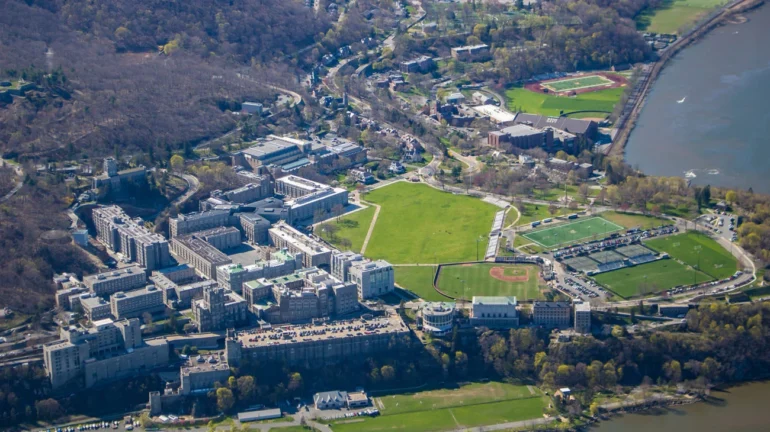
Photo: U.S. Military Academy at West Point, US Army photo by Cadet Hallie Pound