
STANAG 6001 Level 3 – Writing Task (Report): Multinational Exercise SEA SHIELD 2026
Examination task
Write a minimum of 200 words on the topic below.
Your unit, including elements of the Polish Naval Missile Unit, has recently participated in the multinational exercise SEA SHIELD 2026 conducted in Romania in the Black Sea region. Your commander has asked you to write a report evaluating this participation.
In your report:
- describe the purpose and scope of the exercise,
- assess the benefits and challenges for your unit,
- make recommendations for future participation.
Sample Answer
Subject: Report on Participation in Exercise SEA SHIELD 2026
Introduction
The purpose of this report is to evaluate the participation of the Polish Naval Missile Unit in the multinational exercise SEA SHIELD 2026, conducted from 23 March to 3 April 2026 in the Black Sea region, primarily in the area of Constanța, Romania. The exercise was one of the largest and most complex joint training events organized this year by the Romanian Naval Forces.
Description of the Exercise
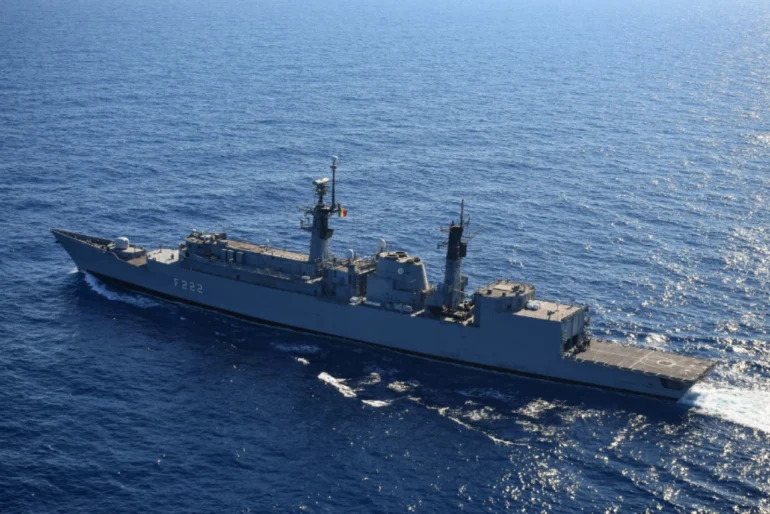
SEA SHIELD 2026 was a multinational and inter-institutional exercise involving over 2,500 military personnel from 13 NATO and partner nations. The exercise integrated naval, air, land, riverine, and underwater components, reflecting the complexity of current security challenges. It involved 48 ships and boats, 64 combat vehicles, 10 aircraft, and 10 autonomous unmanned systems operating across the Black Sea and Romania’s river networks.
The main objective of the exercise was to enhance interoperability among allied forces and improve joint operational procedures in a dynamic and demanding environment. The scenario included the defence of maritime infrastructure, live-fire drills at sea, protection of sea lines of communication, and countering hybrid threats, including simulated attacks on critical underwater infrastructure.
The Polish Naval Missile Unit was deployed in the Constanța area, where it cooperated with Romanian coastal defence forces. Activities included planning and executing simulated anti-ship missile strikes, exchanging reconnaissance data, and operating within NATO command and control structures.
Benefits and Challenges for the Unit
Participation in SEA SHIELD 2026 brought significant operational and training benefits. First of all, it enhanced interoperability with allied forces and confirmed the compatibility of Polish missile systems with NATO command networks. Soldiers gained valuable experience in operating in a multinational environment and under realistic operational conditions.
Moreover, the exercise improved the unit’s ability to deploy rapidly and operate in a foreign theatre. It also strengthened coordination with naval and air components, which is essential for modern joint operations.
However, several challenges were identified. Operating unfamiliar procedures and systems required rapid adaptation, particularly in communication and coordination. Additionally, the complexity of the operational environment and time pressure increased the difficulty of decision-making processes.
Recommendations
In order to maximise the benefits of future participation, it is recommended to intensify pre-deployment training focused on NATO procedures and communication in English.
Furthermore, additional training on integration with allied reconnaissance and targeting systems should be introduced. It is also advisable to continue participation in similar multinational exercises to maintain a high level of readiness and interoperability.
Conclusion
In conclusion, SEA SHIELD 2026 proved to be a highly valuable and demanding training event. It significantly enhanced the operational capabilities of the Polish Naval Missile Unit and demonstrated the effectiveness of multinational cooperation in the Black Sea region. Continued participation in such exercises is strongly recommended in order to strengthen collective defence and regional security.
Photo: Romanian frigate Regina Maria (F 222) during the SEA SHIELD 2026 exercise © Forţele Navale Române