
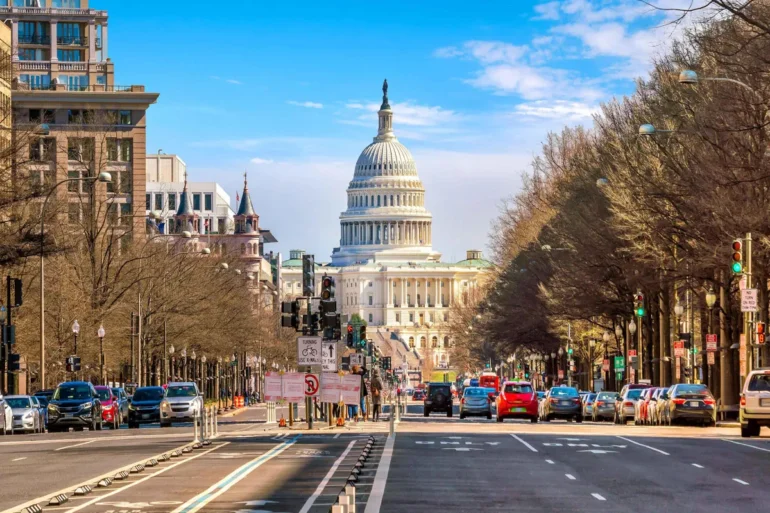
Imagine strolling along one of the most famous streets in the United States. Impressive government buildings, historic monuments and beautiful architecture surround you at every turn. At one end of this remarkable avenue stands the magnificent United States Capitol, while at the other is the White House, the official residence of the American president. Welcome to Pennsylvania Avenue, a historic street that offers visitors a fascinating glimpse into America’s past and present!
Often called America’s Main Street, Pennsylvania Avenue is much more than an ordinary city street. It is a symbol of American democracy and a setting for presidential parades, national celebrations and historic demonstrations. Whether you are interested in history, architecture or simply enjoy exploring famous places, a walk along this remarkable avenue is an experience you should not miss when visiting Washington, D.C.
A Street Born with the American Capital
The story of Pennsylvania Avenue began in 1791, when President George Washington commissioned French-born architect and city planner Pierre Charles L’Enfant to design a new capital for the young United States. His ambitious plan included broad streets, impressive public spaces and diagonal avenues connecting the most important government buildings.
One of his central ideas was to create a grand avenue linking the President’s House (today’s White House) with the Congress House (today’s United States Capitol). This road became Pennsylvania Avenue. The plan was developed further by surveyor Andrew Ellicott, with the assistance of Benjamin Banneker, and work on clearing the route began in 1792.
The avenue was designed not only for practical purposes but also to express an important idea: the connection between the executive and legislative branches of the American government. Even today, it remains a powerful symbol of the country’s political institutions and democratic traditions.
Connecting Two Icons of American Democracy
The most famous section of Pennsylvania Avenue stretches for approximately 1.2 miles (about 1.9 kilometres), connecting two of Washington’s most recognisable landmarks.
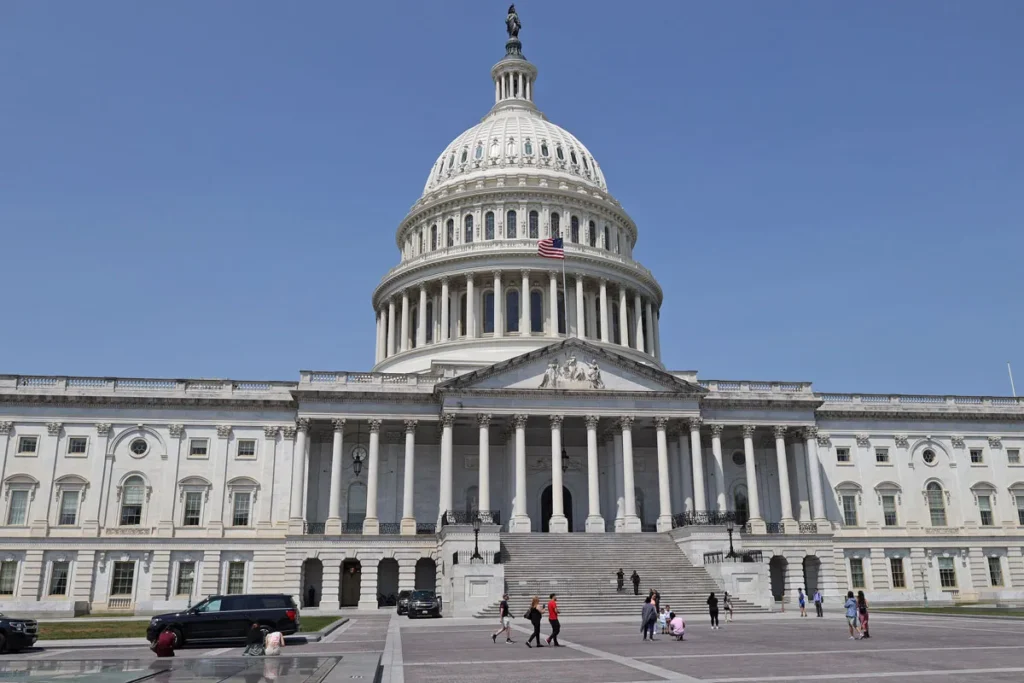
At one end stands the United States Capitol, the impressive seat of the American Congress, where the Senate and the House of Representatives meet to debate and pass laws. Its iconic white dome dominates Capitol Hill and makes the building one of the most recognisable sights in the capital. Visitors can admire its magnificent architecture, explore the Capitol Visitor Center and join a free guided tour to discover the building’s history, beautiful interiors and important role in American democracy.
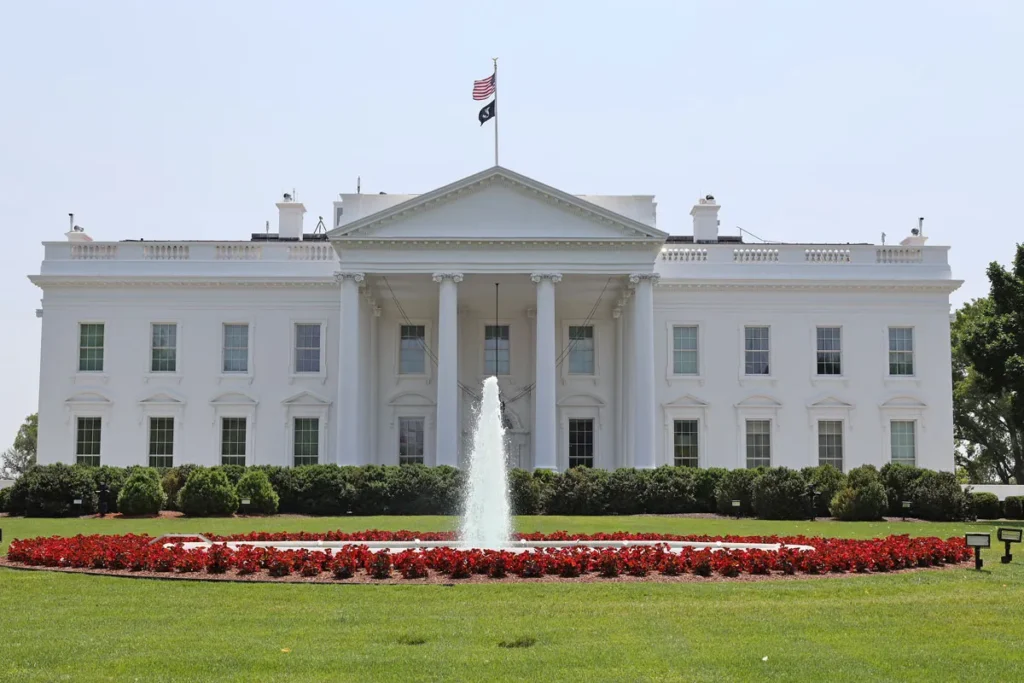
At the other end is the White House, the official residence and workplace of the President of the United States, located at 1600 Pennsylvania Avenue NW. Completed in 1800, it has been home to every American president since John Adams, who was the first to live there. Interestingly, George Washington never lived in the White House, as it was completed after his presidency. Although visiting its historic interiors requires advance arrangements, tourists can admire its famous exterior and take photographs from public areas such as Lafayette Square to the north or The Ellipse to the south.
Walking between these two landmarks gives visitors a unique opportunity to experience the very heart of American political life. The avenue physically connects the places where national laws are made and where the country’s executive leadership works.
A Grand Stage for History
Pennsylvania Avenue has witnessed countless historic events. It is perhaps best known as the traditional route of presidential inauguration parades. Following the swearing-in ceremony, newly inaugurated presidents travel along the avenue in a procession watched by thousands of spectators.
This tradition dates back to the early nineteenth century. Over the years, the avenue has welcomed presidents, military bands, marching groups and enthusiastic crowds celebrating the beginning of a new presidential term.
However, Pennsylvania Avenue is not only a place for celebrations. It has also played an important role in some of the most memorable moments in American history. In 1865, Abraham Lincoln’s funeral procession passed along the avenue, attracting thousands of mourners. That same year, Union soldiers took part in the Grand Review of the Armies, celebrating the end of the Civil War. In 1913, thousands of women marched here demanding the right to vote, making the women’s suffrage parade an important milestone in the struggle for equal rights. Decades later, in 1969, the avenue became a gathering place for massive demonstrations against the Vietnam War.
On September 30, 1965, Pennsylvania Avenue was officially designated a National Historic Site in recognition of its exceptional historical and symbolic importance. The designation covers the avenue and historically related surroundings between the White House and the U.S. Capitol.
This contrast makes Pennsylvania Avenue particularly fascinating. It is both a ceremonial route celebrating the country’s institutions and a public space where ordinary citizens have gathered to express their opinions, demand social change and exercise their constitutional rights.
What Else Can You See Along Pennsylvania Avenue?
A walk along Pennsylvania Avenue offers much more than impressive views of the Capitol and the White House. Following the avenue westward from the Capitol, you will discover several interesting landmarks, monuments and historic buildings along the way. Some stand directly on the avenue, while others are just a short walk away.
Johns Hopkins University Bloomberg Center
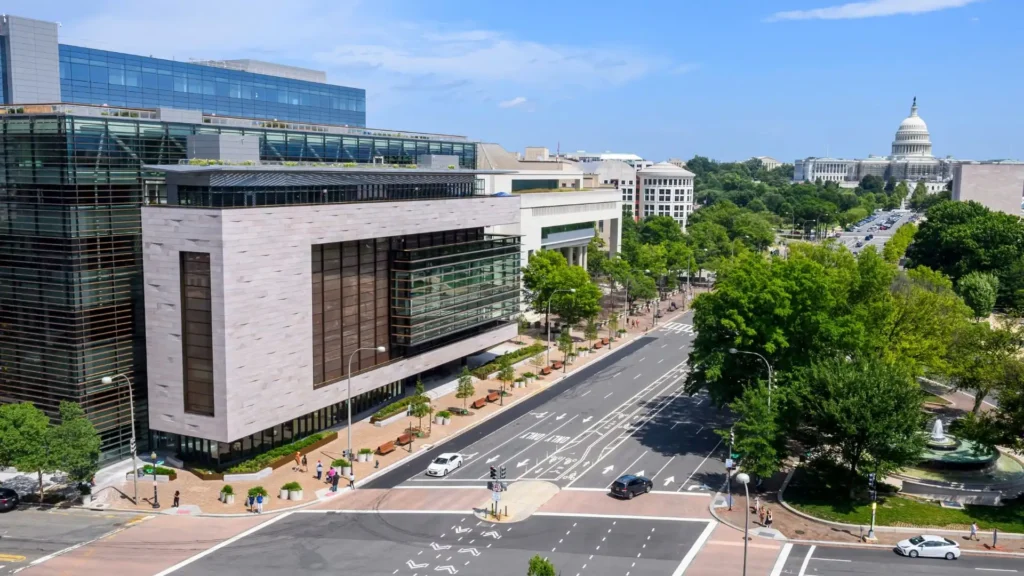
Located at 555 Pennsylvania Avenue NW, just a few minutes’ walk from the United States Capitol, the Johns Hopkins University Bloomberg Center is a striking modern building that adds a contemporary touch to the historic avenue. Opened in 2023, it is home to several of the university’s Washington-based academic programmes, including the School of Advanced International Studies (SAIS).
Founded in 1943, SAIS is particularly well known for its focus on international relations, global economics, diplomacy and public policy. Its location near the U.S. Capitol provides students and faculty with close connections to government institutions, international organisations and policymakers. The modern building also hosts lectures, conferences and public events, bringing together academics, political leaders and international experts to discuss important global issues.
United States Navy Memorial and Visitor Center
A little farther along Pennsylvania Avenue, near 7th Street NW, stands the United States Navy Memorial, dedicated to the men and women who have served in the U.S. Navy and other American sea services. Its central feature is The Lone Sailor, a bronze statue created by sculptor Stanley Bleifeld. It represents an American sailor and pays tribute to generations of people who have served at sea.
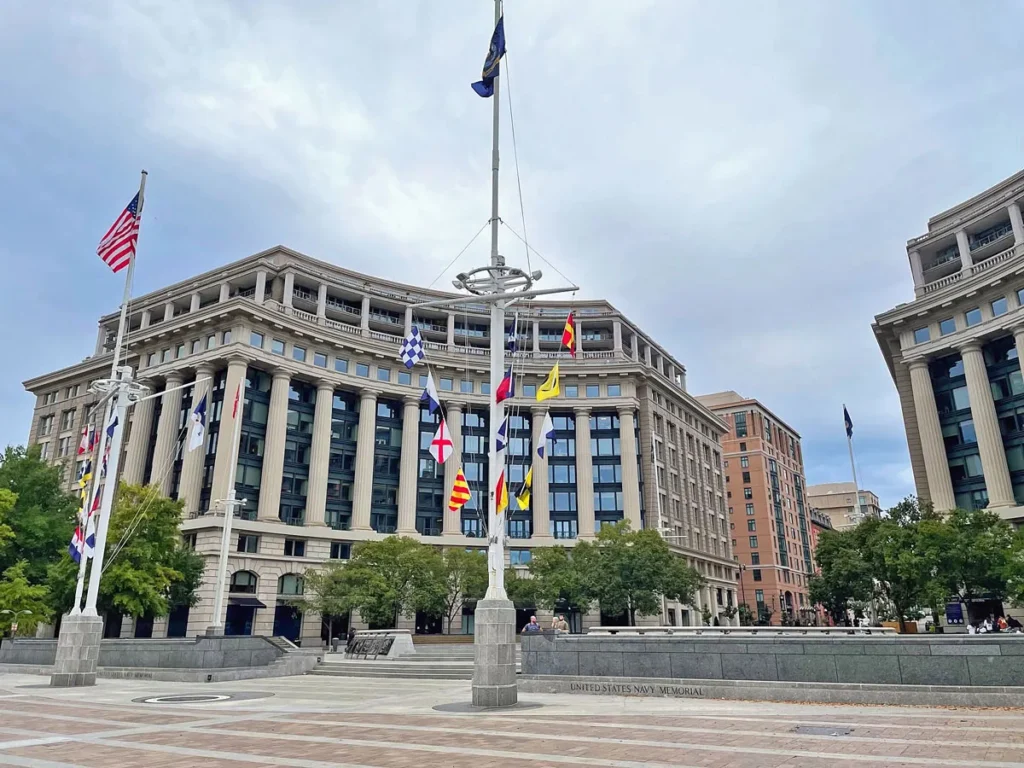
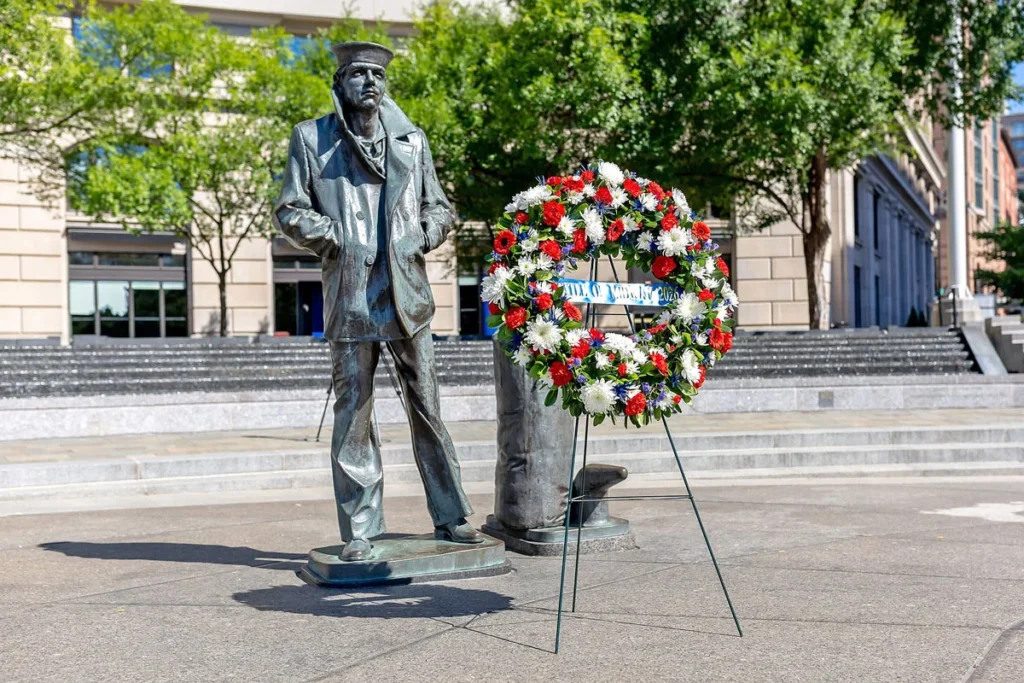
The statue stands on the impressive Granite Sea, a large granite map of the world’s oceans viewed from Washington, D.C. The plaza also features two fountains and 26 bronze relief panels illustrating important moments, people and traditions from naval history.
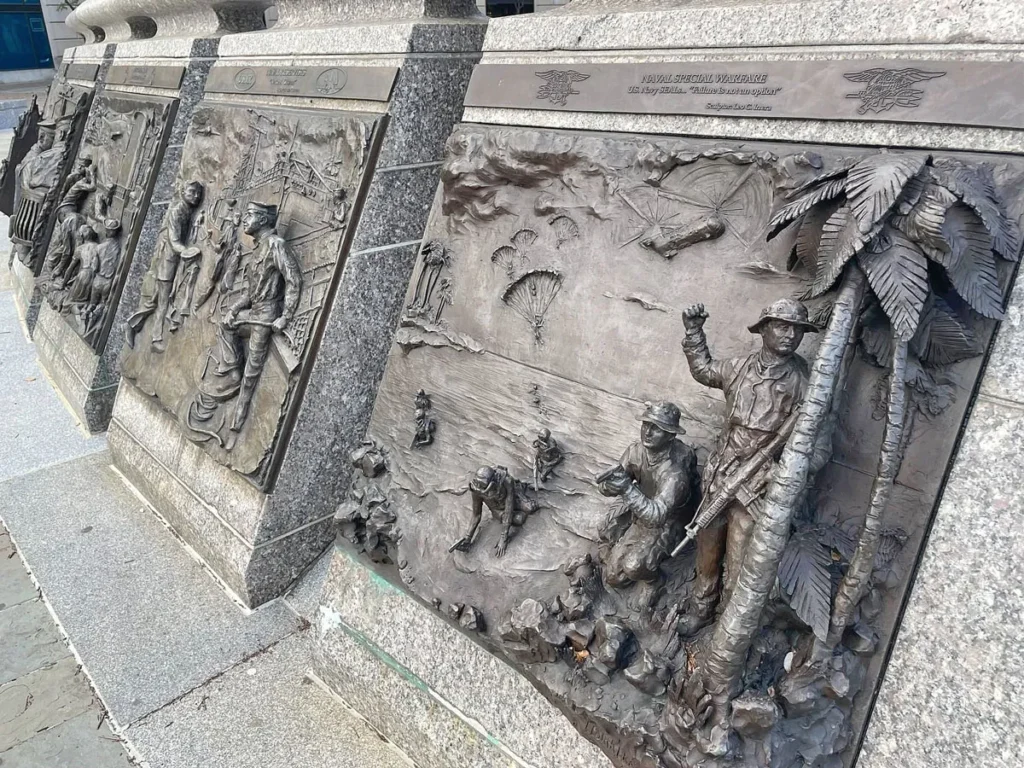
Visitors can also step inside the Navy Memorial Visitor Center to learn more about the history and traditions of the U.S. Navy and other American sea services. Through historical exhibits, photographs, films and interactive displays, the center presents the important role played by sailors and naval forces in the country’s history. It also highlights the development of the U.S. Navy, its major achievements and the people who have served at sea throughout the nation’s history. The visit provides an interesting complement to the outdoor memorial and offers a closer look at America’s maritime heritage.
National Archives Building
Just across the avenue from the Navy Memorial stands the National Archives Building, one of the most important historical landmarks in Washington, D.C. Inside, visitors can see some of America’s most treasured documents, including the Declaration of Independence, the Constitution and the Bill of Rights. In 2026, the Emancipation Proclamation and the 19th Amendment were also added to the permanent display in the Rotunda. Together, these documents tell important stories about the country’s founding, democracy, freedom and civil rights.
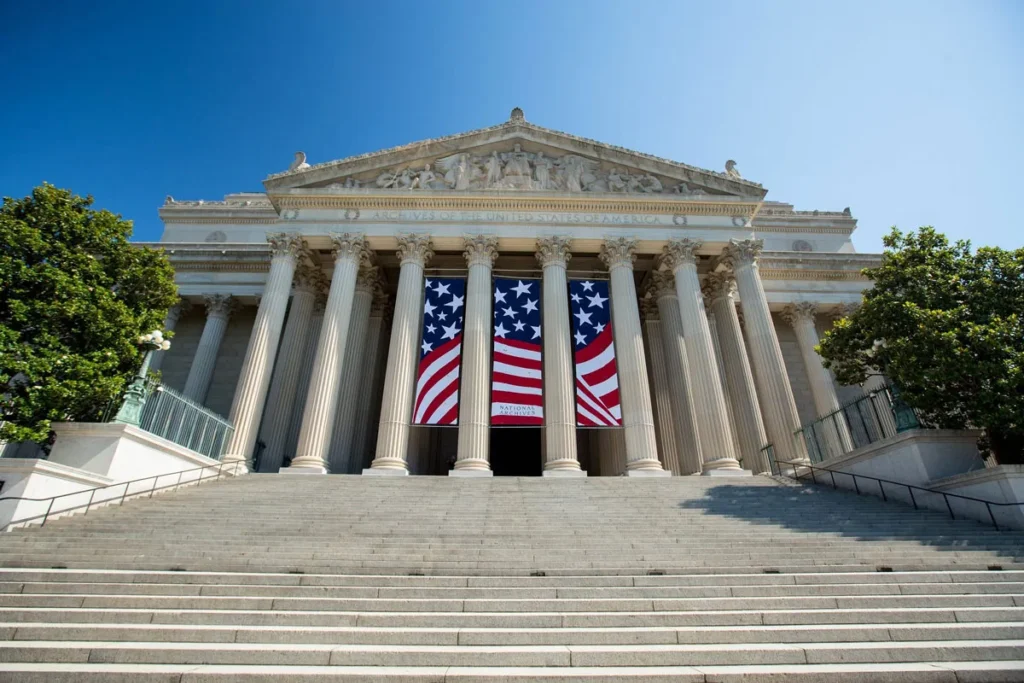
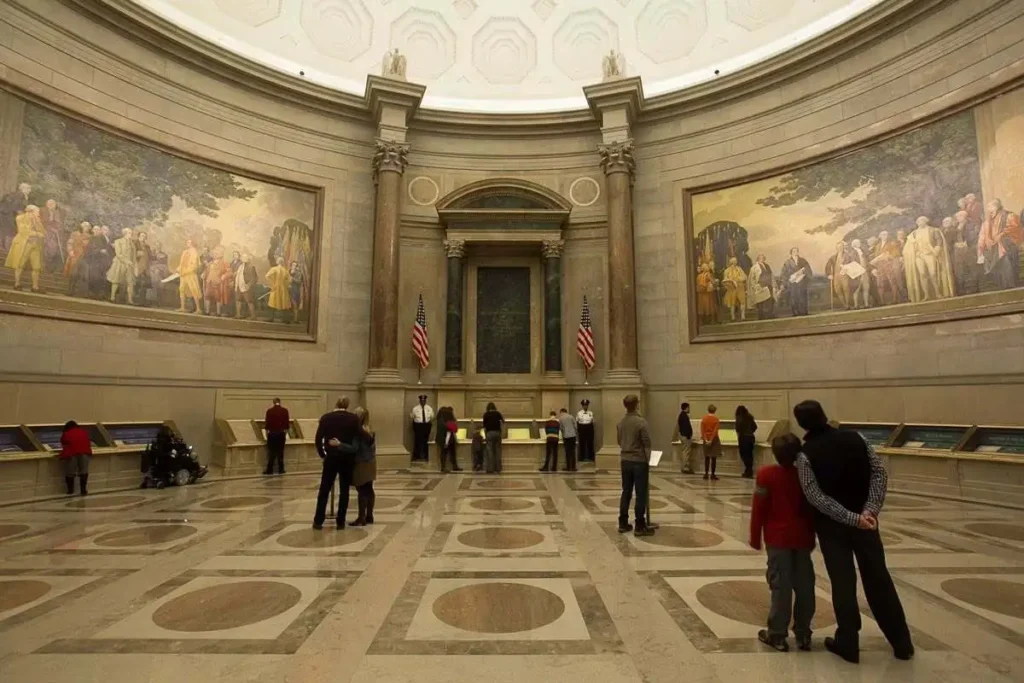
The Archives also houses historical letters, photographs, maps and other valuable records illustrating America’s past. One of its remarkable exhibits is an original 1297 copy of the Magna Carta, one of only four surviving copies of that edition. It is displayed in the David M. Rubenstein Gallery, as part of the Records of Rights exhibition. The document helped establish the principle that everyone, including rulers, must obey the law.
The National Archives is therefore not only a place where important historical documents are preserved, but also a fascinating museum offering visitors a deeper understanding of American history and democracy.
Federal Triangle and Its Historic Government Buildings
Continuing west, you reach the area known as Federal Triangle, a district characterised by monumental government buildings, many of which were constructed during the 1930s. Their grand facades, elegant columns and classical architectural details create a distinctive atmosphere in this part of the capital.
One of the most prominent buildings here is the Robert F. Kennedy Department of Justice Building, located at 950 Pennsylvania Avenue NW. Completed in 1935, it serves as the headquarters of the U.S. Department of Justice, the federal department responsible for enforcing federal laws and overseeing the country’s legal system. The building was originally known as the Department of Justice Building and was renamed in 2001 in honour of Robert F. Kennedy, who served as U.S. Attorney General from 1961 to 1964.
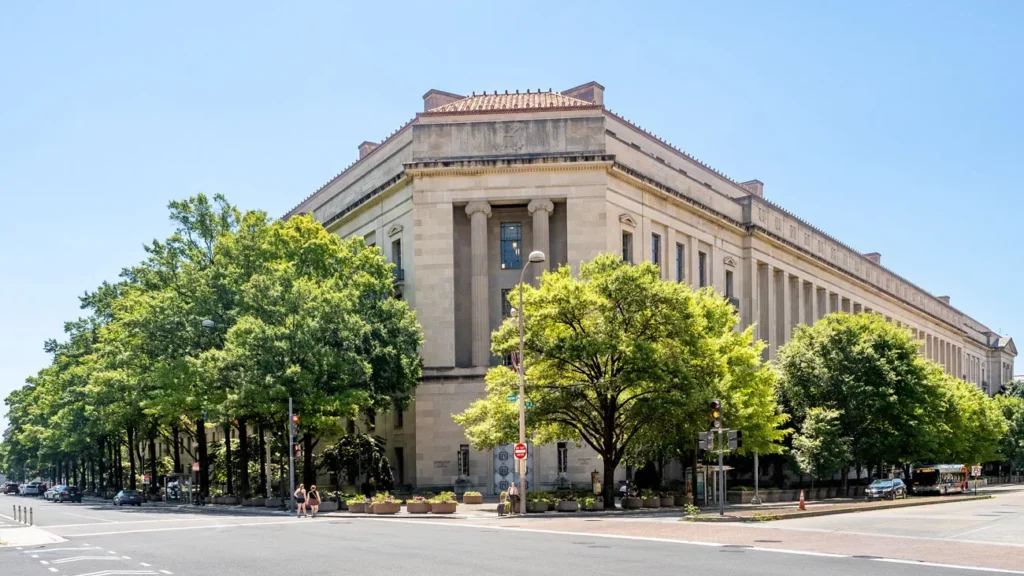
Designed in the Neoclassical style, the building is particularly impressive for its monumental façade, elegant stone columns and grand entrance. Its architecture reflects the ambition of the Federal Triangle development, which transformed this part of Washington into a district of imposing government buildings during the 1930s. Inside, the building houses the offices of the Attorney General and other senior Justice Department officials, as well as numerous divisions responsible for different aspects of federal law enforcement. Its impressive architecture and prominent location make it one of the most recognisable federal buildings along Pennsylvania Avenue.
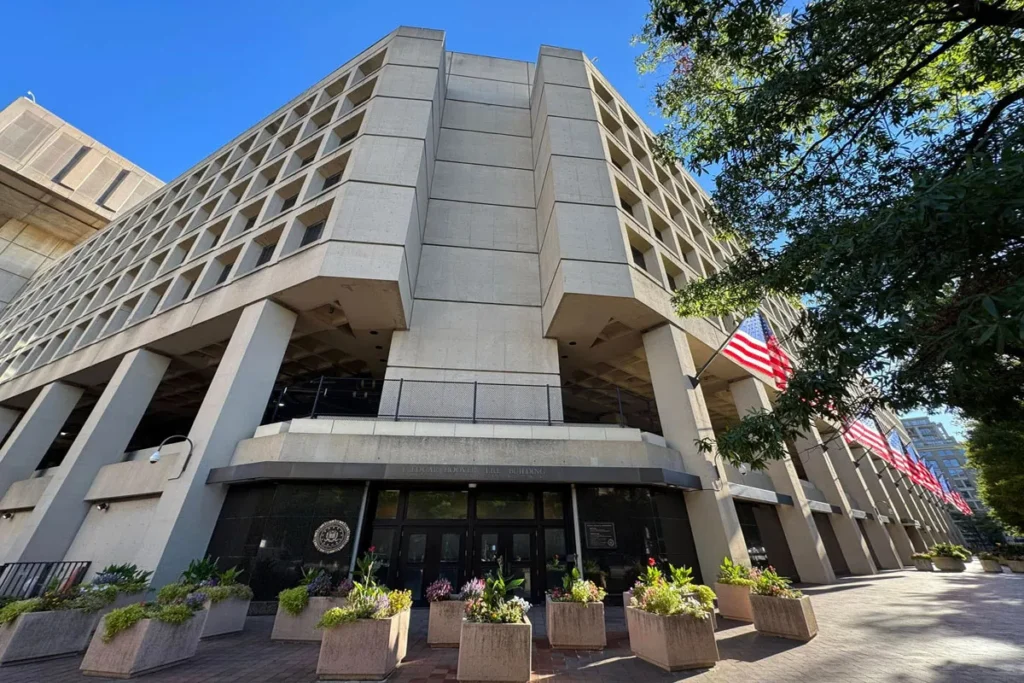
Nearby, at 935 Pennsylvania Avenue NW, stands the J. Edgar Hoover Building, the headquarters of the Federal Bureau of Investigation (FBI). Named after the FBI’s first director, who led the Bureau for nearly five decades, the building was completed in 1975 and is a striking example of Brutalist architecture, with its massive concrete structure and distinctive geometric design. It serves as the main administrative centre of the FBI, the federal agency responsible for investigating a wide range of crimes, including terrorism, espionage, cybercrime and major federal offences. Although the building is not generally open to the public for tours, its imposing exterior makes it a notable landmark along Pennsylvania Avenue and a reminder of the important role federal law enforcement agencies play in the United States.
The Old Post Office Tower (Waldorf Astoria)
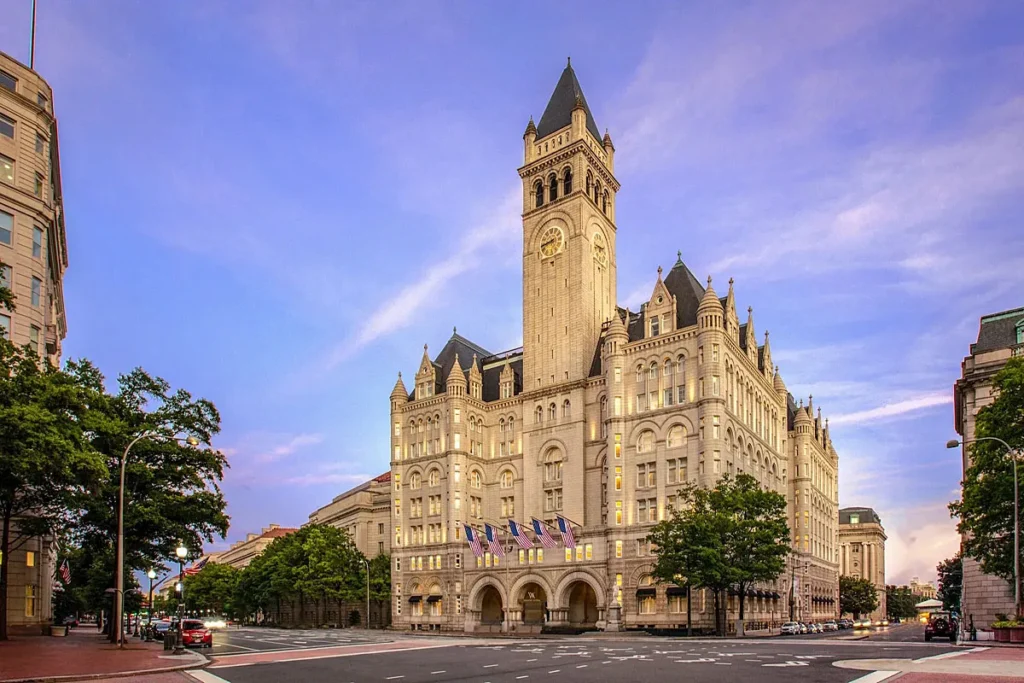
Further along Pennsylvania Avenue, at 1100 Pennsylvania Avenue NW, stands the Old Post Office, one of the avenue’s most remarkable historic landmarks. Built in the late nineteenth century, this impressive building is best known for its tall clock tower, which rises approximately 315 feet (96 metres) above the ground. Once one of Washington’s tallest buildings, it now forms part of the luxurious Waldorf Astoria Washington DC hotel. The historic tower is also home to an observation deck offering spectacular views of the Capitol, the White House, the Washington Monument and the surrounding city. It is certainly worth a stop during a walk along this historic avenue.
Freedom Plaza and Nearby Government Buildings
A little farther west, between 13th and 14th Streets NW, lies Freedom Plaza, one of Washington’s most recognisable public spaces. Its most distinctive feature is a large stone representation of Pierre L’Enfant’s original plan for Washington, D.C., showing the layout of the capital’s streets and avenues. The plaza also features inscriptions from important American historical documents, including the Declaration of Independence and the Constitution.
Originally known as Western Plaza, it was renamed in 1988 in honour of Martin Luther King Jr. The square is a popular gathering place for public events and demonstrations, continuing Pennsylvania Avenue’s long tradition as a stage for civic expression.
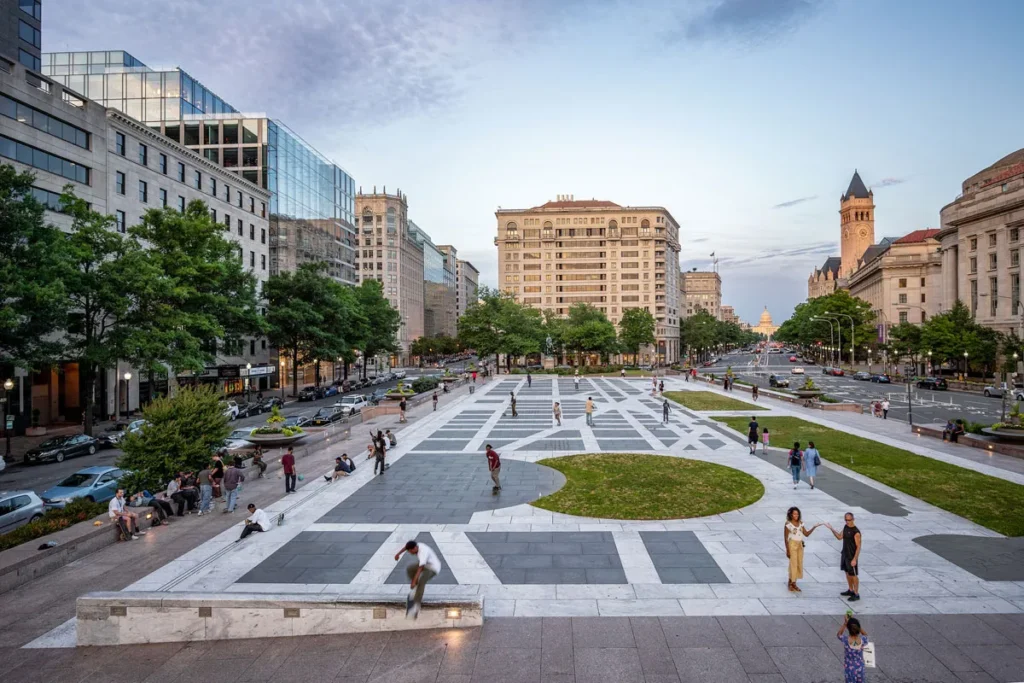
Just south of this area, along Constitution Avenue, you can also admire the Herbert C. Hoover Building, which houses the U.S. Department of Commerce. Another notable nearby landmark is the Andrew W. Mellon Auditorium, an elegant neoclassical building frequently used for official ceremonies, conferences and special events. Both are fine examples of the monumental architecture that gives Federal Triangle its distinctive character.
Willard InterContinental Hotel
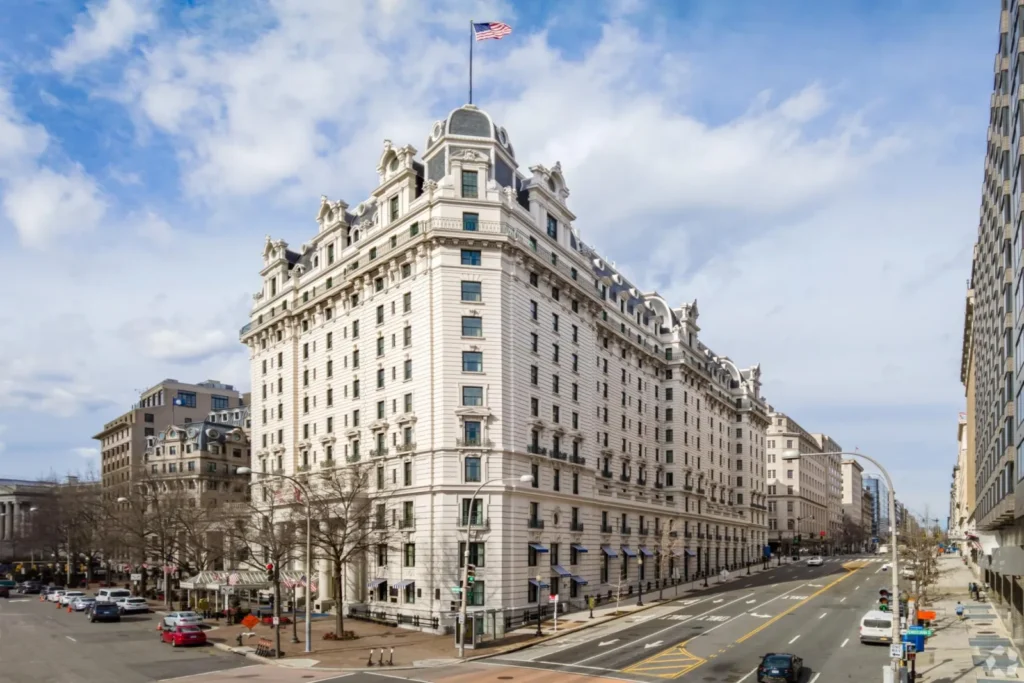
Located at 1401 Pennsylvania Avenue NW, just a short walk from the White House, the Willard InterContinental Hotel is one of Washington’s most famous historic hotels. Its history dates back to 1818, although the impressive Beaux-Arts building we see today was completed in 1904. Over the years, the hotel has welcomed numerous presidents, politicians and diplomats. Abraham Lincoln stayed here shortly before his inauguration in 1861, and Martin Luther King Jr. worked on his famous I Have a Dream speech at the hotel in 1963. The Willard is also associated with the popular story behind the origin of the word lobbyist, supposedly referring to people who approached President Ulysses S. Grant in the hotel lobby to seek political favours. Today, it remains a celebrated landmark combining historic elegance with modern luxury.
The Treasury Building and the Statue of Albert Gallatin
As you approach the western end of Pennsylvania Avenue, near the White House, you will see the impressive Treasury Building, located at 1500 Pennsylvania Avenue NW. Built between 1833 and 1869, it serves as the headquarters of the U.S. Department of the Treasury and is one of the oldest federal buildings in Washington, D.C.
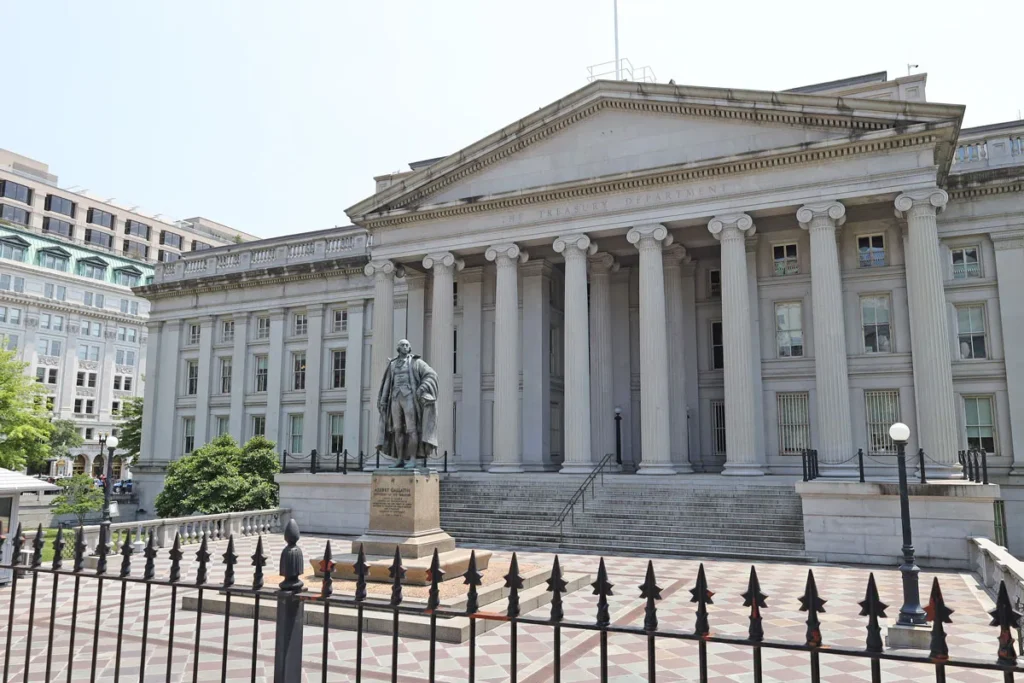
Designed in the Greek Revival style, the building is known for its monumental granite columns and elegant classical architecture. Its north wing faces Pennsylvania Avenue, making it an important part of the avenue’s historic streetscape. The Treasury Building offers visitors a glimpse into the history of the American government and its financial institutions.
In front of its north entrance stands the Statue of Albert Gallatin, a bronze monument created by sculptor James Earle Fraser. Gallatin served as U.S. Secretary of the Treasury from 1801 to 1814 and was the longest-serving person to hold the position. The statue, installed in 1947, honours his contribution to American public life and the country’s financial history.
The Pedestrian Plaza in Front of the White House
One of the most distinctive sections of Pennsylvania Avenue lies directly in front of the White House, between 15th and 17th Streets NW. Unlike the rest of the avenue, this stretch is closed to regular vehicle traffic and has been transformed into a pedestrian plaza. It runs alongside the White House grounds on one side and Lafayette Square on the other, offering visitors a particularly close view of the President’s residence.
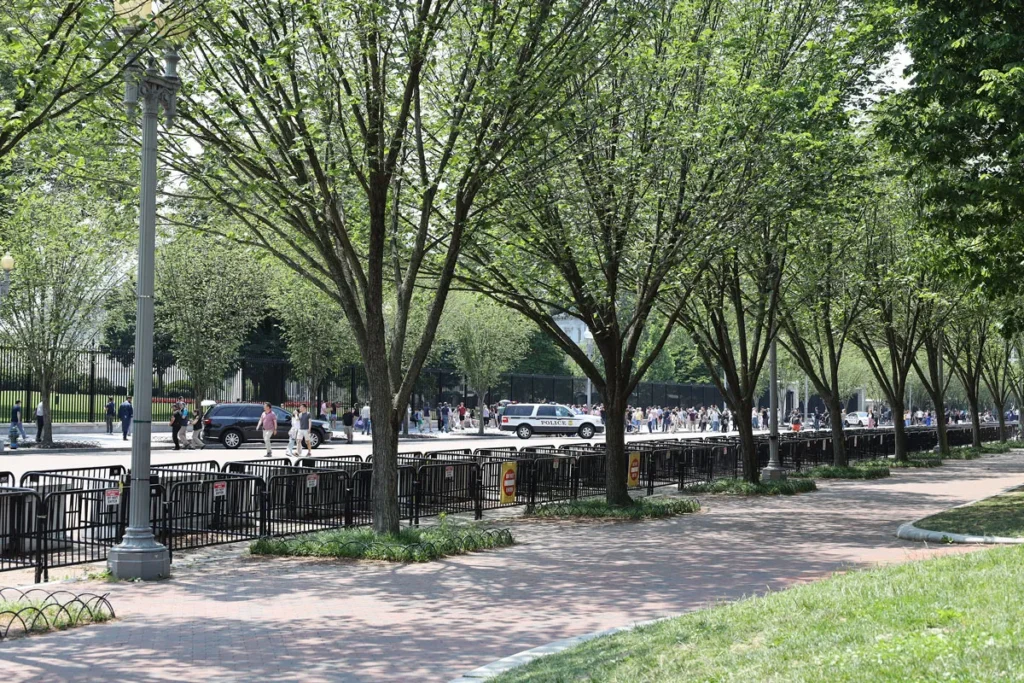
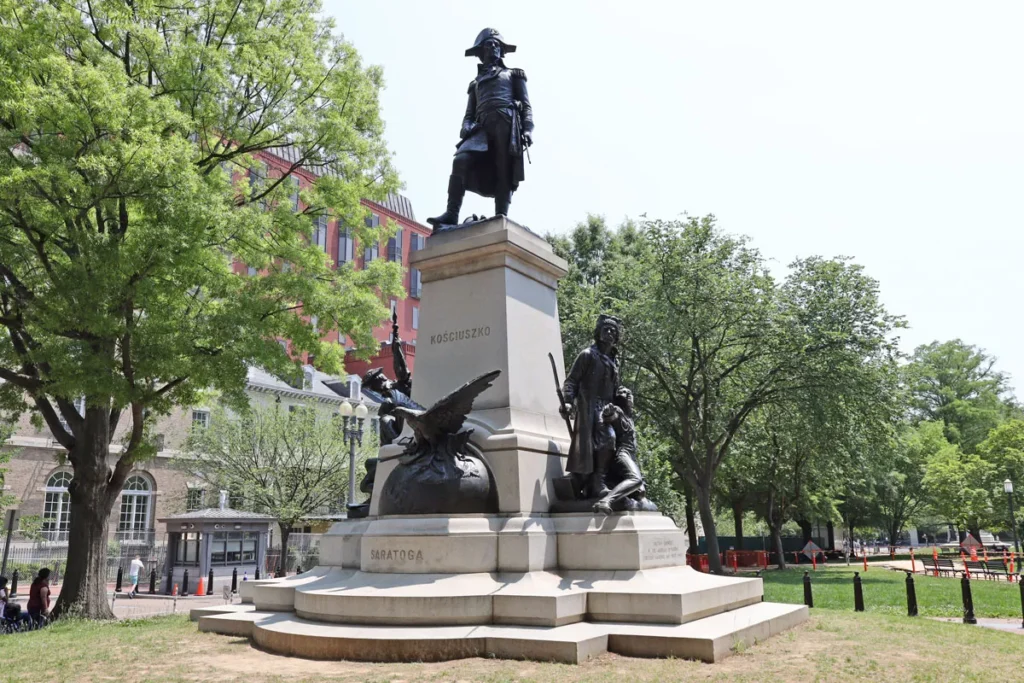
Lafayette Square is well worth exploring in its own right. The park features five monuments, including the impressive equestrian statue of Major General Andrew Jackson (1767-1845). At the four corners stand statues of European military leaders who supported the American cause during the Revolutionary War: the Marquis de Lafayette (1757-1834) and the Comte de Rochambeau (1725-1807), Baron Friedrich Wilhelm von Steuben (1730-1794), and General Tadeusz Kościuszko (1746-1817). The latter is particularly interesting for Polish visitors, as it commemorates a national hero who played an important role in both American and Polish struggles for independence.
A Must-See Destination in Washington, D.C.
Pennsylvania Avenue is much more than a road connecting two of America’s most important buildings. It is a place where the nation’s history, political traditions and architectural heritage come together. From presidential inaugurations and historic demonstrations to remarkable monuments and museums, every stretch of this famous avenue has a story to tell.
Exploring Pennsylvania Avenue on foot is one of the best ways to discover the character of Washington, D.C. Take your time, admire its impressive landmarks and discover the stories behind the places that have shaped American history. It is easy to see why this remarkable avenue has earned its nickname – America’s Main Street.