
STANAG 6001 Level 3 – Writing Task (Report): The Role of NGOs in Contemporary Societies
Examination Task
Write a minimum of 200 words on the topic below.
Nowadays there are many non-governmental organizations (NGOs) in societies which are trying to help citizens to deal with various social problems. Write a report in which you:
- present the reasons for establishing NGOs
- describe different forms of their activity and give examples
- assess the effectiveness of NGOs and predict their role in the societies in the future
Sample Answer
Report
Subject: The Role of NGOs in Contemporary Societies
Introduction
The aim of this report is to analyse the reasons for establishing non-governmental organizations (NGOs), describe their main forms of activity, assess their effectiveness and predict their future role in contemporary societies. In recent decades, NGOs have become important actors not only at the international level but also within local communities, where they address social problems that public institutions may not fully resolve.
Reasons for Establishing NGOs
NGOs are typically established in response to unmet social needs. In many regions, public authorities face financial, organisational or structural limitations that reduce their ability to respond effectively to issues such as poverty, social exclusion, environmental degradation or unequal access to education. As a result, citizens create NGOs to fill these gaps and represent specific social groups.
At the local level, NGOs often emerge from grassroots initiatives. Because they operate close to communities, they are able to identify problems rapidly and propose practical solutions. Furthermore, they strengthen civil society by encouraging civic engagement and shared responsibility for local development.
Forms of Activity and Examples
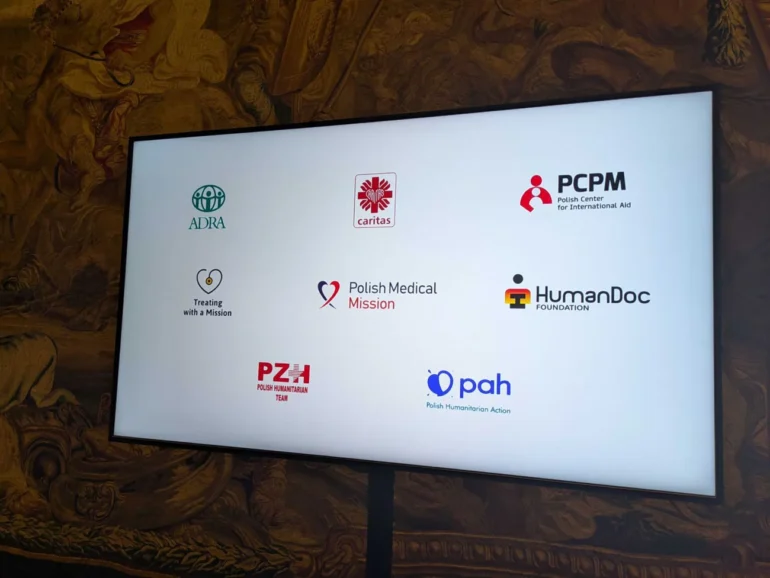
In Poland, several NGOs play a significant role in humanitarian and social assistance. For example, Polish Humanitarian Action delivers food, water and emergency aid to victims of conflicts and natural disasters, while also investing in sanitation infrastructure and humanitarian education. Caritas Polska provides extensive charitable support to low-income families, elderly people, refugees and individuals affected by crises, implementing nationwide food and relief programmes. Another well-known charitable organization, the Great Orchestra of Christmas Charity, organises annual fundraising campaigns to finance modern medical equipment for hospitals, thereby strengthening the national healthcare system.
At regional and municipal levels, smaller NGOs frequently implement public tasks in the fields of sport, culture, education, social welfare, public health and environmental protection. These examples illustrate the diversity of NGO activities and their contribution to both immediate assistance and long-term social development.
Effectiveness and Future Role
The effectiveness of NGOs depends largely on cooperation with public institutions, access to funding and the level of public trust. When supported by through grants and partnership agreements, NGOs can contribute significantly to the implementation of public tasks, including social welfare services and community development programmes. However, their impact may be limited by financial instability or administrative barriers.
In the future, NGOs are expected to play an increasingly important role in strengthening civic participation and supporting social cohesion. As societies face complex social and economic challenges, cooperation between public authorities and NGOs may become a key element of effective governance. Their continued development will depend on sustainable funding mechanisms, transparent management and constructive collaboration with public authorities.
Conclusion
NGOs represent a key component of modern civil society. By addressing social needs, supporting vulnerable groups and promoting civic engagement, they contribute to social cohesion and responsible governance. Their long-term importance is likely to grow, particularly where stable funding systems and institutional partnerships are maintained.