
STANAG 6001 Level 3 – Writing Task (Report): Rising Fuel Costs – Causes, Consequences and Possible Solutions
Examination Task
Write a minimum of 200 words on the topic below.
Many countries are experiencing a significant increase in fuel costs. Write a report in which you:
- explain the reasons for this trend;
- analyse its consequences for individuals and the economy;
- propose possible solutions to the problem.
Sample Answer
Subject: Rising Fuel Costs – Causes, Consequences and Possible Solutions
Introduction
The purpose of this report is to examine the issue of rising fuel costs observed in many countries. The report discusses the main reasons behind this trend, analyses its consequences for individuals and national economies, and suggests possible measures that could help address the problem.
Reasons for Rising Fuel Costs
Several factors contribute to increasing fuel prices. One of the most important reasons is the imbalance between global supply and demand. As economies grow and transportation needs increase, the demand for oil and fuel products rises. At the same time, disruptions in production or distribution may reduce supply and push prices upwards.
Geopolitical instability also plays a significant role. Armed conflicts, international sanctions and political tensions in major oil-producing regions can affect global energy markets and create uncertainty. For example, wars and military tensions in the Gulf region have repeatedly led to disruptions in oil and gas supplies. In particular, any blockade or restriction of shipping through the Strait of Hormuz, one of the world’s most critical maritime chokepoints, may significantly increase global fuel prices. Furthermore, fuel prices are influenced by fluctuations in exchange rates, as crude oil is generally traded in US dollars. Environmental regulations and carbon taxes introduced in some countries may also contribute to higher fuel costs.
Consequences of the Situation
Rising fuel costs have a wide range of economic and social consequences. For households, higher fuel prices increase transportation expenses and reduce disposable income. People who rely heavily on private vehicles are often affected most severely.
Businesses also face higher operating costs, particularly in sectors such as transportation, logistics and agriculture. These additional expenses are frequently passed on to consumers through higher prices for goods and services, contributing to inflation. As a result, the overall cost of living increases.
On a broader scale, persistent fuel price increases may slow economic growth. Consumers may reduce spending, while companies may postpone investments due to rising operational expenses and economic uncertainty. In addition, countries that depend heavily on imported energy resources may experience a deterioration in their trade balance and increased pressure on public finances.
Possible Solutions
A number of measures could help mitigate the impact of rising fuel costs. Governments may invest more heavily in public transportation systems, making them more affordable and efficient. Encouraging the development of renewable energy sources could also reduce dependence on fossil fuels in the long term. Energy diversification will also be important for maintaining affordable fuel prices.
In addition, financial incentives for electric vehicles and energy-efficient technologies may help decrease fuel consumption. Some governments may also choose to provide temporary tax reductions or targeted support for the most vulnerable groups during periods of exceptionally high fuel prices.
At the individual level, people can reduce fuel expenses by using public transport, car-sharing schemes or more fuel-efficient vehicles. Greater awareness of energy conservation may also contribute to lower overall demand.
Conclusion
Rising fuel costs result from a combination of economic, political and environmental factors. The consequences affect both individual citizens and national economies, often contributing to inflation and higher living costs. Although no single solution can eliminate the problem entirely, a combination of government policies, technological innovation and responsible consumer behaviour may help reduce its impact in the future.
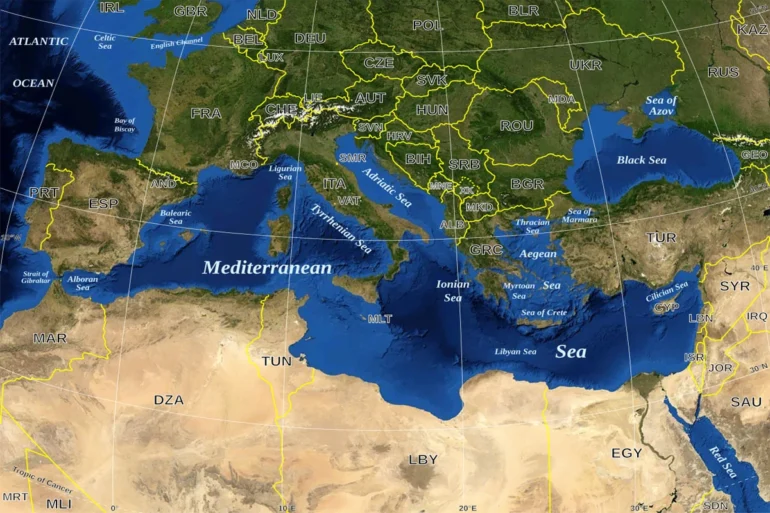
Photo: Political Map of Mediterranean Sea Region