
STANAG 6001 Level 3 – Writing Task (Report): Participation in the Combined Jungle Operations Training Course in Panama
Examination task
Write a minimum of 200 words on the topic below.
Several members of your unit recently participated in the Combined Jungle Operations Training Course conducted at Base Aeronaval Cristóbal Colón, Panama, together with members of the Panamanian security forces and personnel from the United States. Your commanding officer has asked you to write a report evaluating the participation.
In your report:
- describe the purpose and main components of the course,
- assess the benefits for your unit and multinational cooperation,
- make recommendations for future participation in similar training activities.
Sample Answer
Subject: Report on Participation in the Combined Jungle Operations Training Course in Panama
Introduction
The purpose of this report is to evaluate the participation of personnel from our unit in the Combined Jungle Operations Training Course conducted at Base Aeronaval Cristóbal Colón, Panama. The 18-day course brought together members of the Panamanian security forces, U.S. personnel, and representatives of allied partner nations. Its primary objective was to develop jungle warfare capabilities while strengthening multinational cooperation and interoperability.
Description of the Course
The training programme consisted of three phases. The first phase focused on jungle survival skills and was largely conducted by Panamanian instructors. Participants learned essential techniques such as machete handling, fire craft, water purification, food procurement, land navigation, and the construction of primitive shelters. The demanding environmental conditions required adaptability, endurance, and effective resource management.
The second phase concentrated on small-unit tactical operations. Participants practised movement techniques, ambushes, casualty evacuation procedures, and riverine operations. Training scenarios required multinational teams to communicate effectively and make decisions under pressure.
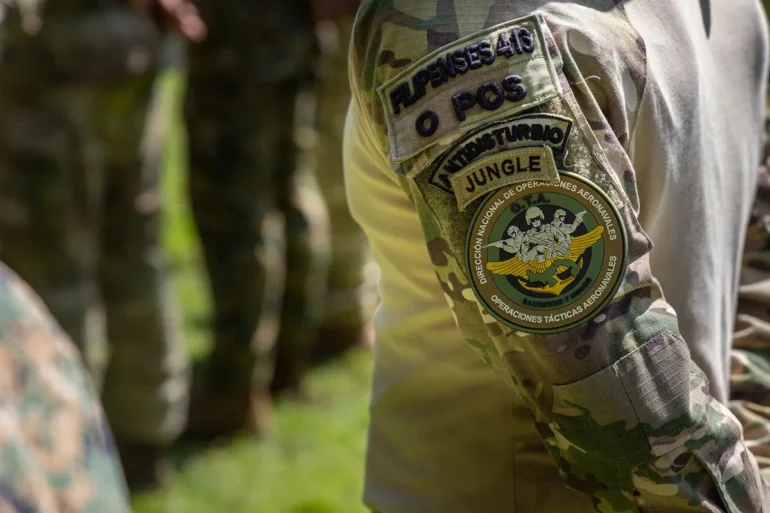
The final phase involved a series of combined missions, including reconnaissance patrols, attacks on simulated enemy positions, and security operations in dense jungle terrain. The course concluded with the challenging “Green Mile” endurance event, designed to assess physical fitness, leadership, teamwork, and resilience. Successful graduates received the Jungle Tab, recognising their proficiency in jungle operations.
Benefits for the Unit
Participation in the course provided significant operational and training benefits. Personnel improved their survival skills and gained valuable experience operating in a challenging tropical environment. Such capabilities may prove useful during expeditionary missions, disaster-relief operations, and multinational deployments.
The training also enhanced interoperability with partner nations. Working alongside Panamanian and U.S. personnel enabled participants to exchange knowledge, improve communication skills, and gain familiarity with different tactical procedures. These experiences contribute to stronger professional relationships and greater readiness for future coalition operations.
Recommendations
To maximise future benefits, it is recommended to increase the number of participants from our unit and introduce preparatory training focused on tropical environments and English-language tactical communication. Furthermore, lessons learned during the course should be incorporated into domestic training programmes and shared with other units.
Conclusion
In conclusion, the Combined Jungle Operations Training Course was a demanding and highly valuable training activity. It significantly enhanced operational capabilities, strengthened multinational cooperation, and improved the ability of participants to operate effectively in austere jungle environments. Continued participation in future editions of the course is strongly recommended.
Photo: Panamanian special operations patch and Jungle tab © 82nd Airborne Division, Fort Bragg