
STANAG 6001 Level 3 – Writing Task (Memo): Forward Surgical Team Performance During Field Exercise
Examination task
Write a minimum of 120 words on the topic below.
You were responsible for coordinating medical support during a field training exercise at the National Training Center. A Forward Surgical Team was deployed to provide immediate care to simulated casualties. During the exercise, the team experienced some problems, including communication difficulties, limited medical supplies, and delays in evacuation.
Write a memorandum to your Commanding Officer (CO), in which you:
- describe the situation and the main problems faced by the team,
- explain what actions were taken and assess how effective they were,
- suggest improvements for future exercises.
Sample Answer
Memo
Subject: Forward Surgical Team Performance During Field Exercise
- The aim of this memorandum is to report on the performance of the Forward Surgical Team during the recent field training exercise at the National Training Center. The team was responsible for providing immediate care to simulated casualties. During the exercise, several problems were observed. Communication with evacuation units was sometimes difficult due to technical issues, such as a poor signal range. In addition, there was a limited amount of medical supplies, which made it harder to treat several patients at the same time. There were also delays in evacuation, mainly because of unclear coordination between units.
- In response to these problems, the team used backup communication systems and improved cooperation with evacuation units by assigning contact personnel. Medical staff focused on the most serious cases and used available resources carefully. These actions helped to continue the mission; however, evacuation delays still affected the speed of treatment. Overall, the team performed well despite the difficulties.
- In order to improve future operations, it is recommended to check communication between units before the exercise. More joint training should be organised to improve coordination, especially in evacuation procedures. It would also be useful to prepare additional medical supplies in advance. These steps should help improve the effectiveness of medical support in similar situations.
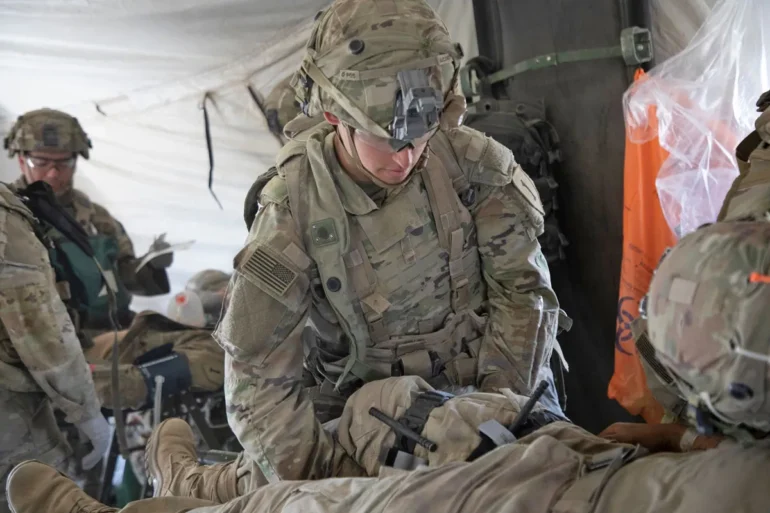
Photo: Medical treatment of a simulated casualty © Operations Group, National Training Center, Fort Irwin (U.S. Army photo by Spc Musheerah Hampton)