
STANAG 6001 Level 3 – Writing Task (Report): Participation in Operation Harpie in French Guiana
Examination task
Write a minimum of 200 words on the topic below.
Your unit has recently taken part in Operation Harpie, a long-term interagency operation conducted in French Guiana to combat illegal gold mining. Your commanding officer has asked you to write a report evaluating your unit’s participation in this operation.
In your report:
- describe the purpose and nature of the operation,
- assess the main benefits and challenges for your unit,
- make recommendations to improve the effectiveness of future operations.
Sample Answer
Subject: Report on Participation in Operation Harpie in French Guiana
Introduction
The purpose of this report is to assess the participation of our unit in Operation Harpie, conducted in French Guiana. This long-term operation aims to combat illegal gold mining while supporting environmental protection and stability in remote regions.
Description of the Operation
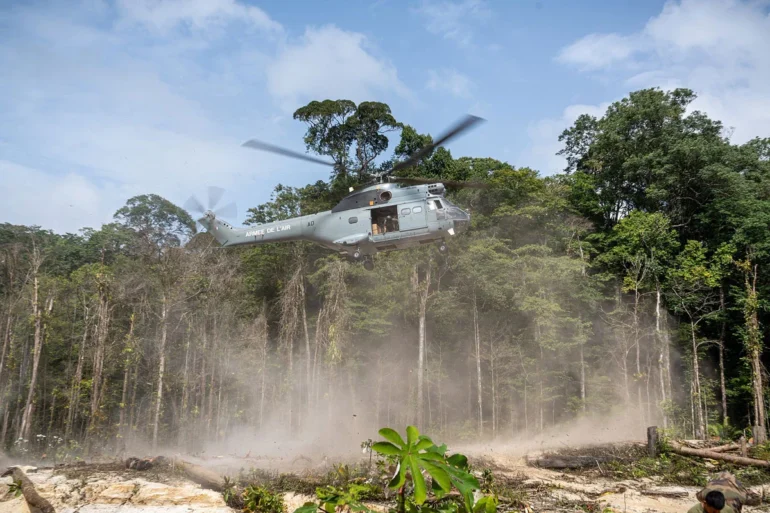
Operation Harpie is a joint mission involving the armed forces, law enforcement, and other government agencies. It is conducted in a dense equatorial rainforest, where illegal gold mining activities are carried out in difficult-to-access areas.
The main objective of the operation is to disrupt and reduce illegal mining activities by destroying equipment, seizing supplies, and targeting logistical networks. Patrols are carried out both along river routes and in the jungle, often with the support of helicopters and reconnaissance assets.
Due to the terrain and climate, mobility is limited and operations are time-consuming. The operational environment requires adaptability, endurance, and sustained situational awareness.
Benefits and Challenges
Participation in Operation Harpie provided significant training benefits for our unit. Personnel have significantly improved their ability to operate in a jungle environment, particularly in terms of navigation, patrolling, and survival skills. The mission also enhanced cooperation with other services, which contributed to better coordination and communication.
In addition, the operation strengthened leadership skills and the ability to operate under pressure. It offered valuable practical experience in real operational conditions.
However, several challenges were identified. The terrain and climate limit mobility and slow down operations. Illegal miners adapt quickly and often relocate their activities, which reduces the long-term effectiveness of individual actions. Moreover, logistical support remains difficult due to the remote nature of the area.
Recommendations
To improve operational effectiveness, it is recommended to increase the use of surveillance technologies, such as unmanned aerial systems. Improving intelligence-sharing between participating agencies would also support more effective targeting.
Furthermore, greater focus should be placed on disrupting supply routes rather than only targeting mining sites. Finally, additional pre-deployment training focused on jungle operations is recommended.
Conclusion
In conclusion, Operation Harpie is a demanding but valuable mission. It provides important training opportunities and contributes to regional stability and environmental protection. Continued participation is recommended, with adjustments to improve overall effectiveness.
Photo: Combating illegal gold mining in French Guiana © Armée de Terre (France)