
STANAG 6001 Level 3 – Speaking Task (Discussion): Voluntary Military Training: Who Is Most Useful?
Examination Task
Due to the conflict in Ukraine more and more people are interested in doing military training. Look at the list below. Discuss the reasons why different groups volunteer for such training and try to agree which one is the most and the least useful for the military. Be ready to justify your choice.
- University students
- Secondary school students
- Adult professionals
Sample Discussion
A: Due to the conflict in Ukraine, more and more people are becoming interested in military training. Let’s discuss university students, secondary school students, and adult professionals, and try to decide which group is the most and the least useful for the military.
B: Okay. In my opinion, adult professionals might be the most useful group. They usually have more life experience, are more disciplined, and may already possess valuable skills such as medical training, engineering knowledge, or IT expertise. In Poland, for example, there are voluntary military training programmes organised by the Ministry of Defence. Voluntary military training consists of two stages: basic training, which lasts about 27 days, and specialist training, which can last up to 11 months. As a result, volunteers can quickly become effective members of the armed forces. What do you think?
A: I agree that adult professionals are mature and bring valuable skills. However, I think university students are also very useful. They are usually young, physically fit, and quick to learn. Moreover, many of them study fields like technology, logistics, or medicine, which are highly relevant for the military. In addition, they may be more flexible and willing to commit to longer training programmes. For example, after completing basic training, they can continue their military education and even become professional soldiers.
B: That’s a good point. University students do have strong potential, especially in the long term. On the other hand, I would say that secondary school students are the least useful group. They are often underage or lack maturity and experience. Military training requires responsibility and discipline, which younger students may not yet fully possess.
A: I partly agree. Secondary school students may not be ready for full military training, but they can still benefit from basic programmes focused on safety and crisis response. For instance, there are nationwide, voluntary, and free defence training programmes called ‘wGotowości’, available to citizens from the age of 13. These programmes are held on weekends and teach young people basic safety, first aid, survival skills, and cyber hygiene. These skills are valuable, even if they are not directly related to combat readiness.
B: That’s true. Such programmes can help build awareness and prepare future recruits. However, from a strictly military perspective, their immediate usefulness is limited compared to adults or university students.
A: Yes, that’s true. Each group contributes in its own way, but if we consider direct military effectiveness, adults clearly lead, university students follow, and secondary school students play a more preparatory role.
B: I completely agree. This ranking makes sense, while still recognising that all groups benefit from training and can contribute to national security in different ways.
A: Exactly. That gives us a clear conclusion and shows the value of voluntary military training for everyone.
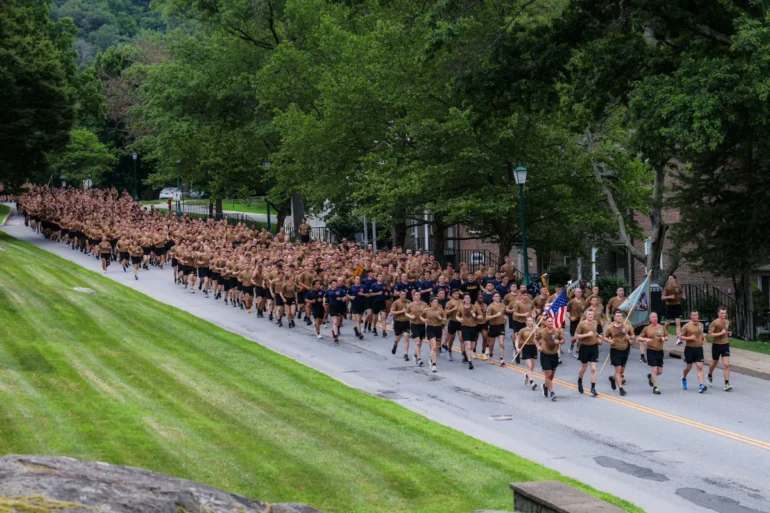
Photo: Cadet Formation Run © West Point – The U.S. Military Academy