
STANAG 6001 Level 3 – Speaking Task (Discussion): Security Challenges in Modern Military Operations
Examination Task
There are different security challenges in modern military operations. Discuss their impact and decide which is the most and the least serious. Be ready to justify your choice.
- Cyber attacks
- Terrorism
- Disinformation
Sample Discussion
A: There are different security challenges in modern military operations. Let’s discuss their impact and decide which is the most and the least serious. Am I right?
B: Yes, that’s correct. From my point of view, the most serious challenge is terrorism because it directly threatens the safety of soldiers and can disrupt military operations. For example, the 2000 terrorist attack on a U.S. Navy warship in Aden Harbour killed many sailors and severely damaged the destroyer, showing how terrorism can directly endanger military personnel and operational capability. Another example is the 2021 Kabul airport attack, which killed dozens of people, including U.S. service members, and revealed the ongoing threat of terrorism even during large-scale military evacuation operations. Therefore, I consider terrorism the most serious threat because it has immediate, visible effects on troops, disrupting missions and creating constant uncertainty. What do you think?
A: I completely agree that terrorism has an immediate and serious impact on military operations. Terrorists aim to cause the greatest possible material damage and loss of life, to spread fear and destabilization, often striking unexpectedly and using the element of surprise, which makes effective defence and response more difficult. However, cyber attacks are also dangerous because they can paralyse command and control systems, like military communication networks or logistics systems. They can also disrupt operations of public institutions, banks, or nuclear power plants. I would say cyber attacks are slightly less serious because they rarely cause direct casualties, and effective cyber defence can reduce their impact. Wouldn’t you agree?
B: Yes, that’s true. Cyber attacks can disrupt military operations, but they rarely cause immediate casualties among troops. In addition, hackers usually demand a high ransom to unlock access to systems, files, or sensitive data they have encrypted or blocked. They may also threaten to permanently delete the data or leak it publicly if the payment is not made. What about disinformation?
A: Disinformation is also an important challenge in modern military operations. For instance, during the Russian invasion of Ukraine, fake news, photos, and videos about troop numbers, military successes, and exaggerated losses have been spread online, which can confuse commanders and undermine morale of soldiers. The disinformation has also been spread and promoted by so-called Russian web brigades, using fake profiles on social media. The aim is to justify Russia’s war against Ukraine, and undermine those who oppose it. However, disinformation effects are slower, less direct, and easier to counter than terrorism or cyber attacks, so I would consider it the least serious of the three.
B: I see your point, and I agree. So, to sum up, terrorism is the most serious challenge in modern military operations because it directly threatens lives, while disinformation is the least serious due to its indirect and slower effects.
A: Exactly. I couldn’t agree more.
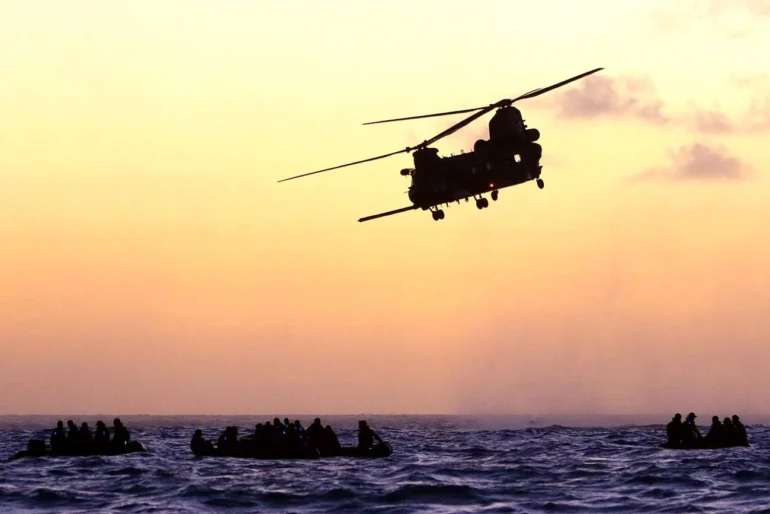
Photo: Military exercises © U.S. Army John F. Kennedy Special Warfare Center and School