
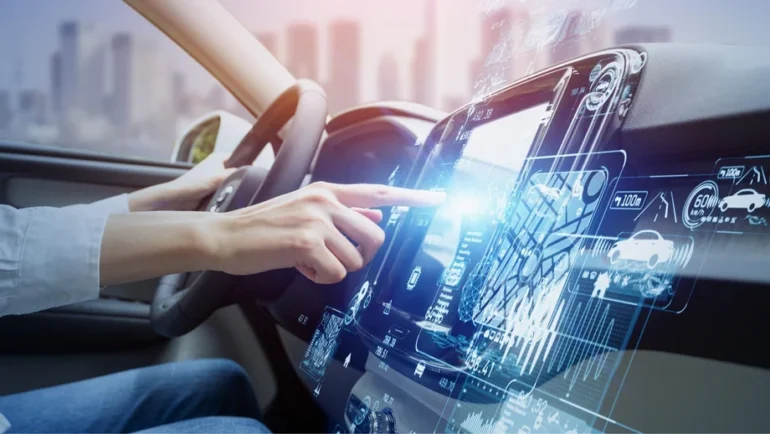
STANAG 6001 Level 3 – Speaking Task (Discussion): Road Safety Measures
Examination Task
The number of fatal car accidents is still high in our country. Look at the list below and decide which solution is the most and the least effective. Justify your choice.
- Harder driving tests
- Stricter punishment
- High-Tech devices in cars
Sample Discussion
A: There are several ways to reduce the number of fatal car accidents. Let’s discuss harder driving tests, stricter punishment, and high-tech devices in cars, and decide which solution is the most and the least effective. Do you agree?
B: Yes, I agree. On Polish roads, the situation is still serious. In 2025, there were around 21,000 road accidents, including 1,660 fatalities, which clearly shows that road safety remains a major issue. From my perspective, the most effective solution is high-tech devices in cars, because they directly reduce human error, which is the main cause of most accidents.
A: That’s a strong point. Can you explain how these systems actually help in real driving situations?
B: Sure. Modern vehicles use sensors, cameras, and artificial intelligence to support the driver. Automatic Emergency Braking can stop the car if a collision is about to happen, lane-keeping assistance prevents the vehicle from drifting out of its lane, and 360-degree monitoring reduces blind spots. These systems react faster than humans, especially in cases of distraction or fatigue. They are also expected to become standard in new vehicles by 2029, which should significantly reduce accidents and fatalities in the long term. Moreover, all new cars sold in the European Union are equipped with an Intelligent Speed Assistance system, which automatically alerts drivers when they exceed the speed limit.
A: I understand. These systems clearly help reduce human errors on the road. However, I would still argue that stricter punishment is the most effective solution at present, because it targets deliberate risky behaviour. In fact, the legal framework is already quite strict, especially after the reforms introduced in 2026. For example, drivers can lose their driving licence for three months if they exceed the speed limit by more than 50 km/h, and courts can confiscate vehicles in cases involving at least 1.5 per mille of alcohol in the blood. There are also severe penalties for reckless driving and illegal street racing. However, the key issue is not the level of punishment itself, but the certainty of enforcement and the deterrent effect in practice.
B: That’s a good point. If drivers do not believe they will be caught, or if police checks are rare, even strict laws lose part of their effectiveness. Technology, on the other hand, works continuously and does not depend on enforcement or police presence.
A: True, but strict punishment also has a wider social effect. When laws are consistently enforced, behaviours like drink-driving or street racing become socially unacceptable. This can gradually change driving culture, not just individual behaviour.
B: I agree, although we should also consider accessibility of High-Tech devices. Not all drivers can afford modern cars equipped with advanced safety systems, so their impact is still uneven across society.
A: I agree. Now, regarding harder driving tests, I think this is the least effective solution. While it may improve the skills of new drivers, it does not address experienced drivers who often develop bad habits over time, such as overconfidence or lack of attention.
B: I completely agree. Driving is not only about technical skills, but also about behaviour and decision-making. These aspects are difficult to evaluate in an exam. Even well-trained drivers can behave irresponsibly under stress or emotional pressure.
A: Right. I think that stricter exams would lead to a lower pass rate because they would require higher driving skills, better knowledge of road safety rules, and faster decision-making from candidates.
B: I share your point of view. Taking everything into account, I think we can agree that stricter punishment is currently the most effective solution, because it targets risky behaviour and applies to all drivers.
A: That’s true.
B: High-tech devices come second. They will become even more important in the future, but at the moment their availability is still limited. And harder driving tests remain the least effective, as they mainly influence new drivers and do not change long-term behaviour patterns.
A: Exactly. Overall, it seems that combining strict enforcement with technological development is the best way forward.
B: Yes, I fully agree. Only a comprehensive approach can significantly reduce the number of fatal road accidents.
Photo: High-Tech devices in car © Giesecke+Devrient GmbH