
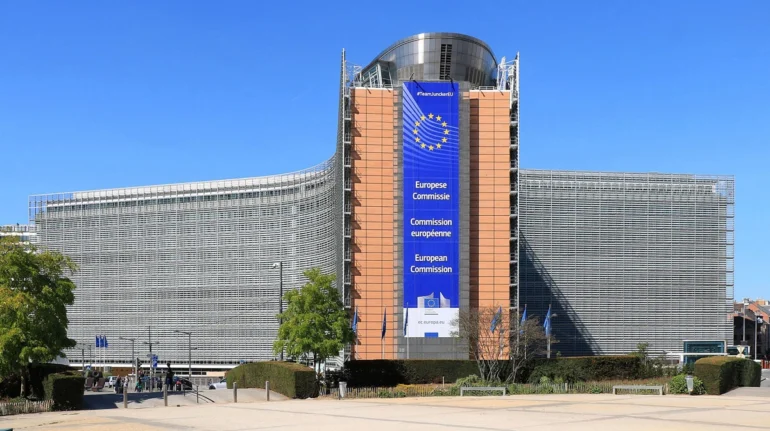
STANAG 6001 Level 3 – Speaking Task (Discussion): Challenges to EU Unity and Security
Examination Task
The EU faces a number of problems that influence security in the region. Look at list below. Discuss the factors and try to decide which of them is the most and the least influential.
- Increased number of terrorist attacks
- Russia’s aggressive policy
- Lack of solidarity among EU members
Sample Discussion
A: The EU is facing quite a complex set of security challenges, including terrorism, Russia’s aggressive policy, and internal divisions. Let’s analyse these factors and try to determine which is the most and the least influential. Maybe we can start with terrorism.
B: Sure. Terrorism continues to be one of the main threats to the security of EU member states, mainly because it directly targets civilians and creates fear and instability. This threat is usually shaped by developments beyond EU border such as the Middle East conflict, Russia’s war of aggression against Ukraine, or growing political instability in regions such as North Africa and the Sahel.
A: That’s true. Particularly in the years 2015 to 2017, Paris, Belgium and Barcelona experienced a series of serious terrorist attacks which can be attributed to developments in the conflict in Syria and Iraq, as well as to the rise of the so-called Islamic State. But Europe has since strengthened its security cooperation, improved intelligence sharing, and taken more coordinated measures to prevent and respond to such threats.
B: According to Europol, member states reported 58 terrorist attacks in 2024, with most incidents occurring in Italy, France, and Germany. About half of these were linked to jihadist terrorism, followed by left-wing and anarchist groups. Equally concerning is the constant evolution of tactics and technologies, as adversaries increasingly exploit modern tools such as the internet, social media, and emerging technologies like artificial intelligence for propaganda and recruitment. Member states remain particularly concerned about jihadist terrorism and the closely related phenomenon of foreign terrorist fighters travelling to and from conflict zones. Increasingly, attacks are carried out by lone actors, often very young and radicalised online, which makes prevention significantly more challenging.
A: Exactly, and they do not require sophisticated weapons – simple tools such as knives or vehicles can be sufficient. The radicalisation of domestic terrorists most often occurs through online self-radicalisation, which makes prevention significantly more challenging.
B: Yes, that’s true. Terrorism aims to create fear and instability within the population by targeting civilians and symbolic locations. However, despite its psychological and social impact, it does not have the capacity to undermine the EU as a political structure.
A: Exactly, and that brings us to Russia’s aggressive policy, which is clearly a different level of threat. Russia is waging an unconventional war in Europe, combined with the full-scale invasion of Ukraine in 2022. Through its campaign of sabotage operations, subversion and disinformation, Russia aims to divide society and destabilise European governments, undermine public support for Ukraine, and demonstrate NATO’s ineffectiveness. EU countries are affected by cyberattacks, espionage and covert operations, airspace and maritime violations, disinformation, arson, and acts of vandalism. We have seen cases of physical sabotage targeting Europe’s critical infrastructure, airports, railways, seaports, ammunition depots and arson attacks on market halls. A particular challenge is also a wave of drone incursions across many European countries which disrupt air traffic, violate airspace and military facilities, and are suspected of espionage and elements of hybrid warfare.
B: Yes, the EU has experienced a series of sabotage operations. There are also serious concerns about underwater infrastructure in the Baltic Sea, including telecommunications cables and pipelines. Russian vessels are regularly conducting reconnaissance activities around underwater infrastructure, which raises concerns about potential sabotage. Another threat to the countries of the Baltic Sea region, including Poland, is Russia’s so-called “shadow fleet”. It is a network of old tankers sailing under changing or false flags, used to bypass sanctions and transport sanctioned oil. Such vessels pose a significant risk to the natural environment. Russian activities also include GPS jamming affecting aviation and maritime navigation, as well as cyberattacks on critical infrastructure.
A: It is also worth noting that sabotage operations are carried out “below the threshold of open war,” which is intended to complicate NATO’s response. The overall aim is not direct military confrontation, but the internal destabilisation of European states. However, some NATO member states have assessed Russia’s unconventional war to be part of its long-term preparations for a potential military confrontation with NATO.
B: And this is closely linked to the war in Ukraine. If it ends with the disintegration of Ukraine, it could set a dangerous precedent that aggression is effective, which would seriously undermine the security of some EU states and non-NATO countries. Russia’s long history of westward expansion reinforces this concern.
A: So overall, we can agree that Russia’s aggressive policy is the most serious factor.
B: Definitely. No doubt about that.
A: Finally, the lack of solidarity among EU members is also an important issue. The most serious threats to the EU are a crisis of trust in the organisation itself and a low level of trust in its individual member states. It weakens the EU’s ability to respond effectively to crises, as member states often prioritise national interests over collective action.
B: The lack of solidarity among EU member states is particularly visible in crisis situations such as the migration crisis, the energy crisis, climate policy, and economic problems. During the migration crisis, several countries refused relocation mechanisms and opposed mandatory quotas. In energy policy, some states took different approaches to sanctions on Russian gas and oil, depending on their level of dependence. In climate policy, there are disputes over the pace of phasing out coal to minimise pollution.
A: It’s true. The lack of solidarity within the EU is also visible in the case of the Mercosur trade agreement, which was adopted despite opposition from some member states, including Poland and France. The dispute mainly concerns the impact of the agreement on the national agricultural sector and unequal production standards, which highlights the lack of a unified position within the EU.
B: We also see a lack of consensus in foreign policy. Some member states, such as Hungary, had repeatedly blocked or delayed sanctions packages against Russia or financial aid for Ukraine, which reduced the EU’s credibility and slowed down collective responses.
A: Yes, I heard about it. This shows that internal divisions can directly affect the EU’s ability to act as a unified global actor and weaken its strategic influence internationally. I would rank the lack of solidarity among EU members second in terms of severity.
B: I agree. It is a structural weakness, but not a direct external threat like Russia’s policy.
A: So, to sum up, Russia’s aggressive policy is the most serious factor, lack of solidarity comes second, and terrorism, while still important, is the least influential in the long-term strategic perspective.
B: Yes, I’m of the same opinion as you.
Photo: Headquarters of the European Commission, Brussels © EmDee