
STANAG 6001 Level 3 – Speaking Task (Discussion): Investing in Transport Infrastructure for Global Trade
Examination Task
The increase in international trade has led to the need for the development and modernisation of transport infrastructure. Look at the list below. Discuss which of the following should be invested in the most and the least. Be ready to justify your choice.
- Railways
- Harbours
- Airports
Sample Discussion
A: There are several types of transport infrastructure that require investment because of the increase in international trade. Let’s discuss their importance and decide which should receive the most and the least funding. Shall we start with railways?
B: Yes, that sounds like a good idea. I think railways are very important, especially for transporting goods over land. They are efficient, can carry large volumes, and are more environmentally friendly than road transport. For instance, West European countries have heavily invested in their rail networks, which helps speed up trade and reduce congestion on roads. These countries can serve as a model for Poland of railway expansion and modernization. Wouldn’t you agree?
A: Absolutely. I also think that modern railway stations and advanced rolling stock make travel more comfortable, which attracts investment and supports economic growth. Railways can connect both inland and coastal regions to trade hubs, which makes them even more valuable. That’s why I would consider railways a top priority.
B: I agree. Railways also provide flexibility for logistics. They can handle bulk goods like coal, steel, gravel or wood efficiently, and they support both domestic and international trade.
A: Exactly. Now, let’s talk about harbours.
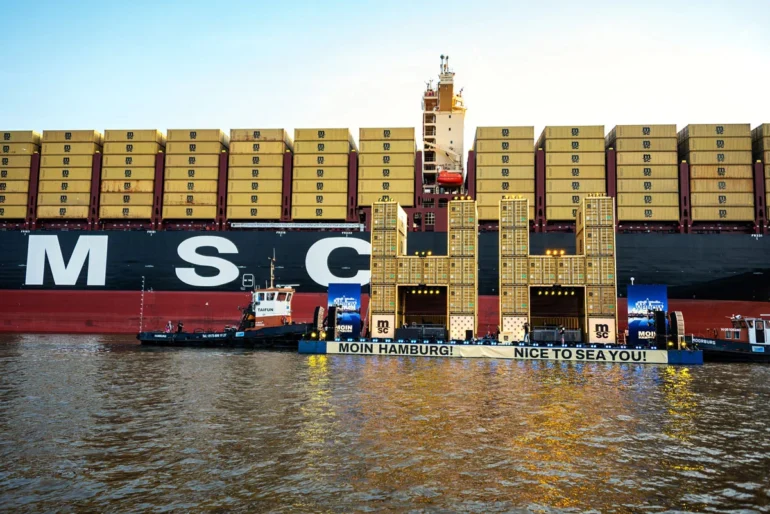
B: Harbours are vital for international trade by sea. Ports serve as logistics hubs and gateways for global commerce. The biggest European ports like Rotterdam and Hamburg handle huge volumes of cargo and attract global trade. They are also crucial for energy security, as they handle the reception and transshipment of oil, natural gas, and coal.
A: That’s an important point. In Poland, for example, the seaports of Gdańsk, Gdynia, Szczecin, and Świnoujście serve as key distribution and logistics hubs with international reach. A large share of imports and exports is handled through these ports, including energy resources, agricultural products, industrial goods, and containerized cargo.
B: Yes, and investing in modern port facilities, storage, and loading equipment can further improve trade efficiency and reduce delays. So, ports should definitely receive substantial investment.
A: I agree. I would rank ports as a medium priority: crucial for international trade and energy security, but with geographically limited impact compared to railways.
B: That makes sense. Now, let’s consider airports.
A: Airports are important for fast transport of high-value or urgent goods and for passenger mobility. Air freight is used for items like electronics, specialized machinery, or urgent shipments. However, it is much more expensive than rail or sea transport.
B: Yes, and even though airports handle smaller volumes, strategic investments can still improve efficiency. For example, combining airports with high-speed rail connections can enhance logistics chains and passenger mobility. A good example of this is the planned Central Communication Port in Poland, which will integrate a new airport with high-speed rail lines. This project is intended to provide fast, direct connections to the airport from different regions, improving both cargo and passenger transport.
A: That’s true. Rapid growth in air traffic in many regions shows that investment is necessary to avoid congestion and economic losses. Airports can support regional development and connect countries efficiently, even if their cargo volume is smaller compared to trains or ships.
B: Exactly. But overall, airports should receive a lower priority for investment than railways and ports, not because they are unimportant, but because their role is more specialized. They mainly handle high-value or urgent goods and passenger traffic, rather than the bulk of trade, which is better served by rail and sea transport.
A: So, to summarize, I would say railways should be invested in the most, because they are cost-effective, high-capacity, and connect regions efficiently. Harbours come second due to their importance for international trade and energy security, and airports receive the least investment.
B: I completely agree. Railways first, harbours second, and airports last. This ranking balances cost, capacity, and overall impact on international trade.
Photo: Container unloading in the Port of Hamburg © Hafen Hamburg