
STANAG 6001 Level 3 – Speaking Task: Briefing on Addressing the Shortage of Military Pilots
Examination Task
There is a growing number of pilots leaving the military to work for commercial airlines. Give a briefing on two possible solutions to the problem, describing their advantages and disadvantages. Recommend one and justify your choice.
- recruit and train more candidates
- focus on retention of personnel
- other
Sample Briefing
Good morning, ladies and gentlemen.
First of all, thank you for attending this briefing.
My name is Captain Anderson, and I am responsible for personnel planning in our air unit. As you are aware, an increasing number of experienced military pilots have recently decided to leave the service and join commercial airlines. This trend has created a serious challenge for our operational readiness and long-term personnel planning.
For this reason, I have been tasked with presenting two possible solutions to this problem. In the first part of my briefing, I will discuss the option of recruiting and training more pilot candidates. In the second part, I will present the possibility of focusing on retaining the pilots who are already serving in the military. Finally, I will recommend the option which I believe is the most effective.
Let me begin with the first option, which is recruiting and training more candidates for pilot positions.
This solution has several advantages.
Firstly, increasing the number of candidates entering pilot training would allow the air force to gradually replace those pilots who leave the service. By expanding recruitment, we could create a larger pool of trained personnel and ensure that our units remain properly staffed in the future.
Secondly, new candidates would bring fresh motivation and new skills to the service. Many young people are interested in aviation and military technology, and an expanded training program could attract talented individuals who are eager to build a long-term career in the armed forces.
However, this option also has some disadvantages.
To begin with, pilot training is a long and expensive process. It may take several years before a new recruit becomes a fully qualified military pilot capable of performing operational missions.
Another drawback is the need for additional training resources, such as instructors, aircraft, and training facilities. Expanding recruitment could therefore require significant investment.
I will now move on to the second option, which is focusing on the retention of experienced pilots who are already serving in the military.
This solution also offers several advantages.
Firstly, retaining experienced pilots would allow the air force to maintain a high level of operational capability. These pilots already have valuable flight experience and knowledge of military procedures.
Secondly, improving retention could reduce the need for large-scale recruitment and training programs, which are costly and time-consuming. Measures such as better career opportunities, improved working conditions, or financial incentives might encourage pilots to remain in service longer.
On the other hand, there are also some disadvantages.
One potential challenge is that commercial airlines often offer significantly higher salaries and more predictable working schedules. As a result, it may be difficult for the military to compete with the private sector.
Another drawback is that retention programs may require substantial financial resources, and even then, they may not fully prevent pilots from leaving the service.
To sum up, both options could help address the shortage of military pilots. However, I would recommend recruiting and training more candidates.
Although this solution requires considerable time and investment, it ensures a stable and sustainable supply of pilots for the future. By increasing recruitment and expanding training programs, the air force can gradually build a larger and more resilient pilot workforce capable of meeting long-term operational needs.
This brings me to the end of my briefing.
If you have any questions, I will be happy to answer them.
Thank you for your attention.
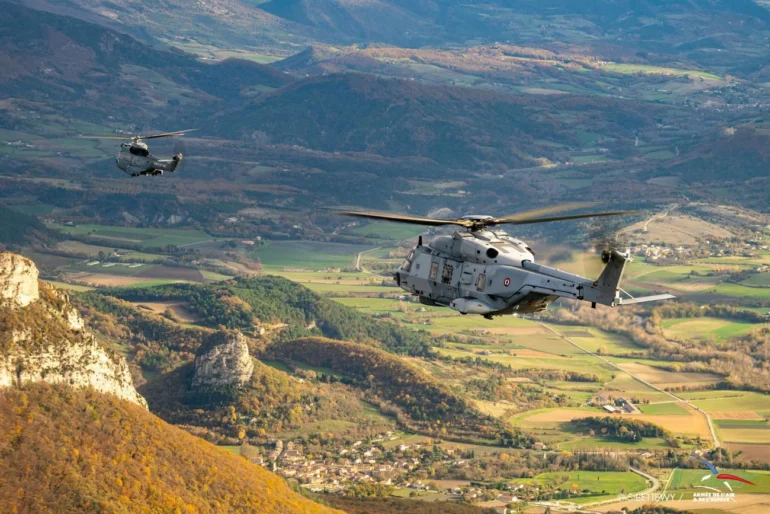
Photo: Rotary Wing Mission Commander Course, Orange-Caritat Air Base, 14 November 2025 © L’armée de l’air et de l’espace (France)