
STANAG 6001 Level 3 – Writing Task (Report): Urban Traffic Congestion in Poland – Current Challenges and Future Prospects
Examination Task
Write a minimum of 200 words on the topic below.
Nowadays there are more and more cars; so big cities have to deal with heavy traffic and a growing number of accidents. Write a report about the situation in Poland, in which you:
- describe problems and dangers caused by heavy traffic in big cities,
- suggest solutions to these problems,
- speculate what the situation will be like in the future.
Sample Answer
Report
Subject: Urban Traffic Congestion in Poland – Current Challenges and Future Prospects
Introduction
This report examines the growing problem of traffic congestion in major urban centres in Poland. The rapid increase in private car ownership has significantly affected transport systems, urban safety, and environmental conditions. The report outlines the key risks associated with heavy traffic, proposes potential solutions, and evaluates possible future developments.
Current Situation
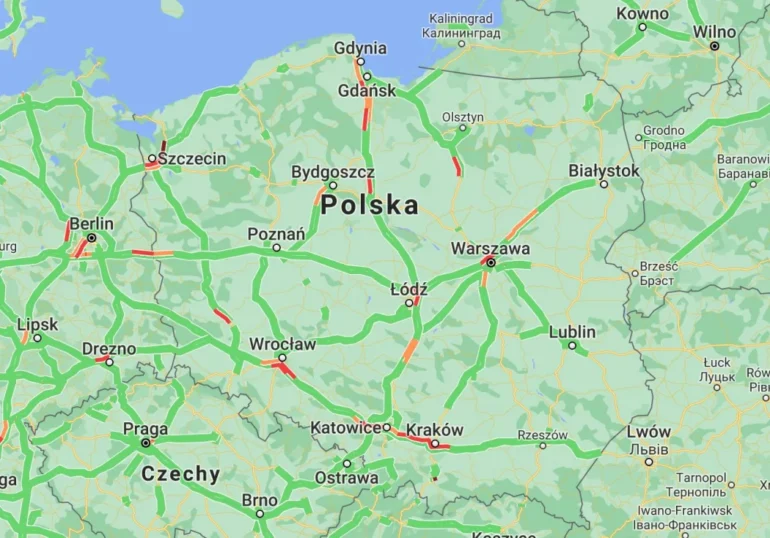
Large metropolitan areas such as Warsaw, Kraków, Łódź and Wrocław are experiencing persistent congestion, particularly during peak commuting hours. Urban infrastructure has not expanded proportionally to the growing number of vehicles, resulting in chronic bottlenecks and extended travel times. In Kraków, Łódź and Wrocław there is no metro system, which limits public transport capacity in these cities. This situation negatively affects economic efficiency, increases fuel consumption, and contributes to driver frustration.
Moreover, heavy traffic significantly elevates the risk of road accidents, especially in densely populated districts and at major intersections. In addition, high concentrations of vehicle emissions increase air pollution, leading to long-term public health concerns, especially respiratory problems. Heavy traffic also results in higher levels of environmental noise.
Proposed Solutions
Addressing these issues requires a comprehensive and integrated transport policy. Priority should be given to the expansion and modernisation of public transport networks, including metro systems, tram lines, and suburban rail connections. Funding from the EU could provide an opportunity to finance these initiatives.
Improving affordability of services would make public transport a more attractive alternative to private vehicles. The introduction of intelligent traffic management systems could optimise traffic flow and enhance road safety.
In addition, local authorities could implement low-emission zones and stricter parking regulations in city centres. Moreover, investment in cycling infrastructure and pedestrian-oriented urban design would promote sustainable mobility patterns.
Future Outlook
Traffic conditions are likely to remain challenging in the coming years due to the continued development of urban areas and increasing number of cars. Without significant investment in public transport and sustainable mobility solutions, congestion levels and accident rates may rise further, placing additional pressure on urban infrastructure and public services.
However, the development of modern transport technologies and environmentally friendly mobility initiatives could improve the situation. Expansion of electric vehicle infrastructure, smart traffic management systems, and public transport networks may reduce congestion and environmental impacts. If such measures are implemented consistently, urban mobility could become more efficient and sustainable in the long term.
In the absence of coordinated action and financial investment, cities may continue to experience traffic-related difficulties. Addressing these challenges through strategic planning and public investment will be essential to ensure safer and more efficient transport systems in the future.
Conclusion
Traffic congestion in major Polish cities constitutes a complex economic, environmental, and safety challenge. Investment in sustainable transport solutions, and behavioural change among residents will be essential to ensure safer, cleaner, and more efficient urban mobility in the decades ahead.
Photo: Congestion on major routes in Poland