
By August 1, 2025, teachers in general education schools in Estonia, must be proficient in Estonian at least at level B2 if they teach their subject in another language (such as Russian) and at least at level C1 if they teach Estonian or a subject in Estonian.
This requirement is part of the national transition plan to Estonian-language education, developed by the Ministry of Education and Research and adopted by the Estonian government in 2022. Teachers who instruct in a language other than Estonian were given time until August 1, 2025, to meet the B2 language requirement.
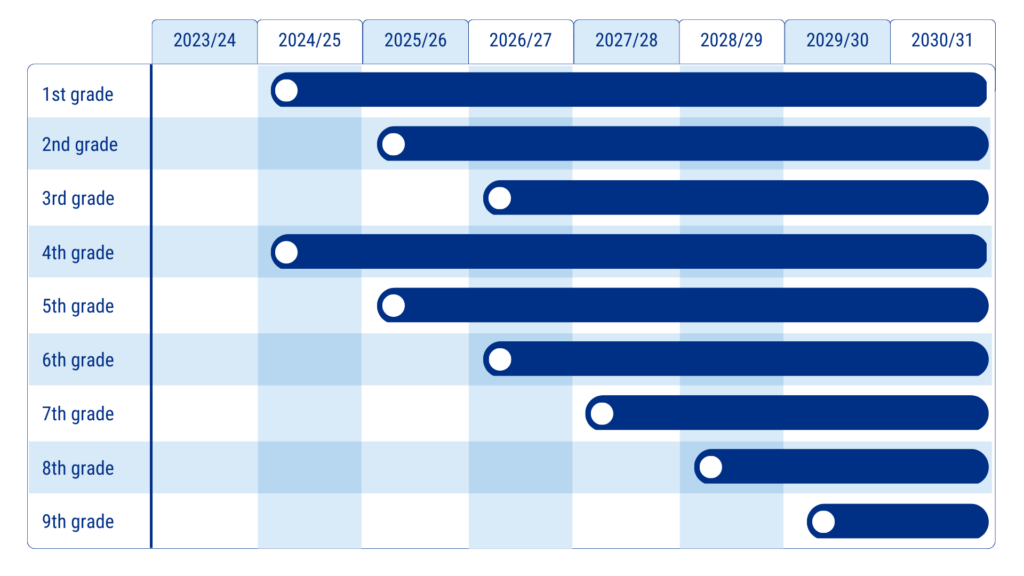
The transition to Estonian-language education began in 2024, starting with preschools as well as the first and fourth grades in general education schools. The reform is part of Estonia’s broader goal to strengthen the use of the Estonian language in education, especially in regions with a large Russian-speaking population. The full implementation is expected to be completed by 2030, by which time all public education institutions will be required to provide instruction primarily in Estonian.
Its main objective is to ensure that all children in Estonia receive high-quality instruction in Estonian, regardless of their native language. This initiative aims to strengthen national identity, promote social integration, and reduce educational and socio-economic disparities. It also also improves access to further education, increases chances of success in the labour market, and supports full integration into the country’s cultural and informational life.
Teachers who previously taught their subjects in Russian are now required to demonstrate proficiency in Estonian. However, only 28% of teachers recently taking the B2-level Estonian language exam managed to pass, raising concerns just weeks before the deadline. The passing rate, significantly lower than the usual average of around 40%, came as a surprise to officials. For example, in 2024, the pass rate was 38%. Location also played a role: while nearly half of the test-takers in Tartu passed, only 24% succeeded in Tallinn.
Ingar Dubolazov, who oversees the transition to Estonian-language education at the Ministry of Education, suggested the results were expected. He noted that many teachers who didn’t take the test likely anticipated they would lose their jobs after August 1. The ministry, however, does not consider the staffing impact to be severe, and sees the situation as more manageable than during the initial stages of the transition, especially when kindergartens were first included.
Most Russians and Russian speakers in Estonia are descendants of Soviet-era migrants who settled between 1945 and 1991. As of 2024, ethnic Russians constitute 21.6% of the population, while Russian speakers – including Ukrainians and Belarusians – comprise 28% and consider Russian their mother tongue. Furthermore, Russian remains the second most spoken language in Estonia, with approximately 31.6% of the population using it. After Russia’s invasion of Ukraine in 2022, the Estonian government accelerated efforts to phase out Russian-language education.
Achieving the transition will require ensuring the availability of teachers with the necessary language skills in Estonian. Some Tallinn schools are temporarily reassigning teachers who failed the C1 exam to roles that don’t yet require full Estonian proficiency. Deputy Mayor Aleksei Jašin explained that in grades 6–9, schools may allow B2-level teachers to continue for a limited time, depending on need.
Tallinn plans to hire 200 new teachers for both schools and kindergartens by September, half the number added last year. However, more challenges lie ahead in 2026, when B2-level Estonian skills will also become mandatory for kindergarten assistant teachers. Currently, around 300 of the city’s 1,700 assistants do not meet that standard.
Source: EER News, 15/07/2025