
STANAG 6001 Level 3 – Writing Task (Report): The Influence of Tourism on Countries and Their Citizens
Examination Task
Write a minimum of 200 words on the topic below.
Tourism is one of the fastest developing industries. You have been asked to write a report about its influence on countries and their citizens. Include the following points:
- describe the changes in tourism that have taken place recently
- assess its positive and negative impact on countries and their citizens
- suggest what should be done to minimize the negative impact of tourism
Sample Answer
Report
Subject: The Influence of Tourism on Countries and Their Citizens
Introduction
The aim of this report is to examine recent changes in the tourism industry, assess its positive and negative impact on countries and their citizens, and suggest measures to reduce its adverse effects. Tourism has become one of the fastest developing sectors of the global economy, significantly influencing both developed and developing countries.
Recent Changes in Tourism
In recent years, tourism has undergone significant changes. The COVID-19 pandemic caused an unprecedented global collapse in international travel due to restrictions, lockdowns and health concerns. Many tourism businesses experienced financial difficulties, and tourist flows shifted towards domestic and short-distance travel. After the pandemic, the industry has gradually recovered, supported by improved health measures and renewed demand for travel. Digital booking systems and online platforms continue to shape modern tourism, while digital tourism and remote work tourism have become growing trends, allowing people to combine travel with professional activities. Environmental tourism and eco-tourism are also developing as alternatives to mass tourism, promoting sustainable interaction with natural and cultural heritage. Short-term rentals and mass tourism remain important trends, leading to higher visitor concentrations in popular areas during peak seasons.
Recent data show that France remains the world’s most visited destination, receiving 102 million international tourists in 2025, followed by Spain, the United States, Italy and Turkey. These trends have increased both economic opportunities and environmental pressures in popular destinations.
Positive and Negative Impact
Tourism generates substantial economic benefits. It creates employment opportunities, supports local businesses and contributes to national income through taxes and foreign exchange earnings. In addition, tourism may promote cultural exchange and improve infrastructure, such as transport and public services.
However, tourism also has negative sides. Overcrowding can lead to environmental degradation, increased waste production, noise and pressure on natural resources. In some cities, like Barcelona or Malaga, rising property prices and the expansion of short-term rentals have reduced housing availability for local residents. Seasonal employment and dependence on tourism revenues may also create economic instability. In addition, overtourism can damage cultural heritage sites and local traditions, as seen in cities such as Venice and Dubrovnik, where visitor numbers have placed significant pressure on infrastructure and historical monuments.
Measures to Minimise Negative Impact
To reduce the adverse effects of tourism, governments should promote sustainable tourism policies. These may include limiting visitor numbers in environmentally sensitive areas, investing in environmental protection and regulating short-term rentals. Developing sustainable tourism certifications and encouraging eco-friendly infrastructure can further reduce environmental pressures. Tourism taxes or visitor fees may also provide funding for conservation and maintenance of public services. Encouraging off-season travel and involving local tour operators in tourism planning may also help reduce negative effects.
Conclusion
In conclusion, tourism has both significant advantages and notable drawbacks. While it contributes to economic growth and development, its negative environmental and social impacts require careful management. Sustainable and well-regulated tourism policies are essential to ensure long-term benefits for countries and their citizens.
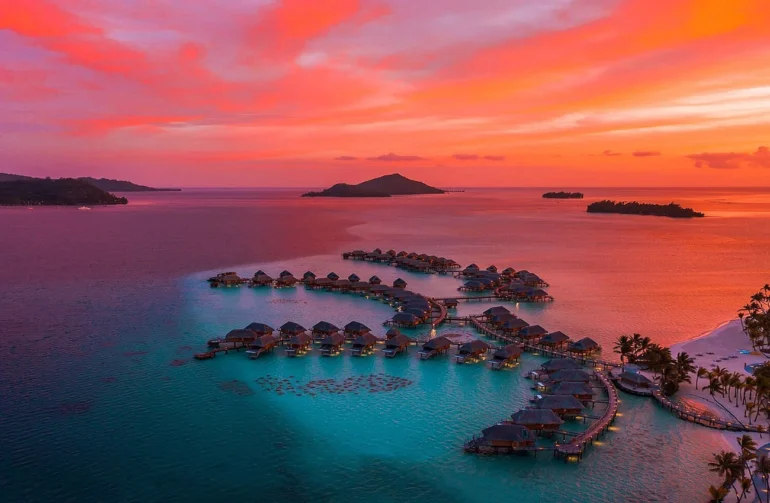
Photo: Sunset panoramic view of Le Bora Bora Resort © Le Bora Bora by Pearl Resorts, Vaitape, French Polynesia