
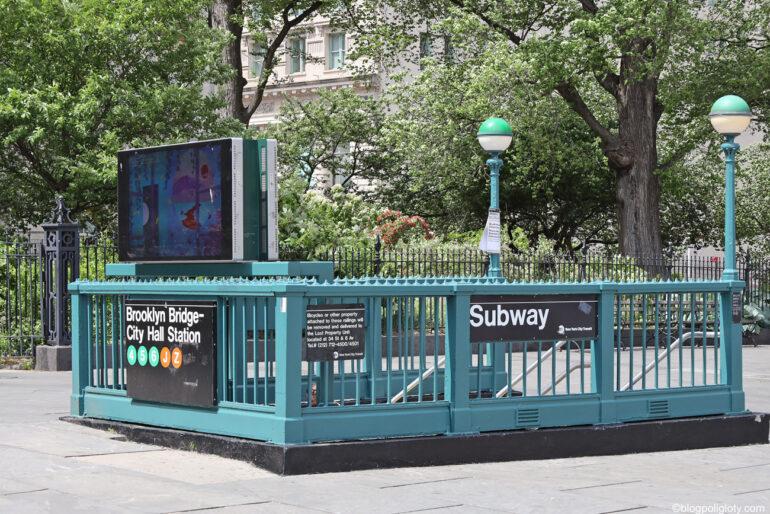
One of the most common sources of confusion is deciding whether to use ‘on’ or ‘in’ when referring to modes of transport. These prepositions are used in different contexts based on the type of vehicle and the way we perceive our relationship to it. In this post, we will explore the correct usage of ‘on’ and ‘in’ when talking about transport, providing examples to help clarify the rules and improve your fluency in everyday conversations.
The General Rule: ‘On’ for Public Transport, ‘In’ for Private Vehicles
The first thing to remember is that ‘on’ is typically used when referring to modes of public transport, and ‘in’ is used for private vehicles or when you are inside an enclosed space. Let’s break it down:
On Public Transport
When you are using public transport such as buses, trains, trams, subways, or planes, you usually say you are ‘on’ these vehicles because the focus is on the surface or the system of transportation itself. You are part of a larger group of people traveling together on the same mode of transport, so the preposition ‘on’ emphasizes that shared experience. Examples:
- Do you prefer to read on the train or just listen to music?
- I was on the bus when I got the call.
- Patricia is currently on a flight to New York.
- Residents are advised to implement recommended safety measures, which include wearing masks on public transport.
- She met some interesting people on a train this morning.
- She travels on the subway / on the underground every day.
- We should meet on the tram at 3 PM.
Notice that in all these cases, you are referring to a mode of transport where you are not inside an enclosed space by yourself. You are ‘on’ the bus, subway or train, interacting with the public space.
In Private Transport
On the other hand, when you are inside a private vehicle – such as a car, a taxi, a minivan, or a small private plane – you say you are ‘in’ the vehicle because you are enclosed within it. The focus is on the individual, personal space you are occupying rather than the system of transport. Examples:
- He is currently in a taxi on his way to the airport.
- I was in the car when I got the message.
- We went to the beach in his convertible.
- We will be in the car for about two hours.
The key difference here is that ‘in’ emphasizes the idea of being within a confined space, such as a car’s interior, rather than being on top of or part of a public transport system.
The preposition ‘in’ is also typically used with smaller, enclosed, or semi-enclosed vehicles like rickshaws, canoes, kayaks, rowboats, and paddle boats. This is because these vehicles are often considered to be spaces or vessels that you enter rather than just ride on. For example:
- He spent the afternoon fishing in a rowboat.
- I’m in the canoe.
- She paddled in the kayak for hours.
- We went in a rickshaw to the market.
Special Cases and Exceptions
While the rules are relatively clear-cut, there are a few exceptions and special cases to keep in mind.
On the Bicycle, On a Motorcycle, On Foot, or On Horse:
With modes of transport that you physically ride or control yourself – like bicycles, motorcycles, or even walking – you still use ‘on’. This is because the emphasis is on being on the vehicle or surface, similar to how we think of ‘on’ for public transport. Examples:
- I went to church on foot.
- He rode on a horse through the fields.
- He was on his motorcycle when he saw the accident.
- She was on her bike when it started to rain.
- We were on foot for most of the day exploring the city.
In Larger Vehicles
For larger modes of transport, such as ships or even large trains, you may use ‘on’ as well, particularly when referring to the entire vehicle or transport system (e.g. on a boat, on a ferry, on a cruise, on a yacht). However, if you are talking about being inside a specific compartment or cabin (for example, in a train), you might use ‘in’. Examples:
- I was in the first-class carriage on the train.
- We spent the whole day on a boat, enjoying the sun and the sea breeze.
- We spent two weeks on a cruise around the Caribbean.
- We were on a ferry for over two hours before reaching the mainland.
- We were on a yacht when the storm started.
On an airplane
We say ‘on an airplane’ rather than ‘in an airplane’ – even though an airplane is enclosed, like a car or a bus. The reason for this is that the preposition ‘on’ is used when we think of the airplane more as a mode of transportation rather than as a ‘space’ that you are inside of. It’s the same reason we say ‘on a train’ or ‘on a bus’, even though they are vehicles that you sit inside. Examples:
- I was on an airplane when I heard the news.
- I watched a movie on the airplane during the flight.
- She’s flying on an airplane to Los Angeles tomorrow.
- There was turbulence on the airplane but everyone stayed calm.
Note
Some modes of transportation can take both ‘in’ or ‘on’, depending on the context or the perspective. For example, with helicopters and submarines:
‘In a helicopter’ – This usage emphasizes the enclosed, somewhat confined space of the vehicle. You are inside the helicopter, typically in the cabin. Example:
- I was in the helicopter when we flew over the city.
‘On a helicopter’ – This usage could be more about being outside the helicopter, on the landing pad or on top of the vehicle (in the rare case of people sitting on the helicopter or standing on its landing gear, etc.), but it is less common. Example:
- The technician is on the helicopter, preparing it for takeoff.
Similarly with submarines:
‘In a submarine’ – When you’re referring to being inside the submarine, this emphasizes the enclosed, interior space. Example:
- They were in the submarine for several hours, exploring the deep ocean.
‘On a submarine’ – This could refer to being on the surface of the submarine, like on the deck or during operations when the submarine is surfaced. Example:
- The crew stood on the submarine’s deck, watching the horizon.
Thus, while both prepositions are possible, ‘in’ usually implies being inside the vehicle, and ‘on’ often suggests being on top of it or referring to its external surface.
The use of the preposition ‘at’
The preposition ‘at’ is used when referring to the specific places where we find or are located near various forms of transport. It generally indicates a location or a point, like a station, terminal, or stop. Here are some examples:
- I am at the airport.
- I will meet you at the bus stop.
- She is at the train station.
- They are at the port waiting for the ferry.
- We are at the taxi rank.
The use of the preposition ‘by’
The preposition ‘by’ is commonly used with modes of transport to indicate the means or method of travel. It tells how someone travels, without focusing on the specific vehicle. Do not use ‘a’ or ‘the’ after ‘by’ in this structure.
by + mode of transport (no article or determiner)
- He came by bus to work.
- I sent the package by courier.
- I went by taxi to the airport.
- She goes to work by car.
- They travelled by train across Spain.
- We are going by plane.
Why Does This Matter?
Mastering the difference between prepositions might seem trivial, but it can help you sound more natural and confident when speaking English. By understanding these subtle distinctions, you avoid making errors that might confuse native speakers or lead to misunderstandings. This knowledge also allows you to use the language more fluidly in real-life situations, whether you are talking about your daily commute, a road trip, or even booking flights. Keep practicing, and soon enough, you will be able to use them without even thinking!