
For learners who want to improve their English listening skills while exploring news and culture from another part of the English-speaking world, Radio New Zealand (RNZ) can be a highly valuable resource. This public broadcaster offers clear spoken English, informative programmes, and easy online access, making it particularly useful for advanced learners.
What Is Radio New Zealand?
Radio New Zealand, commonly known as RNZ, is New Zealand’s public service broadcaster. It is a state-owned organization that provides radio programmes, news coverage, and digital content for audiences across the country and abroad.
RNZ was established in its current form in 1995, although public broadcasting in New Zealand has a much longer history dating back to the early twentieth century. The organisation is headquartered in Wellington, the capital of New Zealand.
Unlike commercial radio stations, RNZ does not broadcast advertisements. It is publicly funded and focuses on delivering high-quality journalism, educational programmes, and cultural content.
Today, RNZ operates several major services, including RNZ National, RNZ Concert, and RNZ Pacific. Through these platforms, it reaches listeners throughout New Zealand and neighbouring Pacific regions.
What Kind of Programmes Does RNZ Offer?
RNZ provides a wide range of programmes covering national and international news, politics, science, arts, literature, and social issues.
Some of its best-known programmes include:
- Morning Report – a major weekday news programme that covers important national and global stories
- Checkpoint – an afternoon news and current affairs programme
- Nine to Noon – a programme featuring interviews, analysis, and discussions on various topics shaping New Zealand and its people.
RNZ also produces documentaries, podcasts, and special reports related to Pacific affairs, environmental issues, and indigenous communities.
Its website offers written articles, audio recordings, and podcasts that allow users to combine listening practice with reading.
Listening to RNZ Online
One of RNZ’s greatest strengths is its accessibility. People from around the world can easily access its content without living in New Zealand or using traditional radio services. Most programmes are available through the official RNZ website, where users can listen to live broadcasts as well as explore a large archive of previously aired content.
The RNZ News service plays an important role in its 24-hour programming schedule, providing impartial news and information to New Zealanders every day.
RNZ also offers a wide selection of podcasts and on-demand programmes that can be accessed through popular streaming platforms. This allows learners to choose content that matches their interests and listening level.
In addition to audio material, the website provides news articles, interviews, and written content connected to many broadcasts. Learners can therefore combine listening practice with reading, which can be especially helpful when trying to understand unfamiliar vocabulary or complex topics.
Because programmes are available on demand, users can pause recordings, replay difficult sections, and return to interesting material whenever they want. This flexibility makes RNZ a practical resource for independent language learning.
Why RNZ Is Useful for Learning English
Radio New Zealand can be particularly helpful for learners who want to improve their listening skills through authentic media content. One of its main advantages is the clear and professional style of its presenters, who usually speak at a moderate pace and use carefully articulated pronunciation. This makes RNZ easier to follow than many fast-paced commercial radio programmes or informal podcasts.
Another important benefit is exposure to the New Zealand variety of English. Many learners focus primarily on British or American accents, but listening to RNZ allows them to become familiar with pronunciation patterns, vocabulary, and expressions commonly used in New Zealand and the wider Pacific region.
RNZ is also valuable because of the wide range of topics it covers. Its programmes frequently discuss international affairs, environmental challenges, indigenous issues, Pacific politics, science, and cultural events. As a result, learners can expand their vocabulary while developing a broader understanding of current global issues.
In addition, RNZ’s website provides written articles, audio recordings, and podcast archives, which allow learners to combine listening with reading. Being able to listen to a report and then read related materials can significantly improve comprehension and help learners remember new vocabulary more effectively.
For students who want regular contact with authentic English outside the classroom, RNZ offers a practical and engaging way to develop listening skills while learning about New Zealand and the Pacific region.
Conclusion
Radio New Zealand is an excellent source of authentic English for learners who want to improve their listening skills while discovering news and culture from New Zealand and the Pacific region. Its clear pronunciation, thoughtful journalism, and free online access make it a practical and engaging resource for advanced learners of English.
RNZ website: https://www.rnz.co.nz/
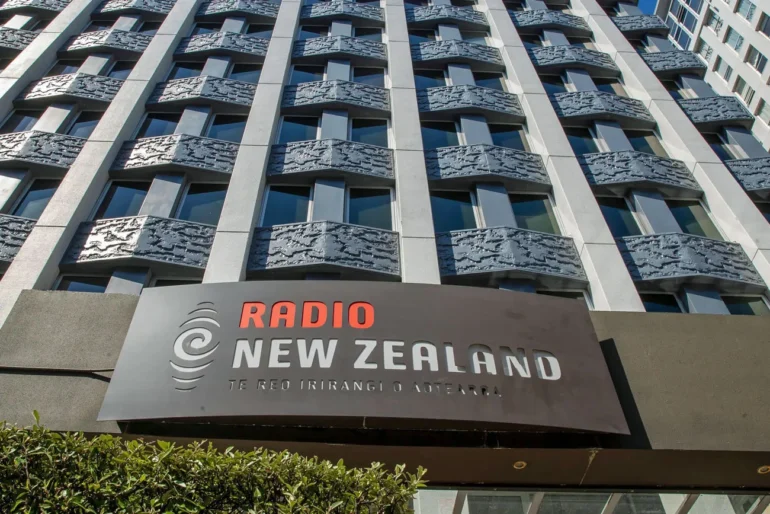
Photo: Radio New Zealand House in Wellington