
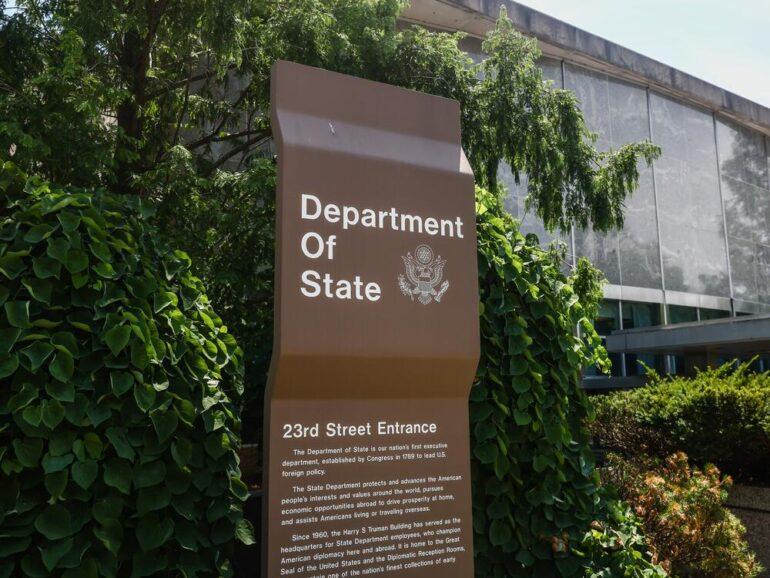
On Friday, more than 1,300 employees at the U.S. Department of State were notified that they would be laid off as part of a significant reorganization plan. This move is the latest step in a series of personnel and structural changes initiated by the Trump administration earlier this year. The layoffs, which affect both civil servants and foreign service officers, represent a drastic reorganization of one of the most crucial federal agencies. Given that the Department of State is responsible for managing the country’s foreign relations – ranging from diplomacy and international treaties to representing the U.S. at the United Nations and other international organizations – the impact of these cuts is particularly significant.
The Layoff Details
The mass layoffs affected 1,107 civil servants and 246 foreign service officers stationed in the United States. These employees, many of whom have spent years dedicated to U.S. foreign policy and diplomatic efforts, were notified that their positions would be “abolished”.
For civil service employees, the layoffs are set to take effect in 60 days, while foreign service officers will have 120 days to transition before being officially terminated. During this period, they were placed on immediate administrative leave, with their access to the Department of State headquarters and email systems revoked. The rationale behind this action, according to the Department, is to streamline operations and reduce inefficiencies.
A large-scale reorganization
The layoffs are part of a broader, far-reaching reorganization of the Department of State, which will affect more than 300 bureaus and offices. The cuts are being presented as a necessary step in eliminating divisions doing unclear or overlapping work.
In late May, the State Department notified Congress of an updated reorganization plan, proposing cuts to programs as well as an 18% reduction of staff in the U.S.
Some of the divisions facing closure are those tasked with overseeing U.S. involvement in Afghanistan, including offices dedicated to the resettlement of Afghan nationals who assisted American forces. Specifically, almost all civil service officers working in the Bureau of Population, Refugees, and Migration’s admissions office – a program dedicated to resettling refugees in the U.S. – were laid off. Individuals who worked for the State Department’s Coordinator for Afghan Relocation Efforts (CARE) office were also among the cuts.
In addition, certain positions overseeing human rights advocacy, global health, and democracy promotion have been eliminated.
Critics say the changes will hurt U.S. standing abroad
The American Academy of Diplomacy, an association that includes hundreds of former high-level diplomats and other national security professionals, expressed its opposition to the proposed personnel cuts and urged the Secretary to rescind this action. It declared in its statement of 3rd June 2025 that the State Department layoffs “will seriously undermine the ability of our government to understand, explain, and respond to a complex and increasingly contested world.”
“At a time when the United States faces unprecedented challenges from strategic competitors and adversaries, ongoing conflicts in Central Europe, Africa, and the Middle East, and emerging security threats, the decision to gut the Department of State’s institutional knowledge and operational capacity is an act of vandalism,” the organization emphasised in a statement before the cuts were announced.
The American Foreign Service Association (AFSA), the union representing diplomats, also strongly opposes the reduction of State Department staff. In its press release dated 11 July 2025 it stated: “This decision sends the wrong signal to allies and adversaries alike: that the United States is pulling back from the world stage. As allies look to the U.S. for reassurance and rivals test for weakness, the administration has chosen to sideline the very professionals best equipped to navigate this moment. Meanwhile, countries like China continue expanding their diplomatic reach and influence.”
This association also emphasized in the press release that “Diplomats are not faceless bureaucrats. They are America’s forward presence, serving in war zones, evacuating citizens, negotiating for the release of detained Americans, and steadying allies in turbulent times. Like military personnel, they move every two to three years, serving wherever America needs representation, often in dangerous and difficult places. Their mobility is a strategic asset. Firing them based solely on their current office location discards that asset and damages our credibility abroad.”
A Controversial Decision with Far-Reaching Consequences
The layoffs at the U.S. Department of State represent a shift in the employment policy of this federal agency, marking a departure from long-established practices in diplomatic staffing. These cuts reflect a broader plan within the U.S. government to reorganize the federal administration and reduce the size of the federal workforce, even at the expense of institutional knowledge and diplomatic expertise. While some argue that such a shift is necessary for budgetary reasons, others express concern that it may severely compromise the U.S. ability to effectively manage the country’s foreign relations, particularly in light of Russia’s war in Ukraine, the ongoing Gaza conflict, and the rising tensions in the Middle East, especially between Israel and Iran.