
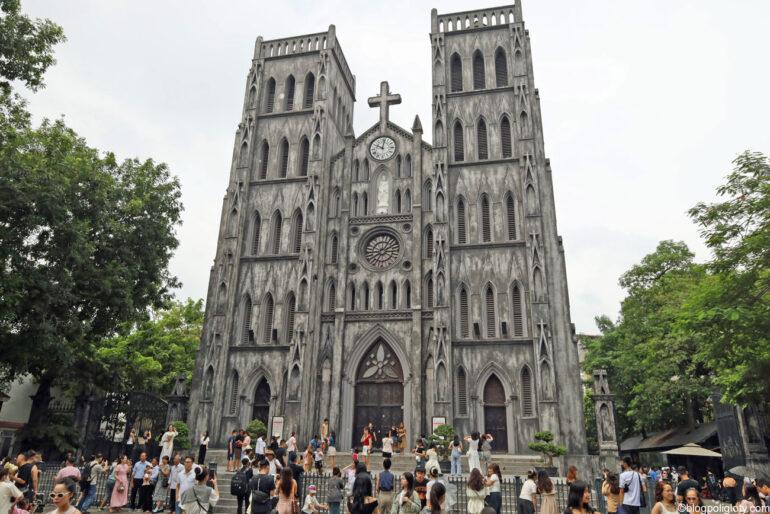
Wśród zgiełku i chaosu tętniącego życiem Hanoi, w dzielnicy Hoàn Kiêm, gdzie wąskie uliczki pełne są zapachu wietnamskiego jedzenia i hałasu skuterów, znajduje się szczególne miejsce. To Katedra Świętego Józefa – monumentalna budowla w stylu neogotyckim, która od ponad 130 lat jest duchowym i architektonicznym symbolem miasta. Jest to najstarszy kościół w Hanoi, który swoim stylem przypomina katedrę Notre-Dame w Paryżu.
Amid the hustle and bustle of vibrant Hanoi, in the Hoàn Kiêm district, where narrow streets are filled with the aromas of Vietnamese cuisine and the noise of scooters, lies a very special place. It is St. Joseph’s Cathedral – a monumental neo-Gothic structure that has stood as a spiritual and architectural symbol of the city for over 130 years. This is the oldest church in Hanoi, and its style bears a striking resemblance to Notre-Dame Cathedral in Paris.
Francuski ślad w Azji Południowo-Wschodniej / A French Trace in Southeast Asia
Historia Katedry Świętego Józefa to opowieść o czasach kolonialnych, kiedy Wietnam znajdował się pod panowaniem Francuzów jako część tzw. Indochin Francuskich. Budowę kościoła rozpoczęto w 1884 roku, a zakończono dwa lata później. Uroczyste poświęcenie świątyni miało miejsce w Boże Narodzenie 1886 roku. Dla władz kolonialnych wzniesienie katedry było nie tylko aktem religijnym, lecz także symbolicznym – miało podkreślić obecność francuskiej kultury, religii i architektury w Azji.
The history of St. Joseph’s Cathedral is a story from the colonial era, when Vietnam was under French rule as part of what was known as French Indochina. Construction of the church began in 1884 and was completed two years later. The cathedral was solemnly consecrated on Christmas Day in 1886. For the colonial authorities, the erection of the cathedral was not only a religious act but also a symbolic one – intended to underscore the presence of French culture, religion, and architecture in Asia.
Katedra powstała na miejscu zniszczonej w czasie wojny pagody buddyjskiej Bao Thien. Taki wybór lokalizacji nie był przypadkowy – miał silny wydźwięk ideologiczny i kulturowy, wskazując na zmianę dominującego systemu wartości i wpływów. Kościół został zaprojektowany przez Pigneau de Behaine w stylu neogotyckim i znajduje się we „francuskiej dzielnicy” Hanoi.
The cathedral was built on the site of the Bao Thien Buddhist pagoda, which was destroyed during wartime. This choice of location was no accident – it carried strong ideological and cultural meaning, pointing to a shift in the dominant system of values and influence. The church was designed in neo-Gothic style by Pigneau de Behaine and is located in the ‘French Quarter’ of Hanoi.
Architektura: mała Notre-Dame w Hanoi / Architecture: The Little Notre-Dame of Hanoi
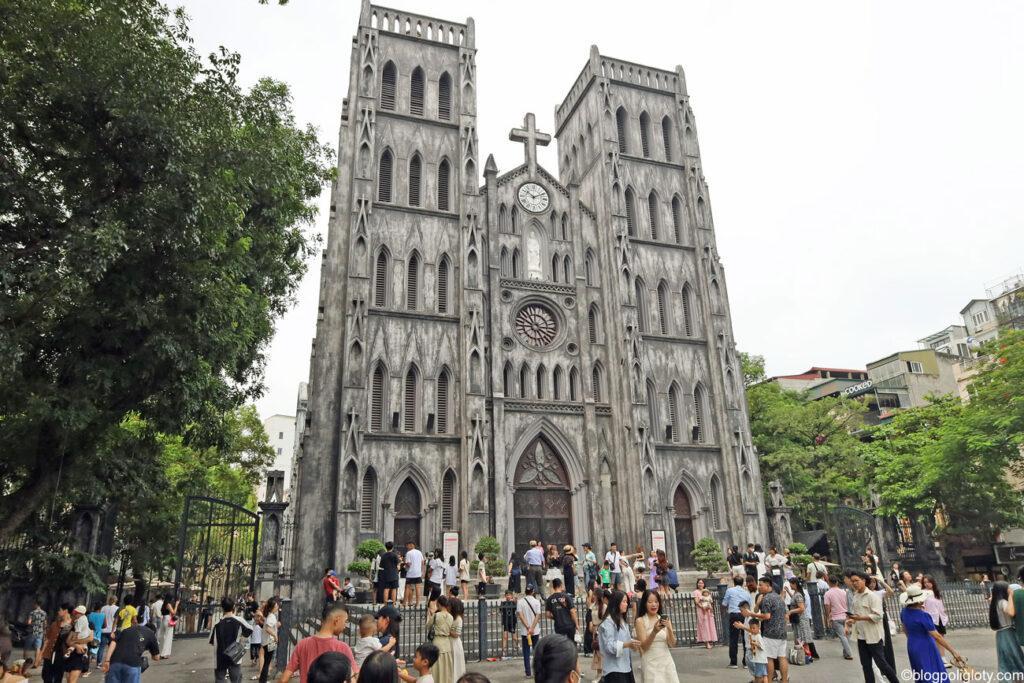
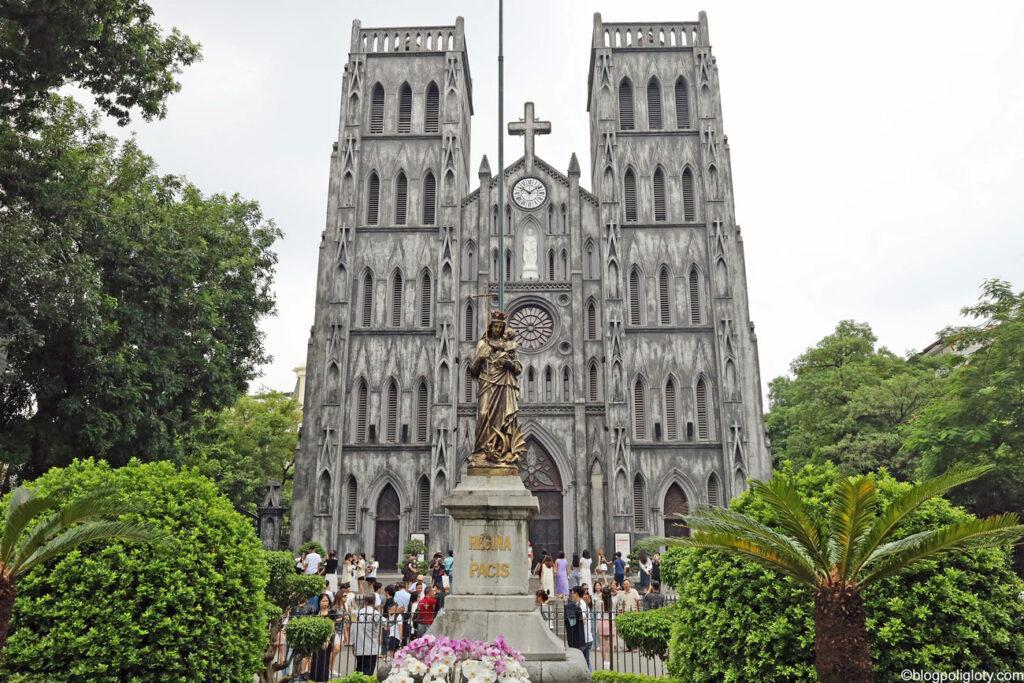
Już na pierwszy rzut oka katedra przywodzi na myśl słynną Notre-Dame w Paryżu. Neogotycki styl jest tu widoczny w każdym detalu: od strzelistych dwóch wież i ostrołukowych okien, po misternie zdobione witraże i masywną fasadę z szarego kamienia. Budowla ma 64,5 m długości, 20,5 m szerokości, a jej dwie główne wieże sięgają 31,5 m wysokości. Na szczecie elewacji znajduje się kamienny krzyż.
At first glance, the cathedral instantly evokes Notre-Dame in Paris. The neo-Gothic style is evident in every detail: from the two tall spires and pointed-arch windows to the intricately decorated stained glass and the massive grey stone façade. The building is 64.5 meters long, 20.5 meters wide, and its two main towers reach a height of 31.5 meters. A stone cross is mounted at the top of the façade.
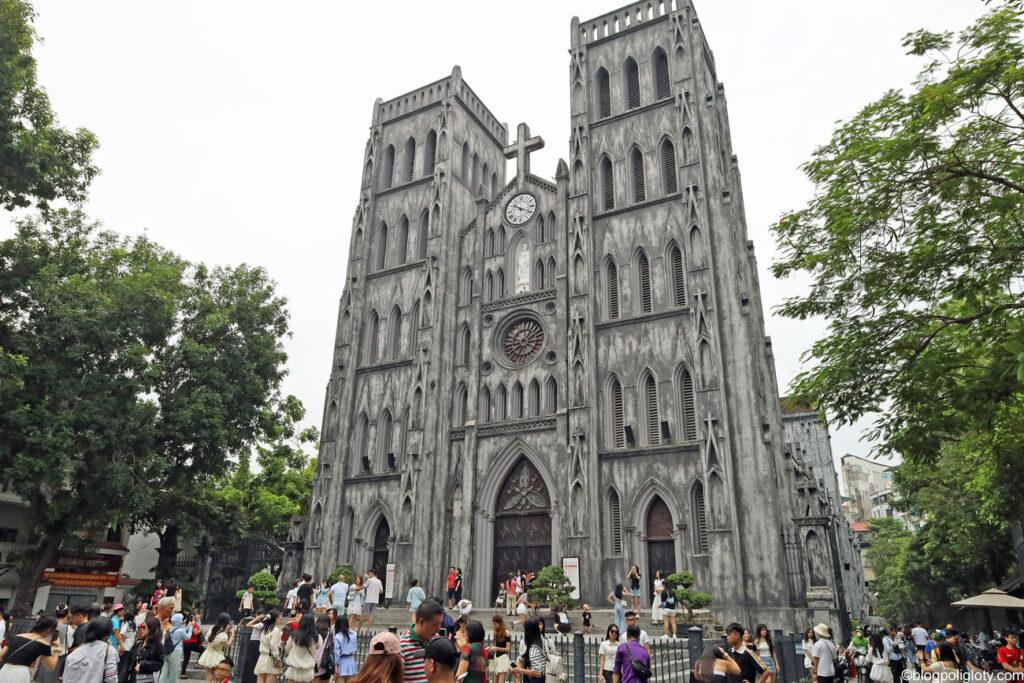
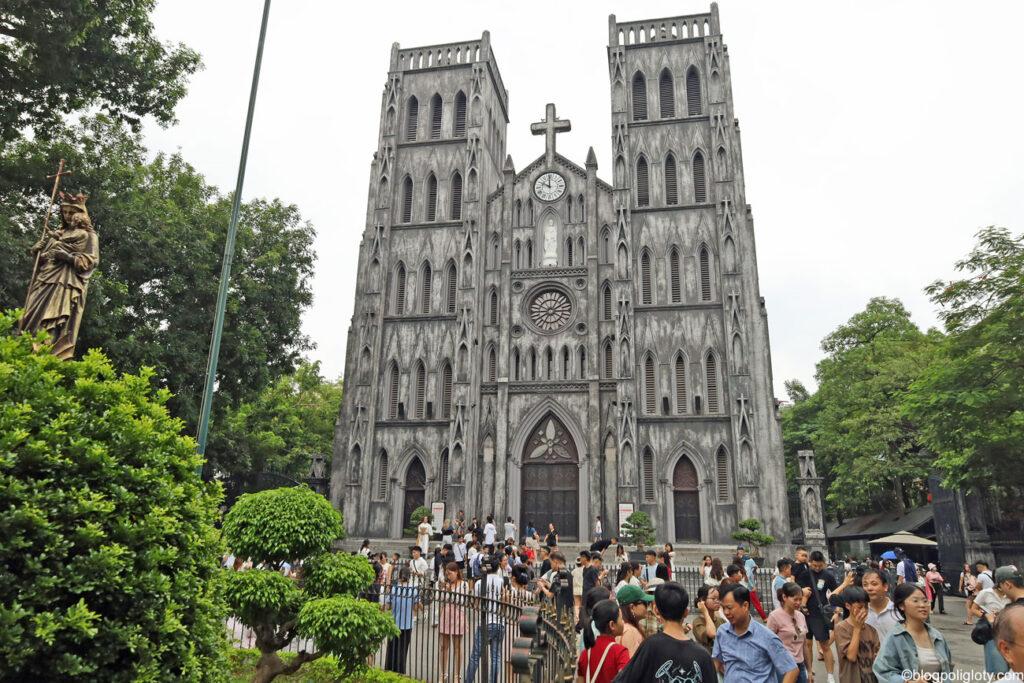
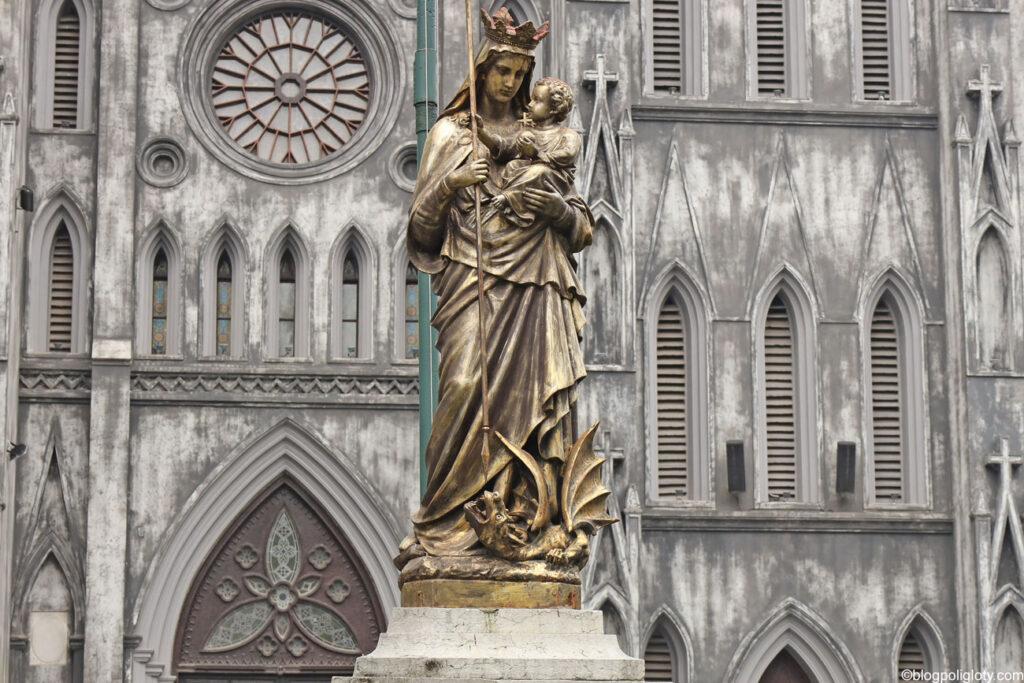
Główna brama do katedry jest otwierana podczas Mszy św. Ściany zewnętrzne kościoła wykonane są z granitowych płyt kamiennych. Uwagę przykuwają wyglądające jak bliźniaczki wieże z dzwonami w środku. Wnętrze składa się z głównej nawy i dwóch bocznych oraz chóru. Zobaczymy tam główny ołtarz i kilka bocznych. Natomiast przed i za katedrą znajdują się figurki Matki Bożej.
The main gate of the cathedral is opened during Holy Mass. The outer walls are made of granite slabs. The twin bell towers immediately draw attention. Inside, the cathedral consists of a central nave, two side aisles, and a choir. There is a main altar and several side altars. Statues of the Virgin Mary are located both in front of and behind the cathedral.
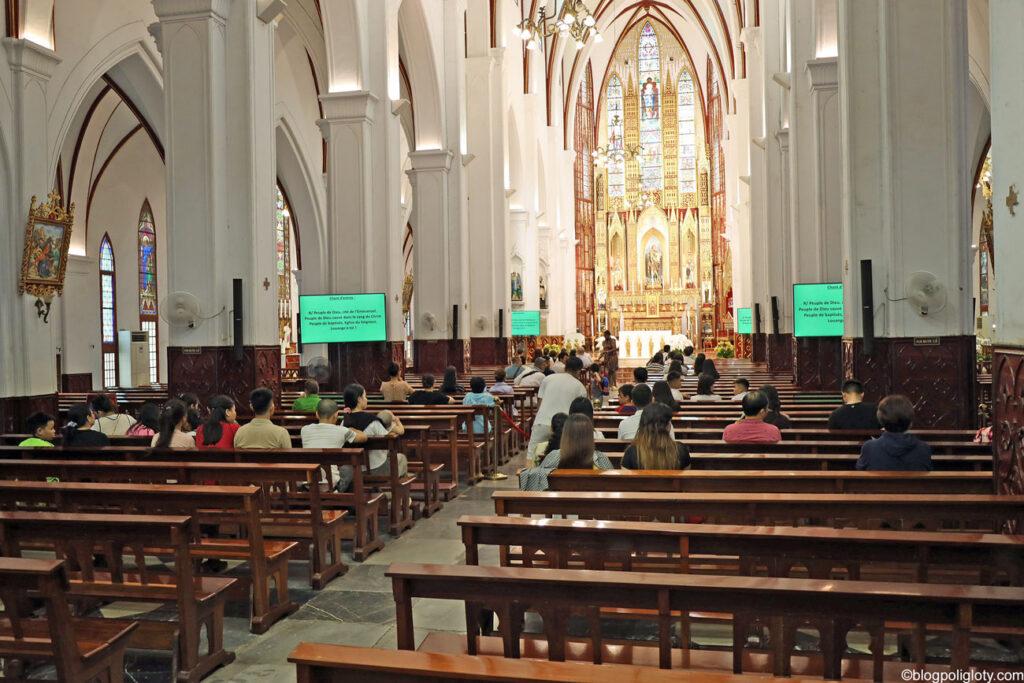
Wnętrze świątyni, choć stosunkowo skromne, zachwyca spokojem i harmonią. Szczególne wrażenie robią kolorowe witraże sprowadzone z Francji oraz sufit wyłożony drewnem, przypominający odwrócony kadłub statku – motyw znany z wielu europejskich kościołów.
Though relatively modest, the cathedral’s interior emanates peace and harmony. Especially striking are the colourful stained-glass windows imported from France and the wooden ceiling, shaped like an inverted ship’s hull – a motif found in many European churches.
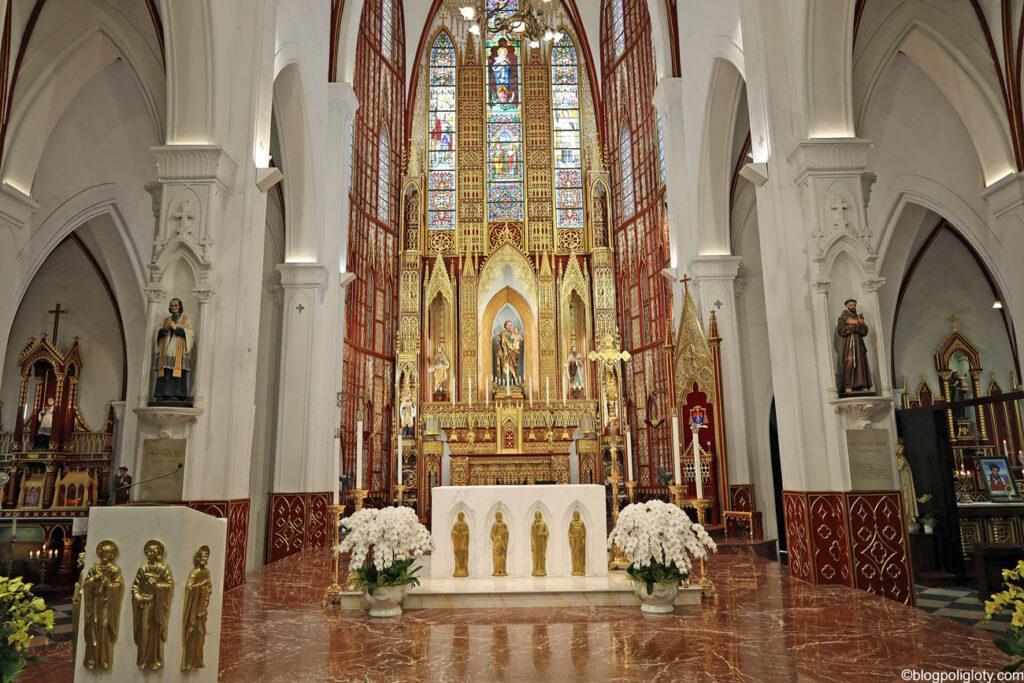
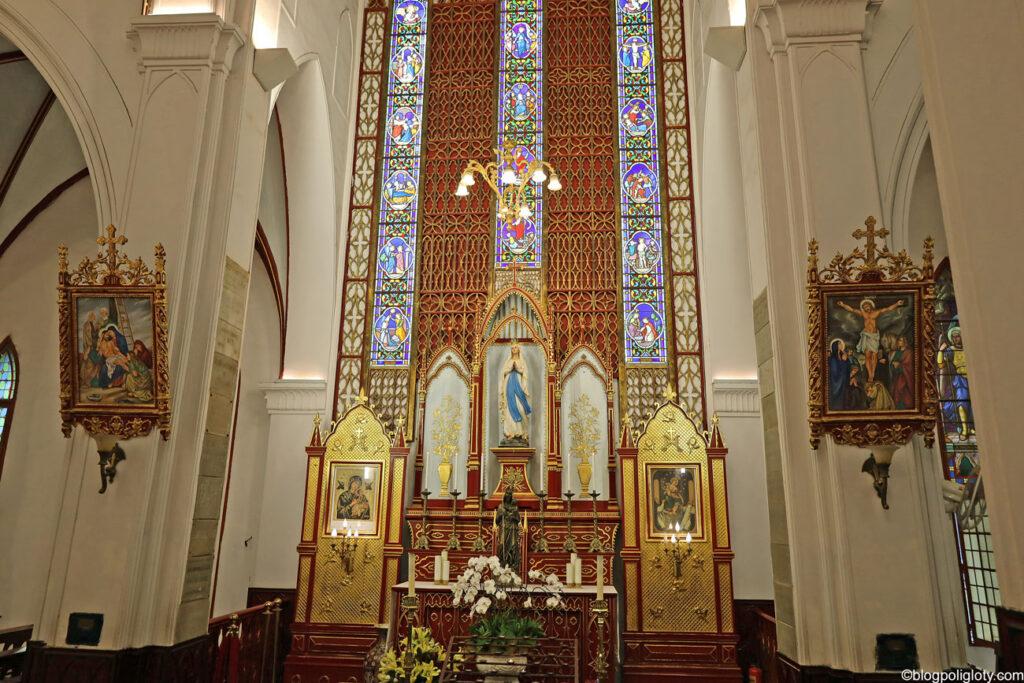
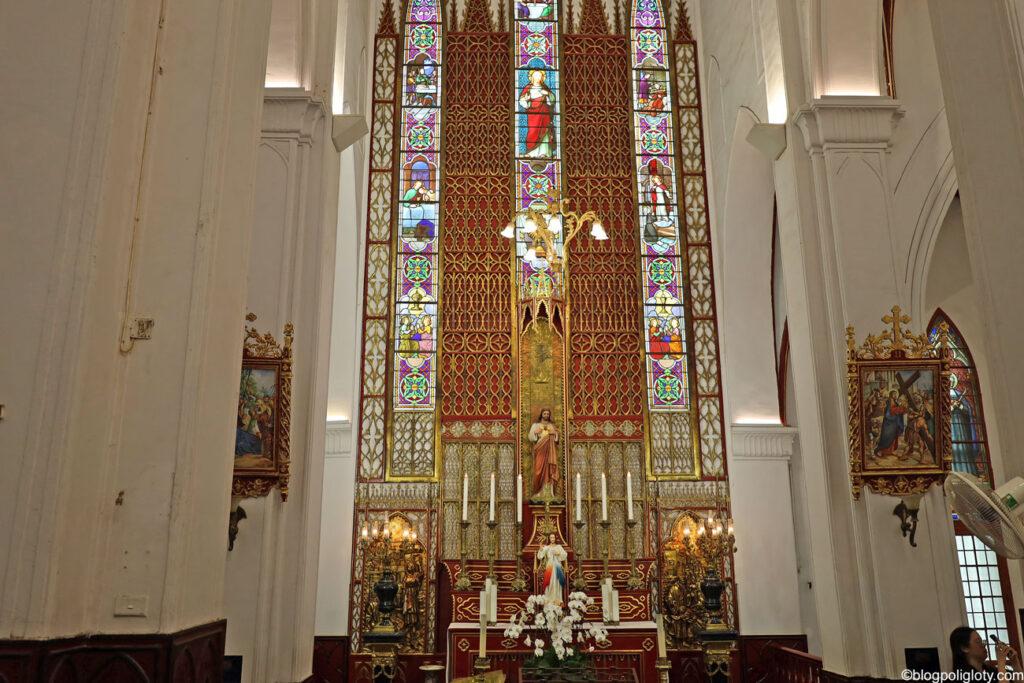
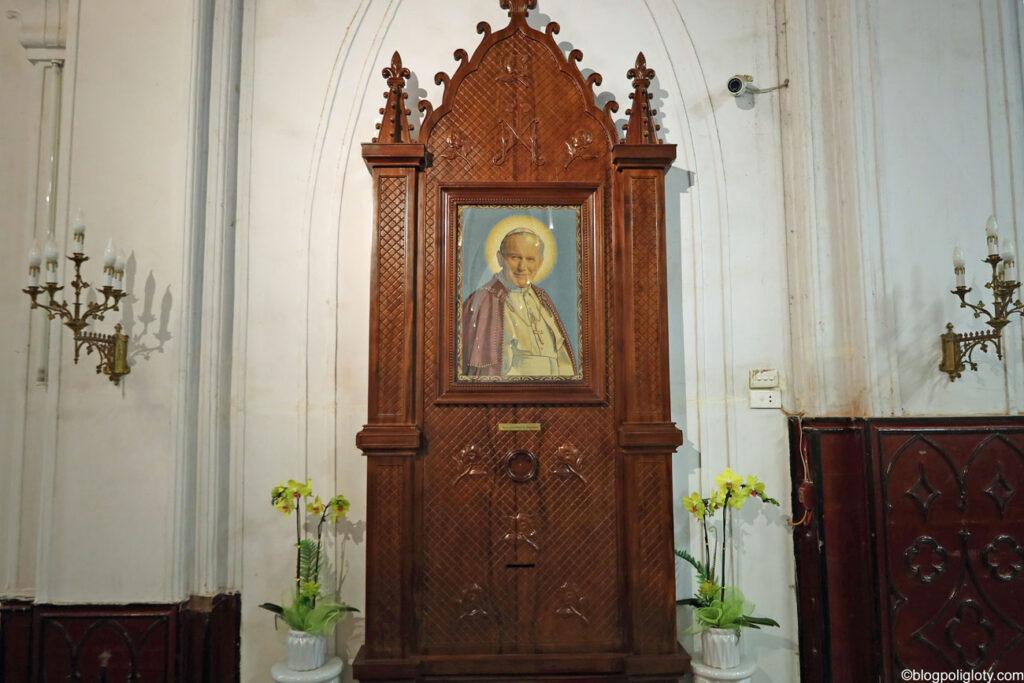
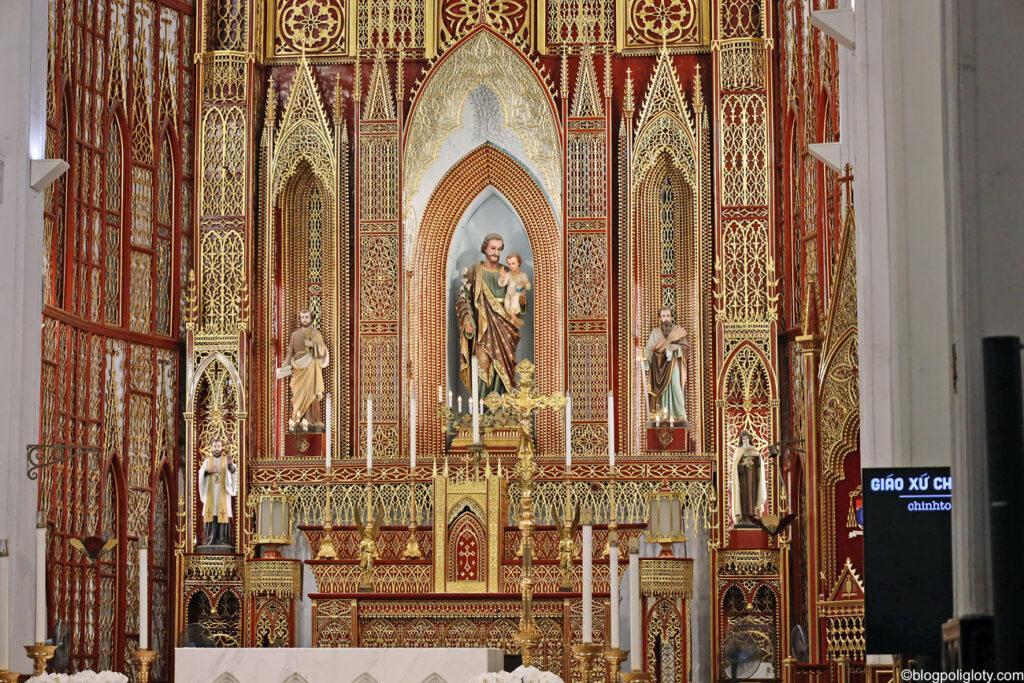
Mimo europejskiego charakteru, wnętrze zawiera także elementy nawiązujące do lokalnej estetyki. Ołtarz główny zdobią ornamenty inspirowane wietnamską sztuką ludową, co tworzy unikalne połączenie dwóch światów – Wschodu i Zachodu.
Despite its European character, the interior also includes elements inspired by local aesthetics. The main altar is decorated with ornaments drawn from traditional Vietnamese folk art, creating a unique fusion of East and West.
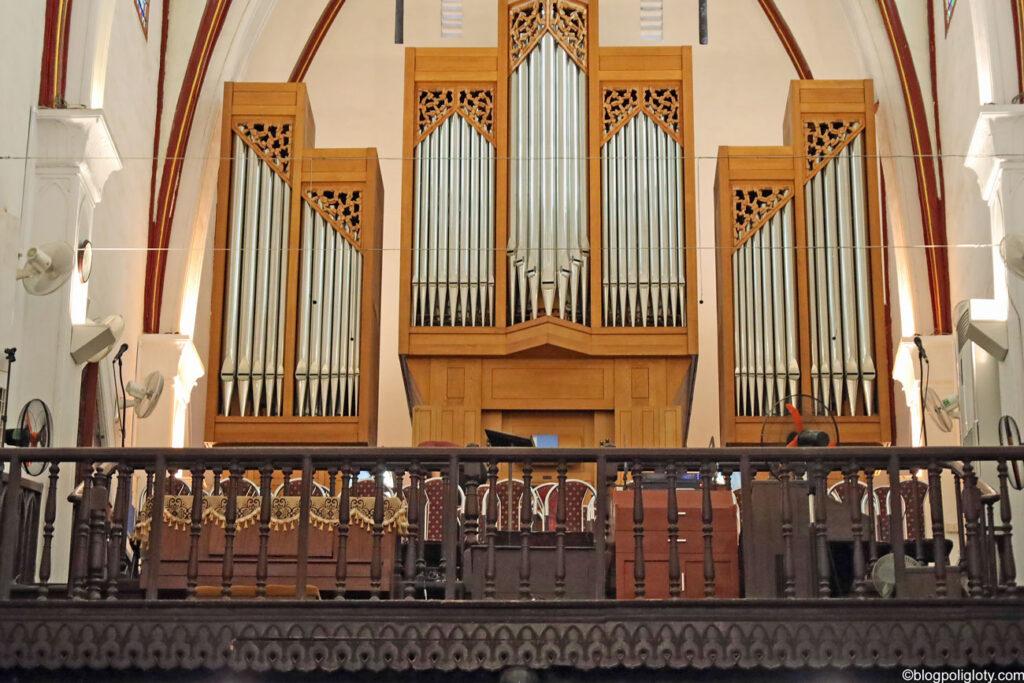
Organy piszczałkowe zostały zainstalowane 23 listopada 2022 roku. Zaprojektował je belgijski rzemieślnik Guido Schumacher w ramach projektu wymiany kulturalnej między Itami w Japonii a Hasselt w Belgii. Instrument posiada 1850 piszczałek.
A pipe organ was installed on November 23, 2022. It was designed by Belgian craftsman Guido Schumacher as part of a cultural exchange project between Itami, Japan, and Hasselt, Belgium. The instrument has 1,850 pipes.
Święty Józef – patron i symbol / St. Joseph – Patron and Symbol
Świątynia nosi imię Świętego Józefa – patrona rodzin, rzemieślników i opiekuna Kościoła katolickiego. W wietnamskim kontekście to szczególnie trafny wybór – kult rodziny i szacunek dla przodków są podstawą lokalnej kultury. Postać Józefa jako opiekuna i człowieka pracy rezonuje tu bardzo silnie, szczególnie wśród wiernych.
The church is dedicated to St. Joseph – the patron saint of families, craftsmen, and the universal Church. In the Vietnamese context, this choice is especially fitting – the cult of family and reverence for ancestors are foundations of local culture. The image of Joseph as a guardian and a man of labour resonates strongly here, especially among the faithful.
Katolicyzm w Wietnamie / Catholicism in Vietnam
Katolicyzm został wprowadzony do Wietnamu w XVI wieku przez europejskich misjonarzy, głównie portugalskich i hiszpańskich, a później francuskich jezuitów. Szczególną rolę odegrał Alexandre de Rhodes, francuski jezuita, który nie tylko ewangelizował, ale i współtworzył quôc ngữ – alfabet łaciński używany dziś w języku wietnamskim.
Catholicism was introduced to Vietnam in the 16th century by European missionaries, mainly Portuguese and Spanish, followed later by French Jesuits. One particularly influential figure was Alexandre de Rhodes, a French Jesuit who not only evangelized but also co-developed quôc ngữ, the Latin-based Vietnamese alphabet used today.
W XIX wieku katolicyzm był postrzegany przez niektóre dynastie jako zagrożenie dla narodowej tożsamości i władzy cesarskiej, co prowadziło do krwawych prześladowań. Tysiące katolików – zarówno wiernych, jak i duchownych – zginęło za wiarę. Wielu z nich zostało później kanonizowanych przez Kościół.
In the 19th century, some dynasties perceived Catholicism as a threat to national identity and imperial authority, leading to bloody persecutions. Thousands of Catholics – both clergy and laypeople – were martyred for their faith. Many of them were later canonized by the Church.
Pod panowaniem francuskim (XIX–XX w.) katolicyzm zyskał oficjalne wsparcie. Budowano kościoły, zakładano szkoły, a Kościół katolicki zyskał silną pozycję społeczną i edukacyjną, co po upadku kolonializmu bywało postrzegane jako „dziedzictwo okupanta”.
During French rule (19th–20th centuries), Catholicism received official support. Churches were built, schools were established, and the Catholic Church gained strong social and educational influence. After the fall of colonialism, however, this legacy was sometimes viewed as the ‘heritage of the occupier’.
Choć Wietnam jest krajem zdominowanym przez buddyzm i tradycyjne wierzenia ludowe, katolicyzm zajmuje w nim stałe miejsce. Obecnie Katolicy stanowią ok. 7 proc. ludności tego kraju (ok. 7 milionów wiernych), co czyni go drugą co do wielkości religią po buddyzmie.
Although Vietnam is predominantly Buddhist and steeped in traditional folk beliefs, Catholicism maintains a solid presence. Today, Catholics make up about 7% of the population (around 7 million believers), making it the second-largest religion in the country after Buddhism.
Od 1925 roku w Hanoi istniała Delegatura Apostolska, której celem było utrzymywanie więzi z lokalnym Kościołem. Delegatura ta nie posiadała jednak statusu dyplomatycznego. Początkowo jej działalność obejmowała całe Indochiny. W 1957 komunistyczne władze Wietnamu Północnego wypędziły delegata apostolskiego z Hanoi. Przeniósł on się wówczas do Sajgonu – stolicy Wietnamu Południowego. Delegatura Apostolska w Wietnamie zawiesiła działalność w 1975 roku po wygraniu przez komunistów wojny wietnamskiej.
Since 1925, an Apostolic Delegation existed in Hanoi to maintain ties with the local Church. However, it lacked diplomatic status. Initially, the delegation’s jurisdiction covered all of Indochina. In 1957, the communist authorities of North Vietnam expelled the apostolic delegate from Hanoi. He relocated to Saigon – the capital of South Vietnam. The Apostolic Delegation to Vietnam suspended operations in 1975 after the communists won the Vietnam War.
W 2010 roku uzgodniono, że Stolica Apostolska mianuje swojego stałego specjalnego przedstawiciela ds. stosunków z Socjalistyczną Republiką Wietnamu, który jednak nie będzie rezydował w tym kraju. W latach 2011–2017 funkcję tę pełnił abp Leopoldo Girelli, a od 2018 roku abp Marek Zalewski, kolejni nuncjusze apostolscy w Singapurze.
In 2010, it was agreed that the Holy See would appoint a permanent special representative for relations with the Socialist Republic of Vietnam, who, however, would not reside in the country. From 2011 to 2017, this role was held by Archbishop Leopoldo Girelli, followed by Archbishop Marek Zalewski in 2018 – both of whom were also Apostolic Nuncios to Singapore.
23 grudnia 2023 roku Papież Franciszek mianował arcybiskupa Marka Zalewskiego pierwszym przedstawicielem Stolicy Apostolskiej rezydującym na stałe w Wietnamie. To historyczny krok w relacjach dyplomatycznych pomiędzy Watykanem a władzami w Hanoi, świadczący o stopniowym zacieśnianiu więzi i wzajemnym zaufaniu. Arcybiskup przybył do Hanoi 31 stycznia 2024 roku. Jednocześnie zachował on funkcję nuncjusza apostolskiego w Singapurze.
On December 23, 2023, Pope Francis appointed Archbishop Marek Zalewski as the first permanent resident representative of the Holy See in Vietnam. This was a historic step in diplomatic relations between the Vatican and Hanoi’s authorities, reflecting growing mutual trust and cooperation. The archbishop arrived in Hanoi on January 31, 2024. At the same time, he continues to serve as Apostolic Nuncio to Singapore.
Katedra Świętego Józefa pełni ważną rolę w życiu lokalnej społeczności. Codziennie odbywają się w niej msze w języku wietnamskim, a w niedziele o godz. 10:00 także po francusku i o godz. 11:30 po angielsku.
St. Joseph’s Cathedral plays an important role in the life of the local community. Daily Masses are held in Vietnamese, and on Sundays at 10:00 a.m. in French and at 11:30 a.m. in English.
Życie wokół katedry / A Living Community Around the Cathedral
Dziś katedra to nie tylko miejsce kultu, ale i jedno z ulubionych miejsc spotkań mieszkańców oraz turystów. W niedziele plac przed świątynią zawsze wypełnia się wiernymi. Wokół katedry powstało wiele klimatycznych kawiarni, księgarń i butików.
Today, the cathedral is not only a place of worship but also one of Hanoi’s favourite gathering spots for both locals and tourists. On Sundays, the square in front of the cathedral is always filled with worshippers. Around the cathedral, many charming cafés, bookstores, and boutiques have emerged.
Wieczorem okolica nabiera życia – ludzie spacerują, zwiedzają i robią zdjęcia. Katedra, pięknie oświetlona, staje się tłem dla rozmów, spotkań i chwil refleksji. Jest czymś więcej niż tylko budowlą – to punkt orientacyjny, symbol miasta i świadectwo jego złożonej historii.
In the evening, the area comes alive – people stroll around, explore, and take photos. Beautifully lit up, the cathedral becomes a backdrop for conversations, meetings, and moments of reflection. It is more than just a building – it is a landmark, a city symbol, and a witness to Hanoi’s complex history.
Podsumowanie / Conclusion
Katedra Świętego Józefa w Hanoi to miejsce, które urzeka na wielu poziomach – architektonicznym, historycznym, duchowym i społecznym. To dowód na to, jak różne kultury mogą współistnieć i wzajemnie się przenikać, tworząc coś niepowtarzalnego. Warto zatrzymać się tu choćby na chwilę – usiąść na ławeczce, spojrzeć w górę na wieże i poczuć spokój w sercu jednej z najbardziej dynamicznych metropolii Azji.
St. Joseph’s Cathedral of Hanoi is a place that captivates on many levels – architectural, historical, spiritual, and social. It is proof of how different cultures can coexist and influence one another, creating something truly unique. It is well worth taking a moment to pause here – sit on a bench, look up at the towers, and feel the peace in the heart of one of Asia’s most dynamic metropolises.