
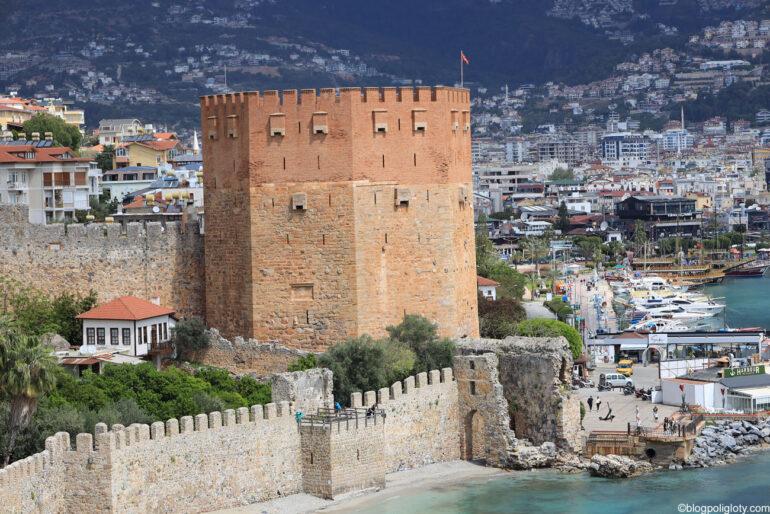
Czerwona Wieża (tur. Kızıl Kule) to jeden z najbardziej rozpoznawalnych zabytków w Alanyi, malowniczo położonego miasta na południowym wybrzeżu Turcji, nad Morzem Śródziemnym. Ten imponujący przykład seldżuckiej architektury obronnej został wzniesiony w 1226 roku na polecenie sułtana Alaeddina Keykubada I – jednego z najwybitniejszych władców dynastii Seldżuków. Budowę powierzono wybitnemu architektowi Abu Ali Reha el Kettaniemu, przybyłemu z syryjskiego Aleppo, ówczesnego centrum wiedzy i sztuki budowlanej.
The Red Tower (Turkish: Kızıl Kule) is one of the most recognizable landmarks in Alanya, a picturesque city on the southern coast of Turkey, overlooking the Mediterranean Sea. This impressive example of Seljuk military architecture was built in 1226 by order of Sultan Alaeddin Keykubad I, one of the most prominent rulers of the Seljuk dynasty. The construction was entrusted to the renowned architect Abu Ali Reha el Kettani, who came from Aleppo – then a thriving centre of knowledge and architectural innovation.
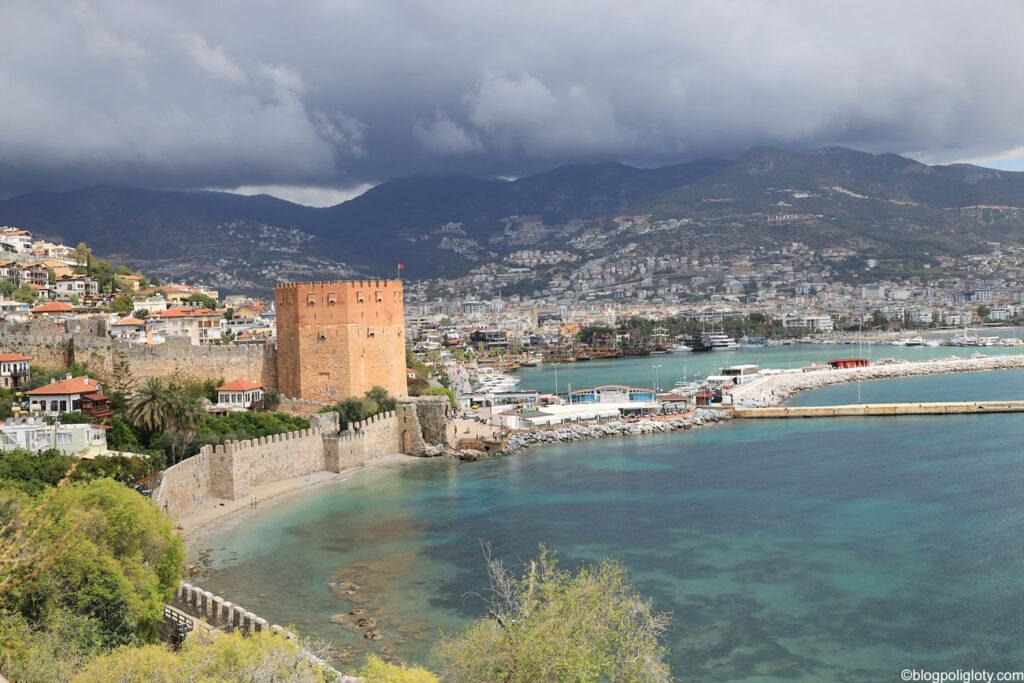
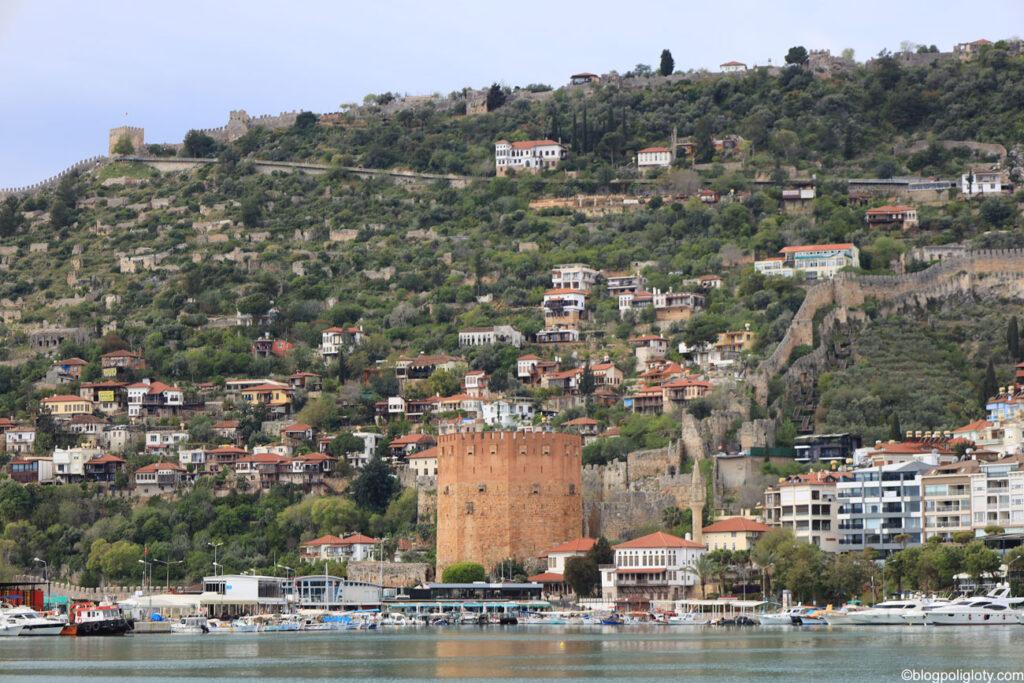
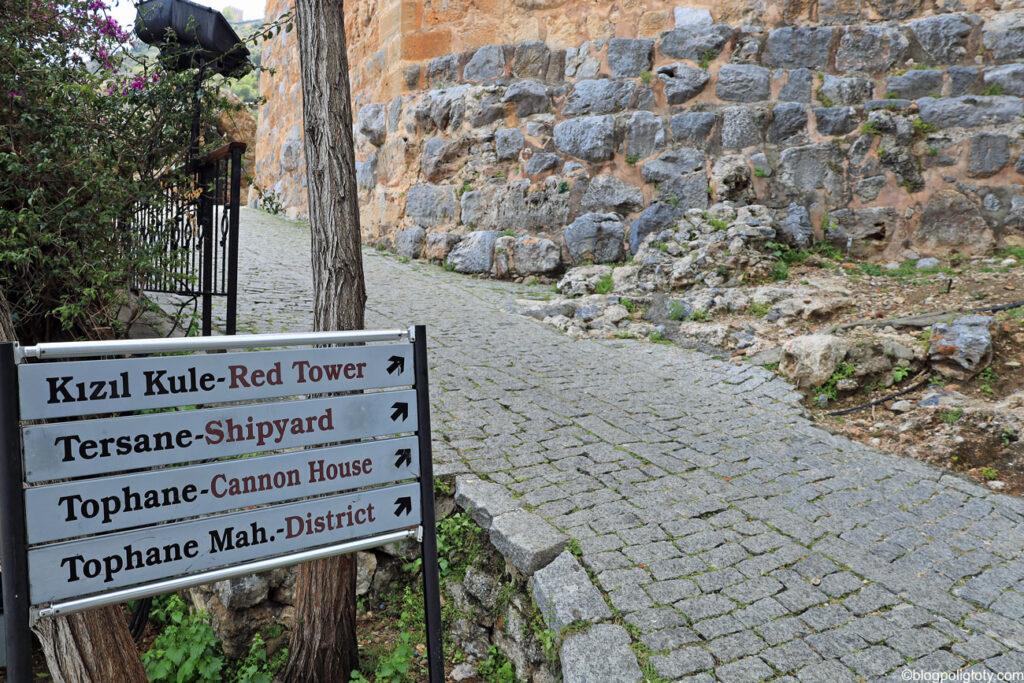
Wieża usytuowana jest przy ulicy İskele, bezpośrednio przy porcie, w miejscu o dużym znaczeniu strategicznym. To właśnie tu rozpoczyna się ścieżka prowadząca do pozostałości seldżuckiej stoczni (Tersane) i dawnego arsenału (Tophane), tworząc wyjątkowy kompleks fortyfikacyjno-portowy.
The tower is located on İskele Street, right by the harbour, in a location of significant strategic importance. From here begins a path that leads to the remnants of the Seljuk-era shipyard (Tersane) and the former arsenal (Tophane), forming a unique coastal fortress complex.
Nazwa i materiały budowlane / Name and Building Materials
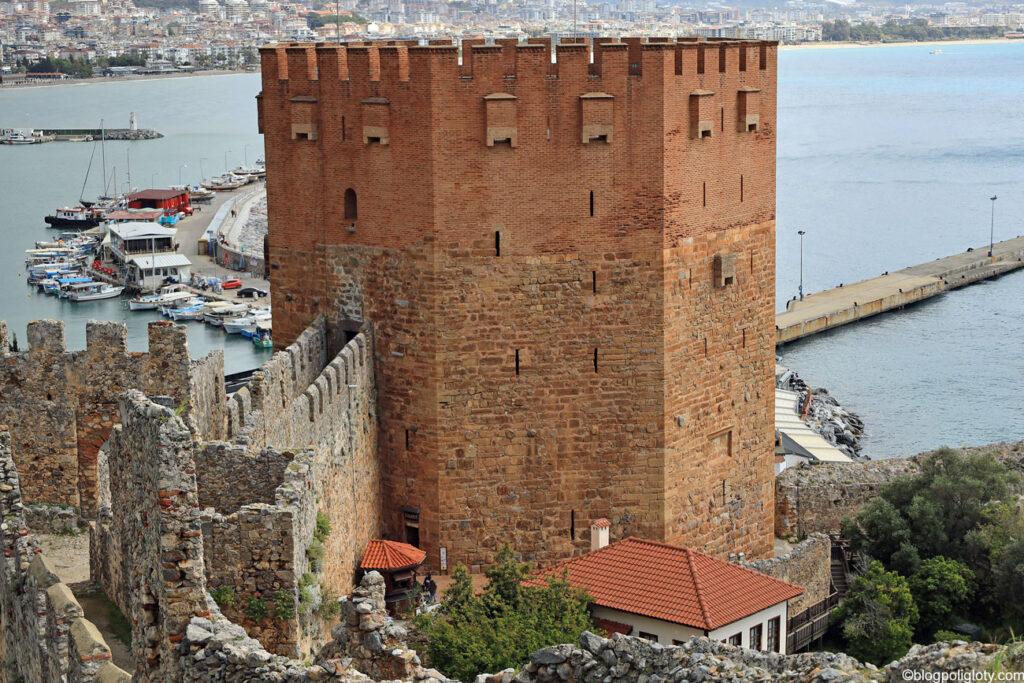
Swoją nazwę budowla zawdzięcza charakterystycznemu kolorowi cegieł, którymi została częściowo wyłożona podczas renowacji w latach 50. XX wieku, w czasie rozbudowy portu. Oryginalna struktura wieży łączy w sobie różne materiały: masywny dół wykonano z miejscowego kamienia i marmuru pochodzącego z rozbiórki starożytnych budowli, natomiast górne kondygnacje zbudowano z czerwonych cegieł. To właśnie one, zastosowane ponownie podczas prac restauracyjnych w 1979 roku, nadały wieży jej współczesny wygląd i sprawiły, że nazwa Kızıl Kule (dosł. Czerwona Wieża) zaczęła funkcjonować powszechnie.
The tower derives its name from the distinctive red color of the bricks used to clad its upper section during port expansion works in the 1950s. The original structure combines various materials: the massive lower part was built using local stone and marble salvaged from ancient ruins, while the upper levels were constructed with red bricks. These bricks were reused during restoration work in 1979, giving the tower its present-day appearance and cementing the name Kızıl Kule (‘Red Tower’) in common use.
Konstrukcja i architektura / Structure and Architecture
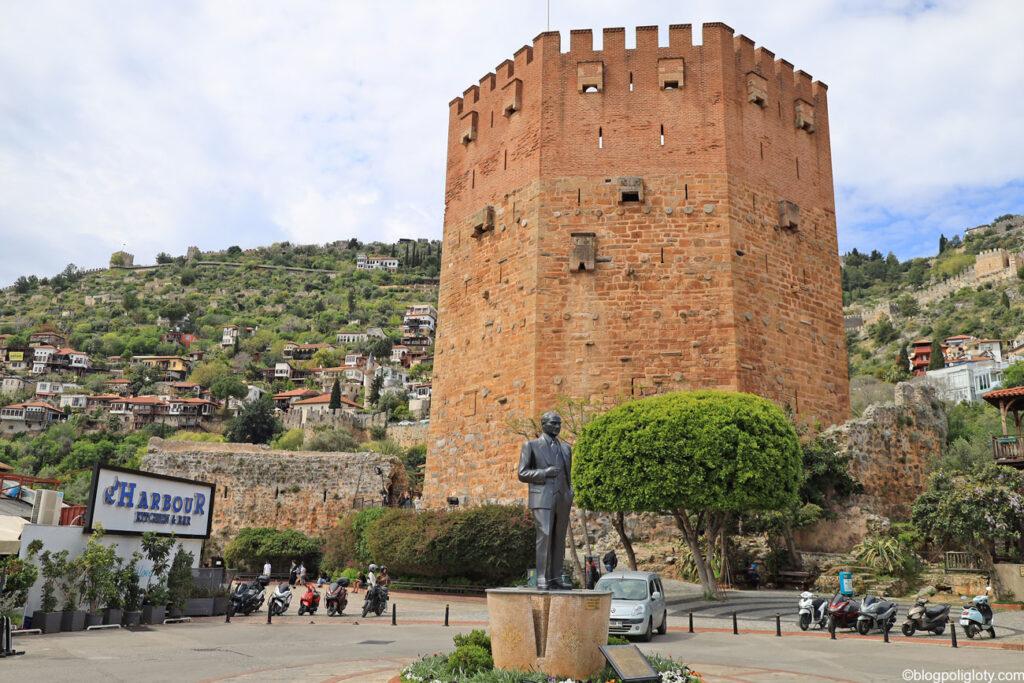
Wieża ma formę regularnego ośmiokąta – każda z ośmiu ścian mierzy około 12,5 metra szerokości. Jej średnica wynosi 29 metrów, a wysokość – 33 metry. Budowla składa się z pięciu kondygnacji (wliczając parter), a na jej szczyt prowadzi 85 stromych, kamiennych schodów.
The tower has a regular octagonal shape, with each of its eight sides measuring approximately 12.5 meters in width. The diameter of the tower is 29 meters, and it stands 33 meters tall. It consists of five levels, including the ground floor, and is accessed via 85 steep stone steps.
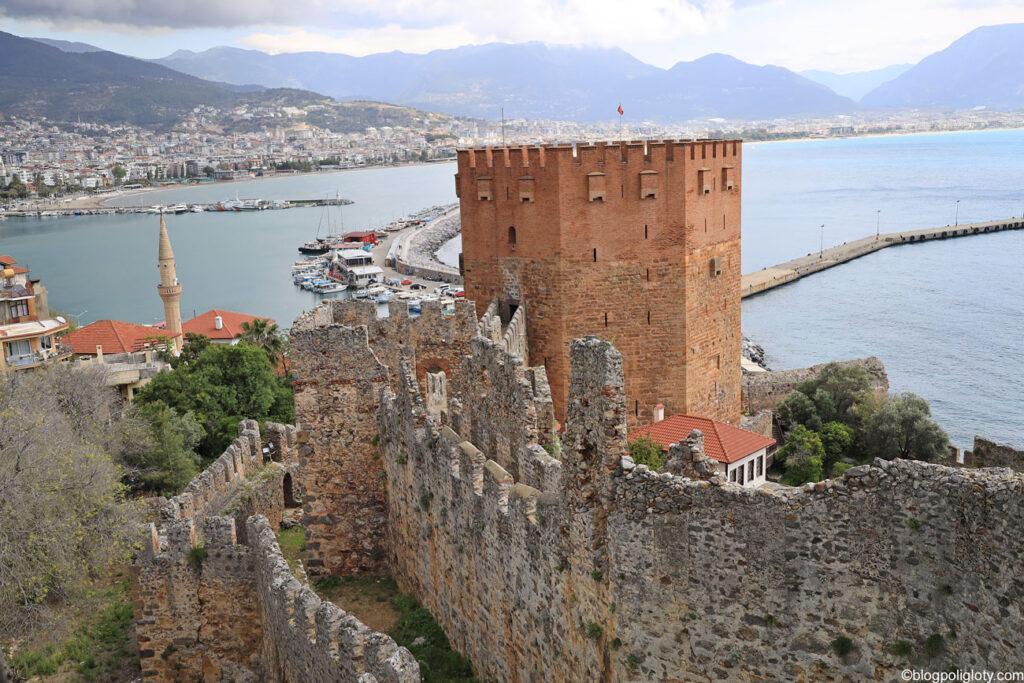
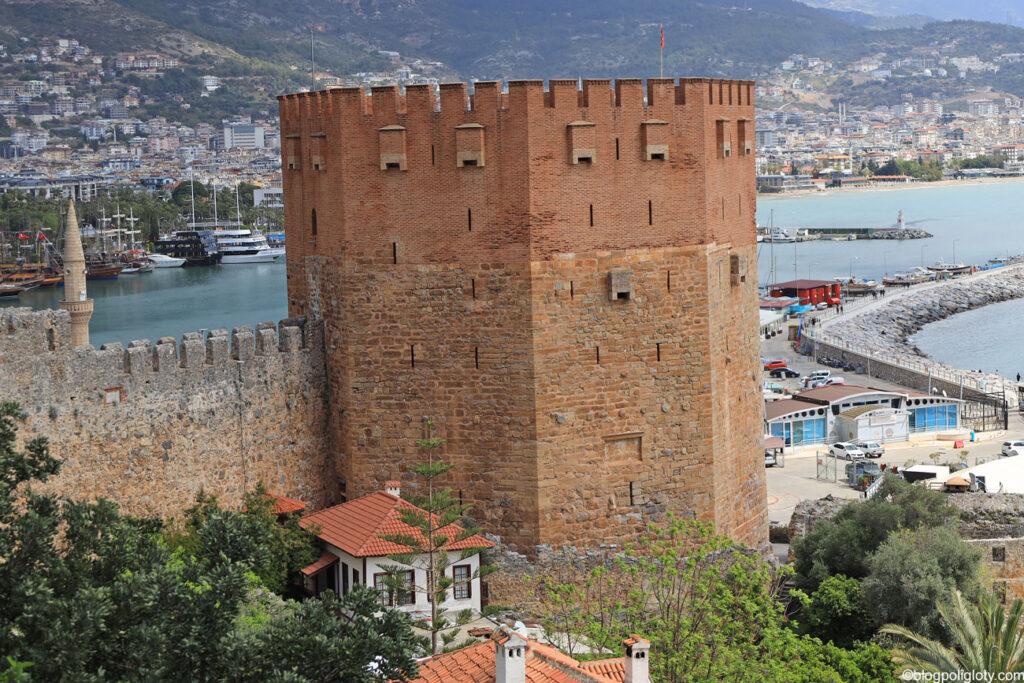
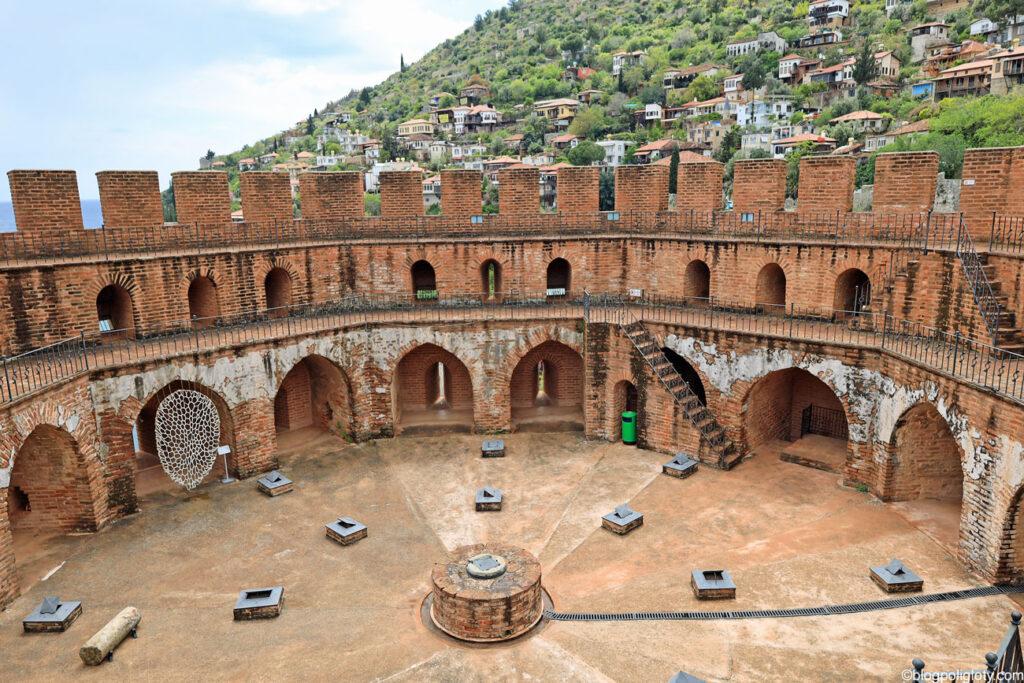
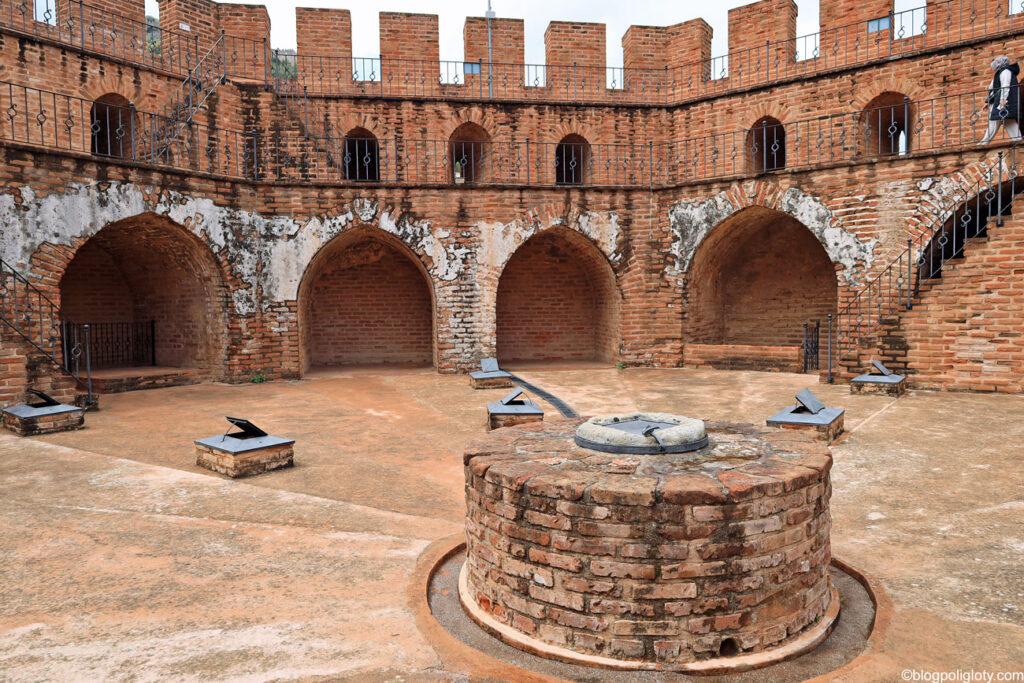
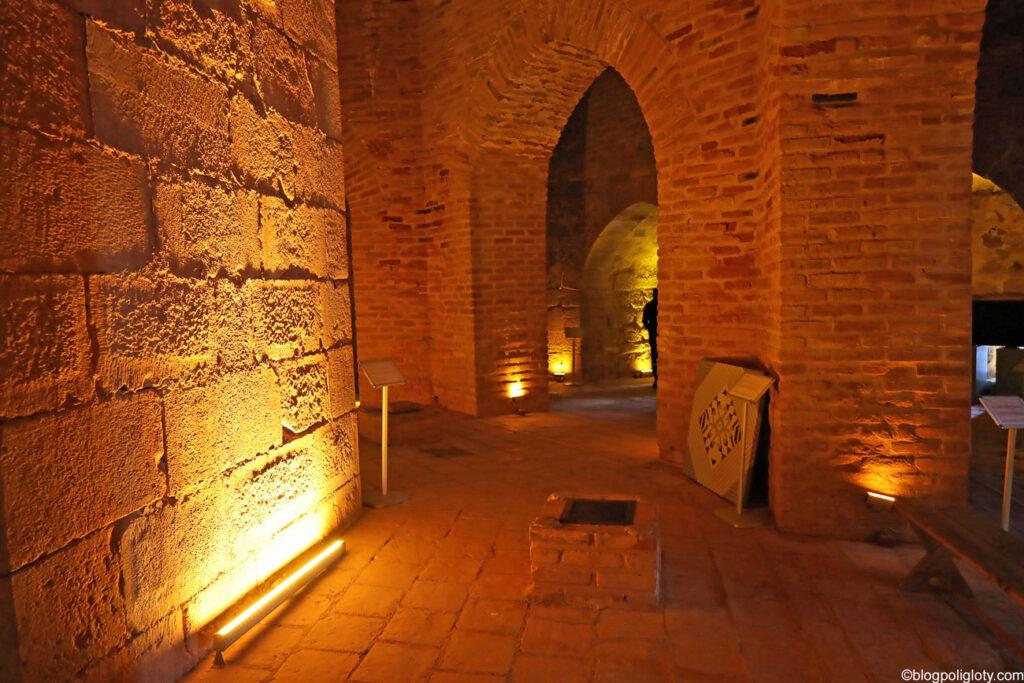
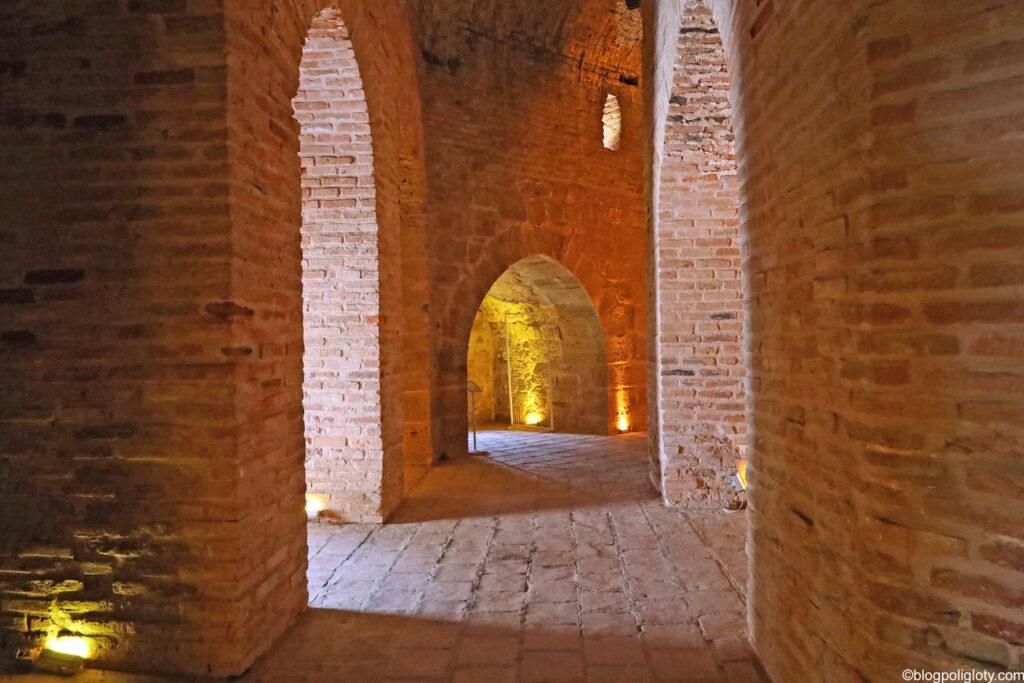
Wnętrze wieży zorganizowano z myślą o funkcjach obronnych. Na każdej kondygnacji zastosowano inny układ przestrzenny, dostosowany do potrzeb wojskowych. W grube mury wkomponowano wąskie otwory obserwacyjne, umożliwiające kontrolowanie otoczenia. Centralną oś konstrukcji stanowi masywny, cylindryczny filar, którego wnętrze częściowo wydrążono, tworząc cysternę na wodę deszczową – rozwiązanie pozwalające garnizonowi przetrwać długie oblężenia.
The interior was designed with defence in mind. Each floor features a unique layout adapted to military needs. Narrow observation slits are built into the thick walls, allowing for surveillance of the surroundings. A massive central pillar forms the structural core of the tower, and its interior was partially hollowed out to create a rainwater cistern – an essential feature enabling defenders to endure long sieges.
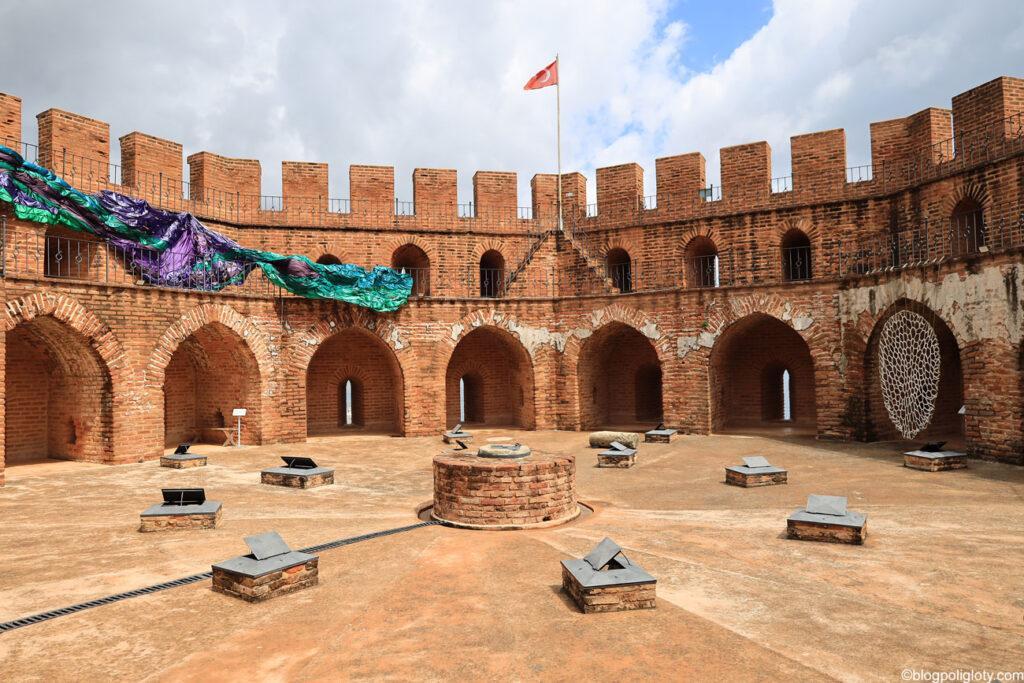
Na otwartym tarasie, wokół otworu cysterny znajdującej się w jego centralnej części, znajduje się 16 szybów wentylacyjnych, rozmieszczonych w dwóch rzędach, przez które do wnętrza wieży docierają światło i powietrze.
On the open terrace, around the mouth of the cistern located at its centre, there are 16 ventilation shafts arranged in two rows, through which light and air enter the interior of the tower.
Funkcja militarna / Military Function
Czerwona Wieża odgrywała kluczową rolę w systemie obronnym średniowiecznej Alanyi. Służyła jako wieża strażnicza, punkt obserwacyjny oraz magazyn zapasów wojskowych. Jej lokalizacja nad samym portem umożliwiała skuteczną kontrolę ruchu morskiego oraz ochronę przed najazdami od strony morza. Wraz z pobliską stocznią i armatnią basztą tworzyła jeden z najważniejszych bastionów obronnych wybrzeża seldżuckiego.
The Red Tower played a crucial role in the medieval defence system of Alanya. It functioned as a watchtower, an observation post, and a storage space for military supplies. Its strategic position overlooking the harbour allowed for effective control of maritime traffic and protection against attacks from the sea. Together with the nearby shipyard and cannon bastion, it formed one of the most important defensive strongholds on the Seljuk coastline.
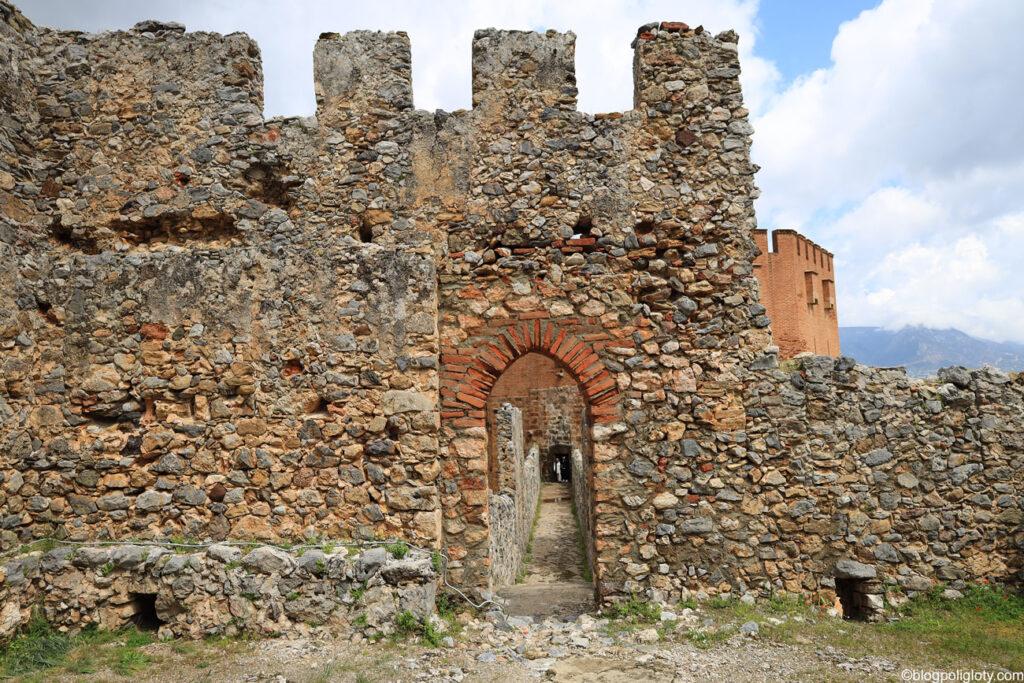
Na Czerwonej Wieży znajduje się łącznie 56 okien strzelniczych z blankami, 22 otwory do wylewania gorącej smoły lub wody oraz 6 ustawionych w jednej linii rzygaczy, które miały na celu odpieranie atakujących i uniemożliwienie ucieczki.
There are a total of 56 crenelated windows on the Red Tower, along with 22 openings for pouring hot pitch or water, and 6 aligned gargoyles designed to repel attackers and prevent escape.
Taras widokowy / Viewing Terrace
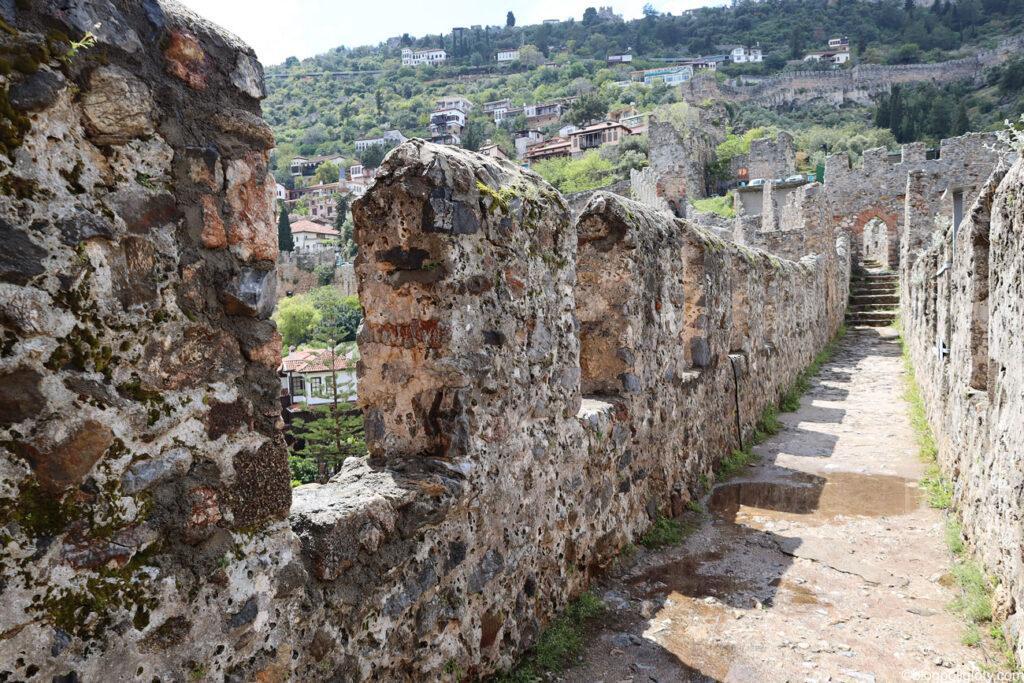
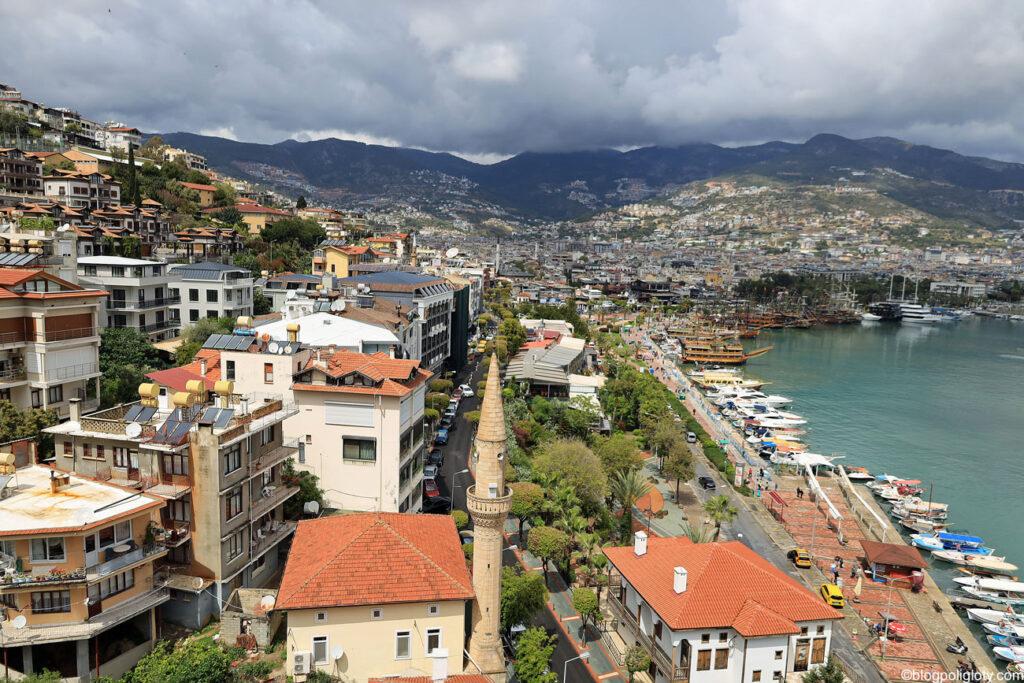
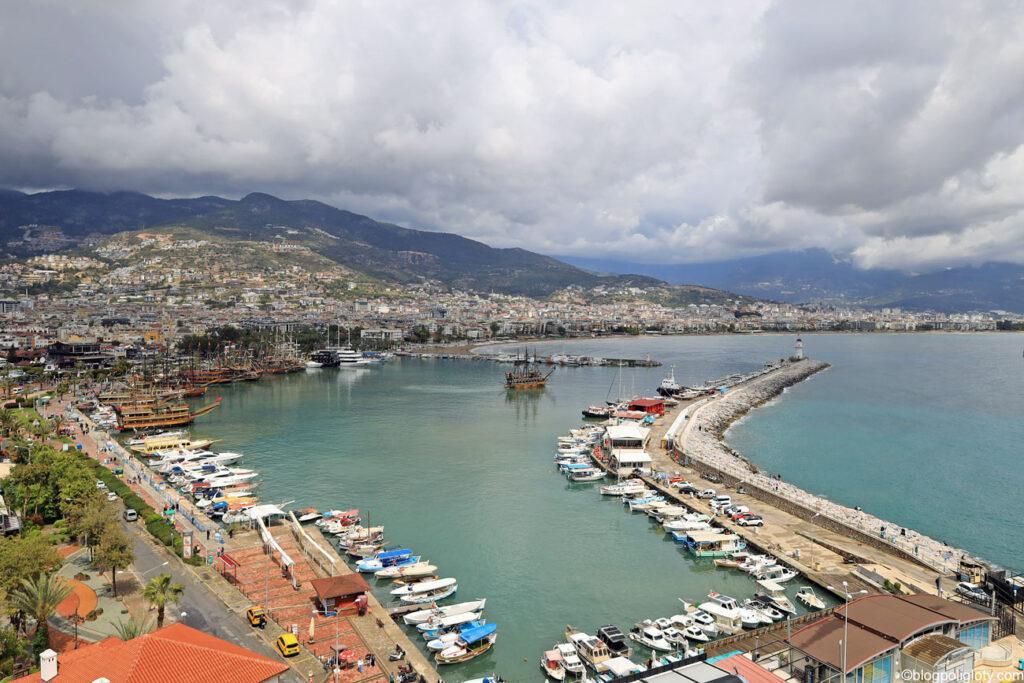
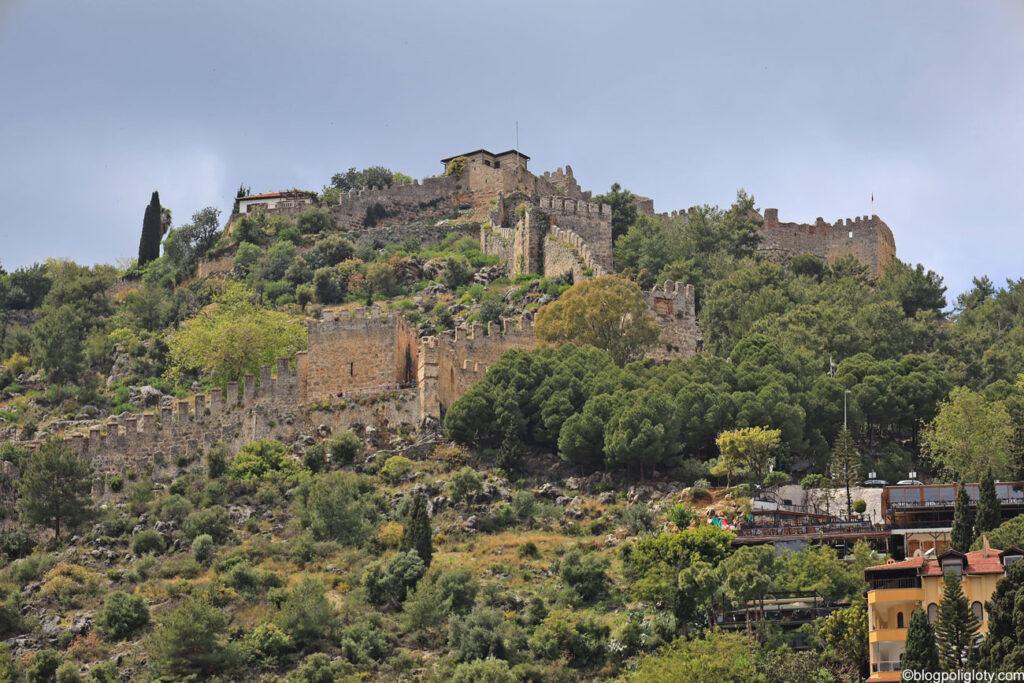
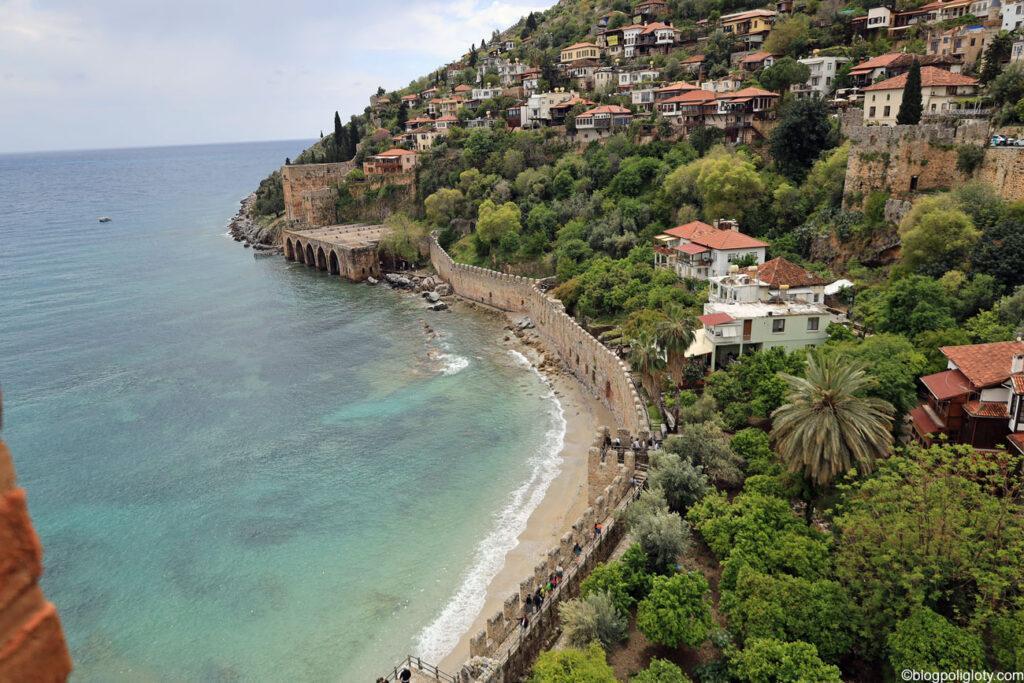
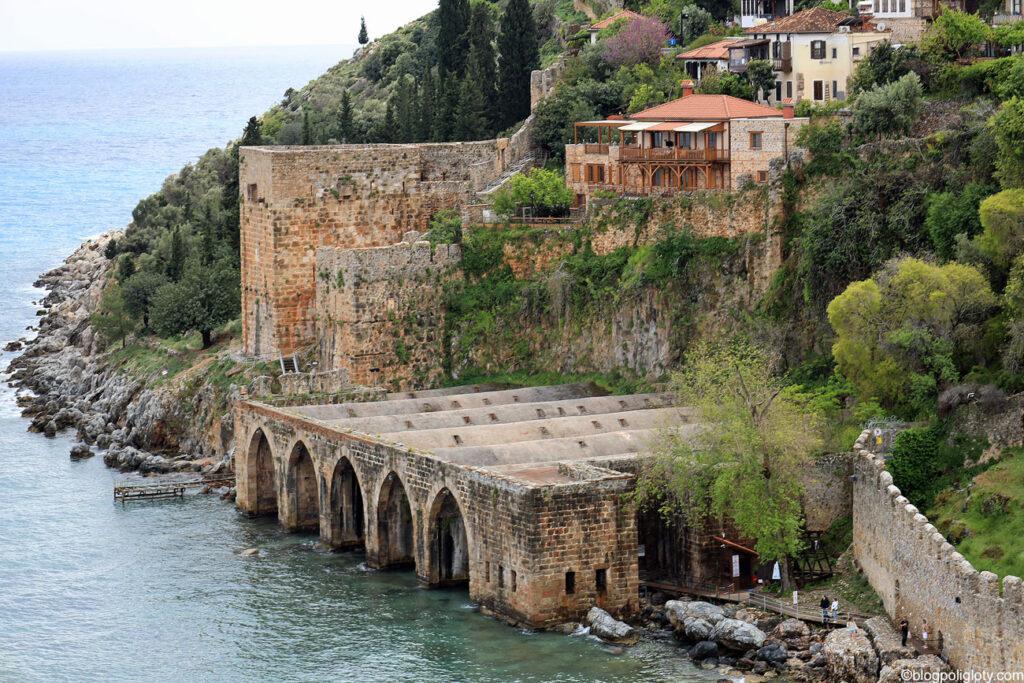
Najwyższa kondygnacja wieży to otwarty taras, otoczony murem z charakterystycznymi blankami – czyli zębami obronnymi z prześwitami między nimi, za którymi mogli kryć się łucznicy. Wzdłuż muru przebiega wąski chodnik, umożliwiający obejście wieży dookoła. Z tarasu roztacza się panoramiczny widok na port, miasto i otaczające je góry Taurus. Z drugiej strony mamy widok na wzgórze zamkowe i dawne stocznie seldżuckie – to jedno z najbardziej malowniczych miejsc w całej Alanyi.
The top level of the tower is an open-air terrace, surrounded by a protective wall topped with battlements – defensive crenelations that allowed archers to shoot while staying protected. A narrow walkway runs along the inside of the wall, allowing visitors to walk around the entire perimeter of the tower. From the terrace, there is a panoramic view of the harbour, the city and the surrounding Taurus Mountains. On the other side, we have a view of the castle hill and the former Seljuk shipyards – making it one of the most scenic spots in Alanya.
Dziś: muzeum i atrakcja turystyczna / Today: Museum and Tourist Attraction
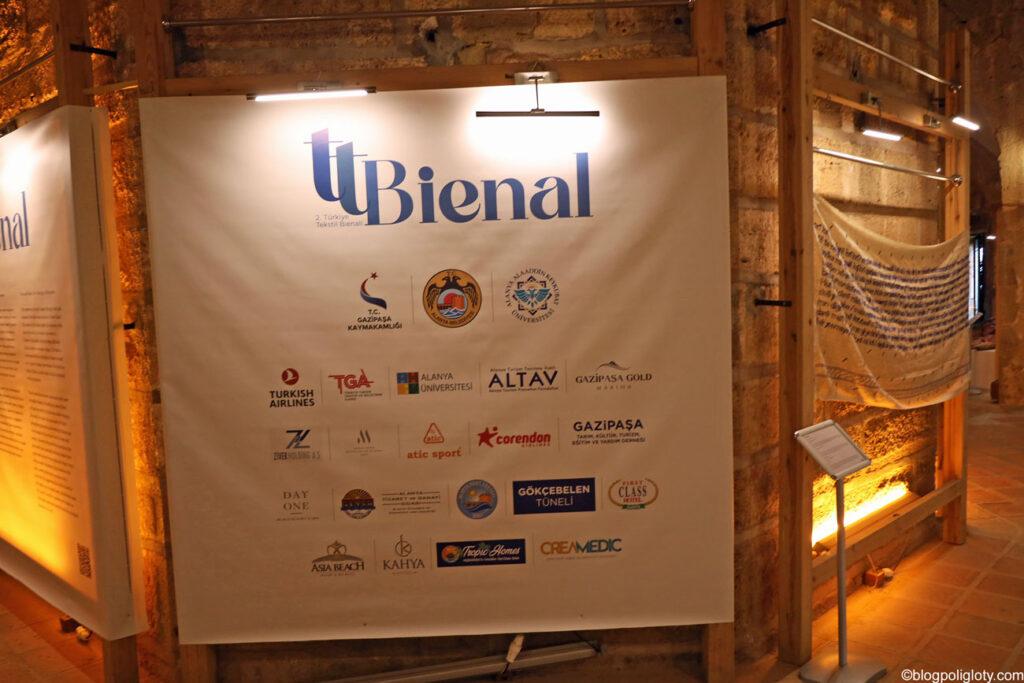
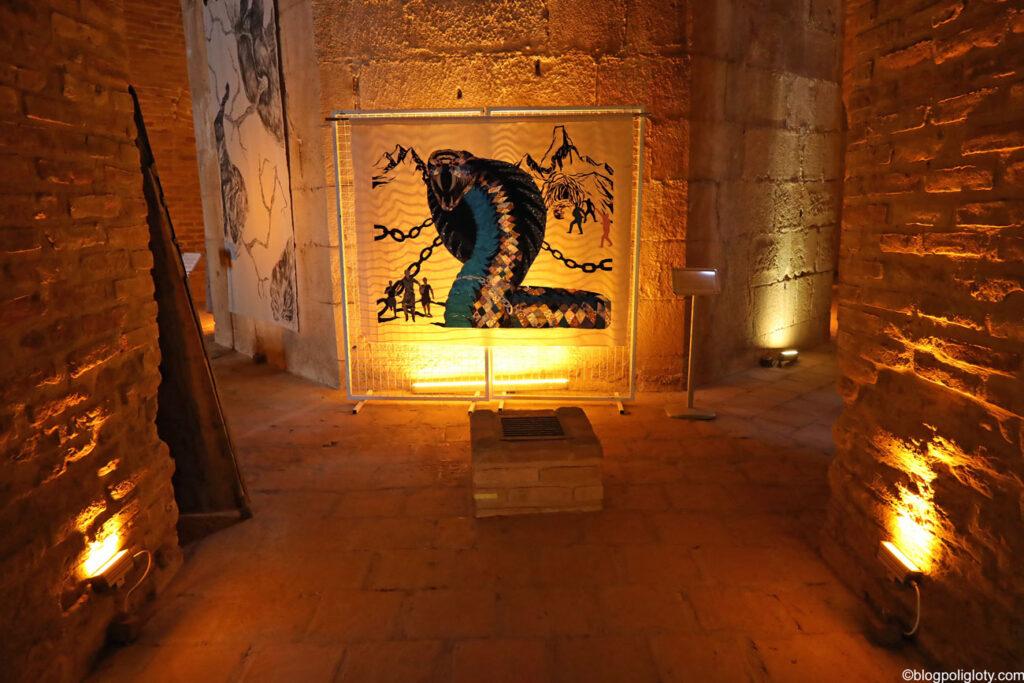
Obecnie Czerwona Wieża jest dostępna dla zwiedzających przez większą część roku. W jej wnętrzu mieści się muzeum, które na kilku poziomach prezentuje multimedialne wystawy poświęcone historii regionu, kulturze morskiej, handlowi oraz militarnej przeszłości miasta. Odwiedzający mogą poznać m.in. dawne techniki budowy statków, życie średniowiecznego portu czy codzienność żołnierzy broniących twierdzy. Wewnątrz wieży eksponowane są również współczesne prace artystów tureckich i zagranicznych.
Today, the Red Tower is open to visitors for most of the year. Inside, it houses a museum with multimedia exhibits spread across several floors, focusing on the region’s history, maritime culture, trade, and military past. Visitors can explore displays about historical shipbuilding techniques, life in a medieval port, and the daily routines of soldiers stationed in the fortress. Inside the tower, contemporary works by both Turkish and international artists are also on display.
Dzięki wyjątkowo dobremu stanowi zachowania, Czerwona Wieża uchodzi za najlepiej zachowaną seldżucką budowlę w Alanyi. Jest nie tylko zabytkiem, ale też ważnym symbolem miasta – do tego stopnia, że w latach 1992–2005 jej wizerunek znajdował się na rewersie tureckiego banknotu o nominale 250 000 lir.
Thanks to its remarkably well-preserved condition, Red Tower is considered the best-preserved Seljuk structure in Alanya. More than just a monument, it has become an enduring symbol of the city – so much so that between 1992 and 2005, its image appeared on the reverse side of the 250,000 Turkish lira banknote.
Zakończenie / Conclusion
Czerwona Wieża to nie tylko świadectwo potęgi i kunsztu średniowiecznych Seldżuków, ale również miejsce, które łączy historię z nowoczesnością. Odwiedzając ją dziś, można nie tylko przenieść się w czasie, ale także doświadczyć ducha Alanyi – miasta, gdzie mury opowiadają historie minionych wieków, a widoki zapierają dech w piersiach.
The Red Tower is not only a testament to the power and craftsmanship of the medieval Seljuks, but also a place where history meets modernity. Visiting it today offers more than just a journey through time – it’s a chance to experience the spirit of Alanya, a city where the walls tell stories of centuries past and the views take your breath away.